
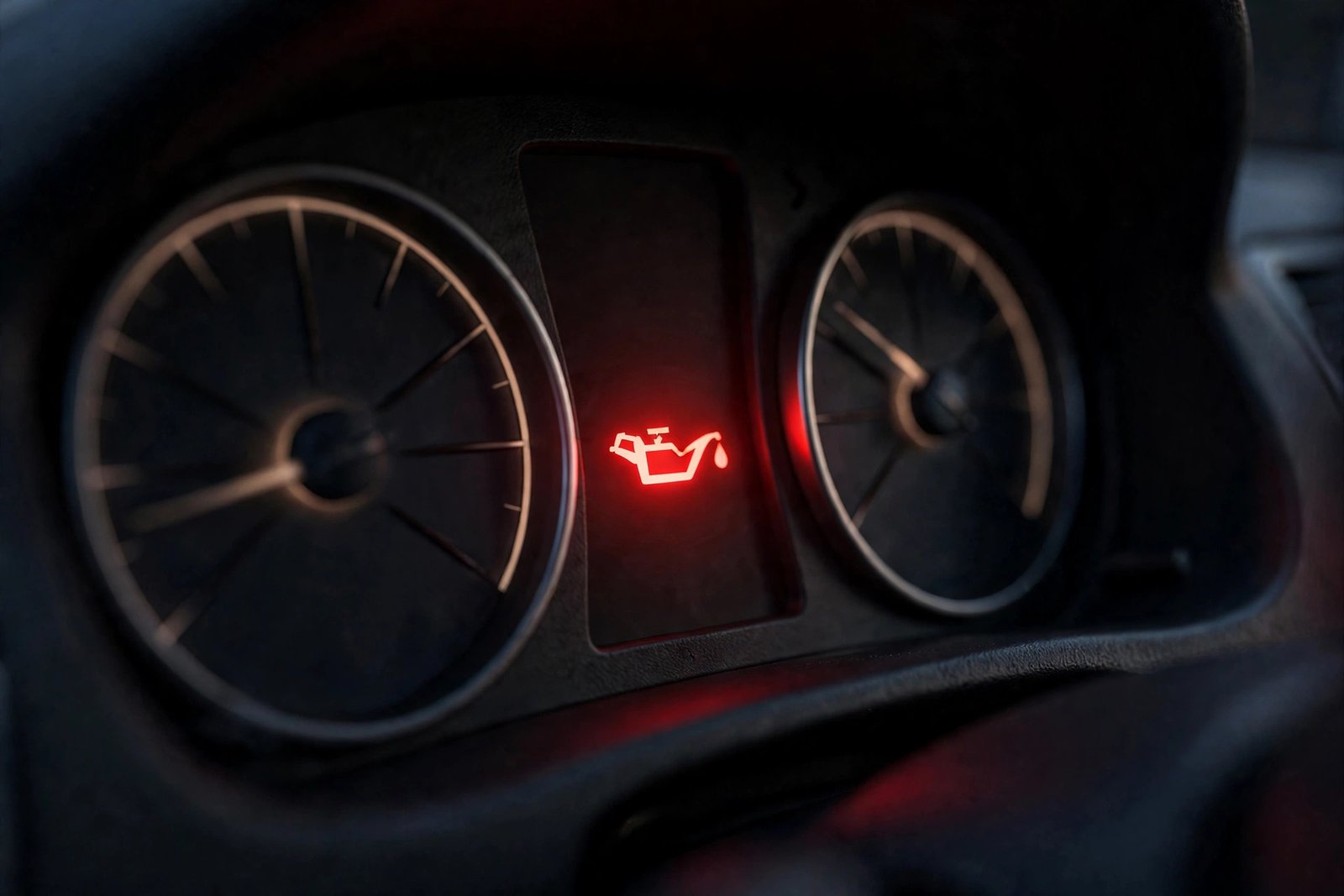
The oil pressure warning light — the little red oil can — is the most urgent light on your dashboard. It does not mean “oil change due soon.” It means oil is not circulating properly right now, and every second the engine runs without oil pressure, metal parts are grinding against metal. If this light comes on while driving: pull over safely, turn the engine off, and do not restart it.
In this guide, you’ll learn:
- Why this light means stop-now, not drive-home
- The most likely causes, in order of likelihood
- The only safe checks (engine off)
- What a mechanic does next
- Typical repair cost ranges (verified 2026-10-14)
⚠️ STOP THE ENGINE. This is the one dashboard light where “just a few more miles” can turn a sensor replacement into an engine replacement. Pull over, shut it off, call a tow. Do not restart to “see if it’s still on.”
Why Stop-Now, Not Drive-Home
Engine oil does three jobs: it lubricates, cools, and cleans. Without oil pressure, none of that happens — bearings, camshafts, and pistons run metal-on-metal. An engine can suffer catastrophic damage in minutes of running with no oil pressure. The repair bill jumps from a sensor ($50–$150) to an engine ($4,000–$10,000+) in the time it takes to drive home. This light is red for a reason.
The one exception: the light flickers briefly at hot idle (e.g., at a long stoplight) and goes off the moment you touch the gas. That still needs diagnosis soon — but it’s not the pull-over-now emergency.
The Most Likely Causes, in Order
1. Low oil level (most common and most hopeful)
The oil pump can’t build pressure if there isn’t enough oil to pump. Check the dipstick (engine OFF, on level ground, after a few minutes of settling). Below the minimum mark = add the correct oil to bring it into range, then watch whether the light stays off. But ask why it was low — leaks and oil consumption don’t fix themselves.
2. Failed oil pressure sensor / sending unit
The sensor itself fails more often than people expect — it’s an electrical part in a hot, oily environment. A mechanic verifies with a mechanical gauge: if actual pressure is fine, it’s just the sensor. This is the best-case outcome.
3. Worn oil pump
The pump itself can wear out or its pickup screen can clog with sludge — especially in engines with neglected oil changes. A failing pump can’t maintain pressure, particularly at idle when it spins slowest.
4. Wrong oil viscosity
Too-thin oil (or fuel-diluted oil) can’t hold pressure, especially when hot. If the light appeared after an oil change, the wrong grade may have been installed — check the receipt against your owner’s manual.
5. Internal engine wear (worn bearings)
On high-mileage engines, worn main and rod bearings let oil escape too easily, dropping pressure. The classic sign: light flickers at hot idle but goes off with RPM. This is an engine-wear diagnosis — expensive, and the reason to catch it early.
6. Clogged oil filter or pickup
A severely neglected filter restricts flow; sludge on the pump pickup screen starves the pump. Both point back to maintenance history.
The Only Safe Checks (Engine Off)
- Dipstick check: Engine OFF, level ground. Pull, wipe, reinsert, pull again. Level and color tell the story — below minimum, or glittery/milky oil, means tow, don’t drive.
- Look underneath: Fresh drips or a spreading stain under the engine? Note the location for the mechanic.
- Check the oil cap: Milky residue under the cap can signal coolant mixing with oil — a serious internal problem.
- Do NOT do the “restart and listen” test. Every start without pressure does damage. If the level looks fine and there are no leaks, it still needs a tow — only a mechanical gauge test (at a shop) can confirm it’s “just the sensor.”
What a Mechanic Does Next
- Mechanical gauge test: screws a real pressure gauge into the sensor port — the definitive answer on whether pressure is actually low.
- Sensor replacement if pressure is fine — quick and cheap.
- Oil and filter change with correct viscosity if the oil is wrong or degraded.
- Oil pump / pickup inspection if pressure is genuinely low — often requires partial engine disassembly.
- Bearing-wear diagnosis on high-mileage engines with hot-idle flicker.
Typical Cost Ranges
(Verified 2026-10-14; ranges vary widely by vehicle, region, and shop labor rates.)
- Oil pressure sensor replacement: roughly $50–$150
- Oil and filter change: varies by vehicle and oil type
- Oil pump replacement: roughly $400–$1,200+ (labor-intensive on many engines)
- Engine rebuild/replacement after oil starvation: $4,000–$10,000+
- The point of stopping immediately: the difference between a $100 sensor and a $6,000 engine is about five minutes of driving.
FAQ
Can I drive to the shop if the light just came on?
No. Pull over and shut it off. A tow costs a fraction of an engine. The only mild exception is a brief flicker at hot idle that clears with RPM — and even that needs diagnosis within days.
Is this the same as the oil change reminder?
No — completely different. The maintenance reminder (often “MAINT REQD” or a wrench icon) is a mileage timer. The red oil-can light is a live pressure warning.
Adding oil turned the light off — am I fine now?
Maybe, but find out why it was low. Oil doesn’t evaporate — it leaks or burns. Check the level weekly until a mechanic finds the cause.
Could it really just be the sensor?
Yes — sensors fail often, and it’s the best-case outcome. But only a mechanical gauge test proves it, and that test happens at a shop, after a tow.