
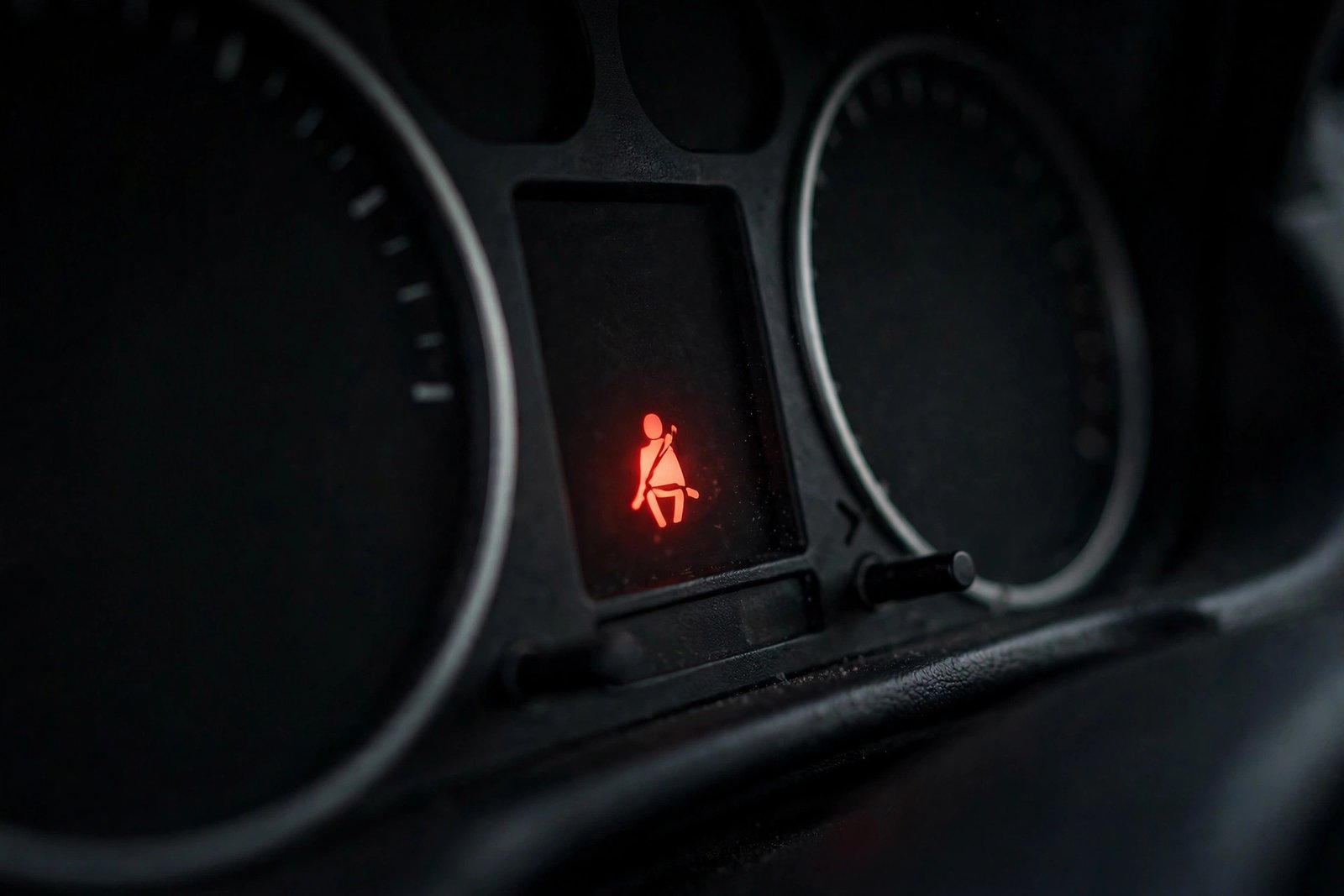
An airbag (SRS) warning light means the computer that controls your airbags, seatbelt pretensioners, and crash sensors has logged a fault — and cannot guarantee those systems will work in a collision. Unlike most warning lights, there is no way to feel or hear this fault from behind the wheel. The light is the only signal you get.
In this guide, you’ll learn:
- Why an airbag light means the safety system may be fully disabled
- The most common causes, in order of likelihood
- What “is it safe to drive” actually means for this light
- The strict rule: diagnosis only — never DIY airbag work
- When to see a mechanic
Safety first — the hard rule for this article: airbags are explosive devices wired to a crash computer. Never attempt DIY repairs on airbag components — not the sensors, not the wiring, not the module, not the clock spring. Unplugging, probing, or replacing airbag parts yourself can cause accidental deployment or leave the system silently dead. This article is diagnosis and education only. Repairs belong to a qualified technician.
What the Light Actually Means
When the airbag/SRS light stays on past the startup self-test (it should glow for a few seconds at key-on, then go out), the system has detected a fault serious enough that it deactivates the airbags and seatbelt pretensioners entirely on most modern vehicles — specifically to prevent an accidental deployment. Until the fault is cleared, you are driving without your vehicle’s most important passive safety features.
| What you see | What it means | What to do |
|---|---|---|
| Light on briefly at startup, then off | Normal self-test | Nothing |
| Stays on while driving | SRS fault — airbags likely disabled | Book a diagnosis promptly; drive normally but carefully |
| Light never comes on at all at startup | Burned-out bulb or disconnected indicator — also a fault | Get it checked (a dead indicator hides a dead system) |
The Most Likely Causes, in Order
1. Loose or corroded wiring under the seats
The single most common cause. Front seats move, and the SRS wiring connectors underneath flex, loosen, and corrode over time — especially in older cars. The system notices the bad connection and flags a fault.
2. Worn clock spring (steering wheel spiral cable)
The clock spring maintains the electrical connection to the driver’s airbag as the wheel turns. It’s a wear part; when it fails, the driver’s airbag circuit breaks. Often arrives with a non-working horn or dead steering-wheel buttons.
3. Faulty seat occupancy / weight sensor
The passenger seat sensor tells the system whether (and how big) the occupant is. A failing sensor — or a heavy bag on the seat — can trip the light.
4. Low battery voltage
A weak or recently replaced battery can trigger SRS fault codes, since the system is voltage-sensitive. If the light appeared right after a jump-start or battery swap, this is the first thing a shop checks.
5. Crash sensor or pretensioner fault
Impact sensors and seatbelt pretensioners are part of the SRS chain. Damage, corrosion, or water intrusion can take one offline.
6. Airbag control module fault
The SRS computer itself can fail internally — least common, but it happens, especially on high-mileage cars or after water damage.
7. After a collision: system not reset
If the car was in a crash — even one where airbags didn’t deploy — the system can log a fault that stays until professionally reset. Undisclosed accident history is a classic cause on used cars.
What You Can Safely Do Yourself
Honestly: very little, and that’s deliberate. The safe list:
- Check nothing was left on the passenger seat — a heavy object can trip the occupancy sensor. Remove it, restart the car.
- Note the timing. Did the light appear after a battery change, jump-start, seat adjustment, interior work, or a minor bump? Tell the shop — it narrows the search enormously.
- Get an SRS-capable scan. Note: basic OBD-II readers usually cannot read airbag codes — you need a scanner with SRS/chassis capability, or a shop.
- Do not unplug, probe, “reseat,” or replace any airbag wiring, sensors, or modules yourself.
When to See a Mechanic
- The light stays on — always. There’s no version of this you should live with long-term.
- The light appeared after a collision, even a minor one.
- Multiple SRS-related symptoms: dead horn, dead steering-wheel controls, seatbelt warning acting up.
- You’re buying a used car with this light on — walk away or demand a professional SRS inspection first.
FAQ
Is it safe to drive with the airbag light on?
The car drives normally, but it’s not truly safe to treat as okay: the system that should protect you in a crash is likely deactivated. Drive to get it diagnosed — don’t postpone it for weeks.
Can the airbag deploy randomly while the light is on?
Extremely unlikely — the system deactivates itself precisely to prevent that. The real risk is the opposite: it won’t deploy when you need it.
My airbag light came on after a jump-start. Coincidence?
Probably not. Voltage spikes and low voltage during jump-starts are a known trigger for SRS fault codes. A scan and code clear often resolves it — if the code doesn’t return.
Will an airbag light fail a state inspection?
Many US states fail a vehicle for an illuminated SRS light. Check your state’s rules, but don’t count on passing.
all dashboard warning lights explained
Sources
- Motoring Chronicle — “What Your Airbag Warning Light Actually Means (and Is It Safe to Drive?)” (system deactivation; clock spring, occupancy sensor, connectors) — https://motoringchronicle.com/what-your-airbag-warning-light-actually-means-and-is-it-safe-to-drive/
- Stoneacre — “Airbag Light: Is It Safe To Keep Driving?” (deactivation framing; causes) — https://www.stoneacre.co.uk/blog/airbag-light-is-it-safe-to-keep-driving
- MotorHub — “Why Is My Airbag Light On? Common Causes and Warning Signs” (driving-risk framing) — https://motorhub.club/blog/airbag-light-on-causes-solutions/