
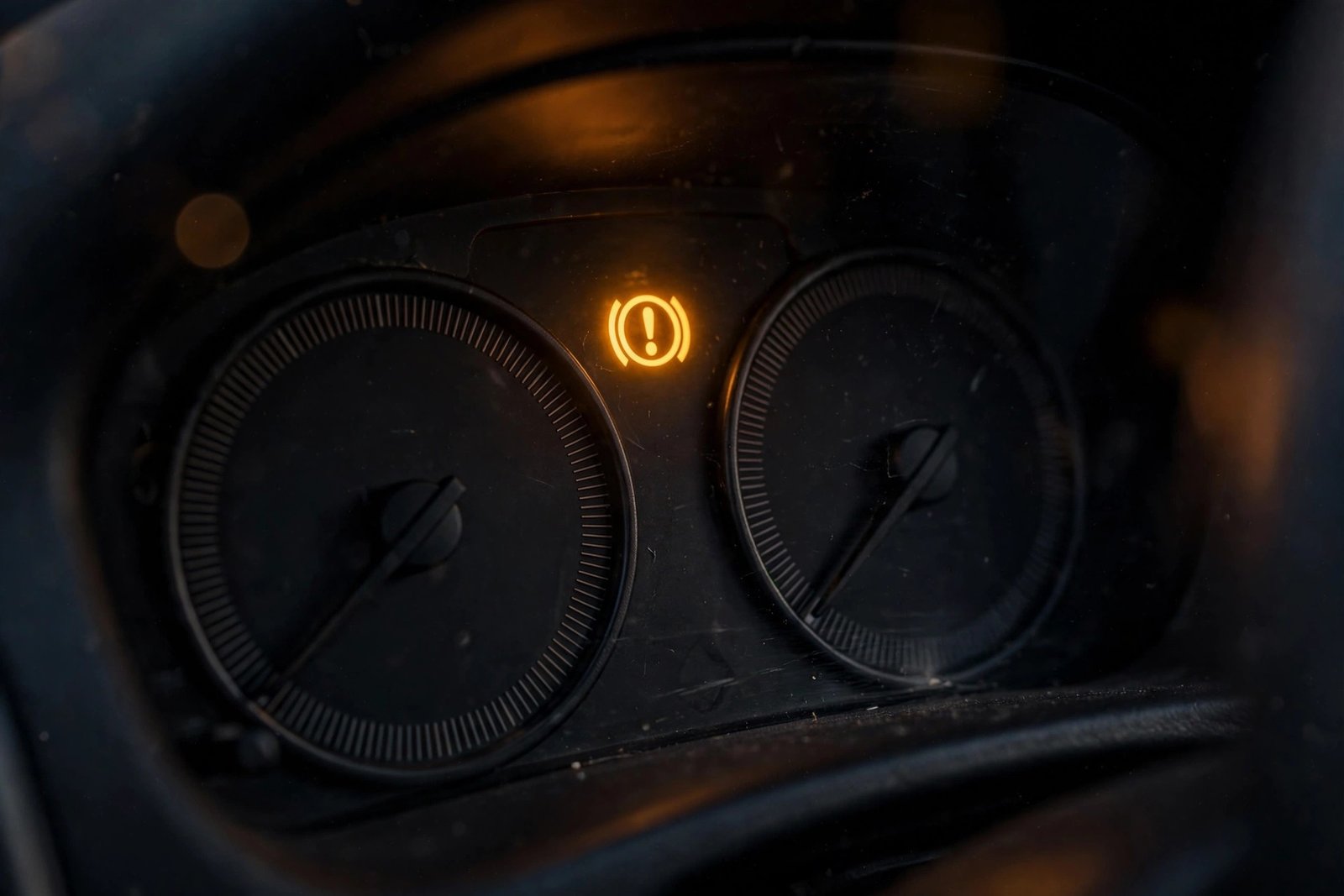
The ABS light came on — and here’s the reassuring part first: your regular brakes still work. ABS (anti-lock braking system) is a helper that prevents wheel lockup in hard braking. When its warning light is on, that helper is disabled, but normal braking is unaffected. What you lose is the anti-lock safety net in panic stops and on slippery roads.
In this guide, you’ll learn:
- What the ABS light actually means for your driving
- The most likely causes, in order of likelihood
- Safe checks you can do yourself
- When it’s urgent vs. when it can wait
- Typical repair cost ranges (verified 2026-10-14)
Safety first: With ABS disabled, hard braking can lock the wheels — especially on wet or icy roads. Increase following distance and brake earlier and gentler until it’s fixed. If the brake warning light (red) is ALSO on, that’s a different, urgent situation — see the red-flag section.
What the ABS Light Means for Your Driving
ABS prevents the wheels from locking during hard braking, which keeps the car steerable in a panic stop. With the light on, that function is off — but your brake pedal, pads, and rotors work exactly as before. The car stops normally in everyday driving. The danger is only in emergency braking: locked wheels skid straight, and you can’t steer a skidding car.
Bottom line: safe to drive carefully to a shop; not safe to ignore for months, especially heading into winter.
The Most Likely Causes, in Order
1. Failed wheel speed sensor (most common)
Each wheel has a speed sensor that tells the ABS computer how fast it’s turning. These sensors live in a brutal environment — heat, water, road salt, debris — and they fail. One dead sensor = no trustworthy wheel-speed data = ABS shuts itself off and turns the light on. A code scan identifies which wheel.
2. Damaged wiring or connector to a sensor
The wiring running to each wheel flexes with the suspension and corrodes with road salt. A chafed wire or green corroded connector gives the same symptom as a dead sensor. Often the cheapest fix on this list.
3. Blown ABS fuse
The ABS module has its own fuse. A blown fuse kills the whole system at once. Check your owner’s manual for the ABS fuse location — if it’s blown and the replacement blows again, there’s a short that needs diagnosis.
4. Low brake fluid
Some cars trigger the ABS light (sometimes along with the brake light) when fluid is low. Check the reservoir — but remember, low fluid usually means worn pads or a leak, so don’t just top up and forget.
5. Failed ABS module/pump
The hydraulic control unit itself can fail — internal valve or pump problems. This is the expensive end of the list and needs professional diagnosis with a scan tool that can talk to the ABS module.
6. Stuck ABS relay
Less common, but a failed relay can disable the system. Your manual’s fuse box diagram shows whether your car has a serviceable ABS relay.
Safe Checks You Can Do Yourself
- Restart test: Turn the car off, wait 30 seconds, restart. If the light was from a one-time glitch (voltage dip, sensor hiccup), it may clear. If it returns, it’s real.
- Visual wheel check: Look behind each wheel for obviously damaged wiring or a sensor hanging loose — especially after recent brake or suspension work.
- Brake fluid level: Check the reservoir against MIN/MAX. Low? That needs investigation, not just a top-up.
- ABS fuse: With the owner’s manual diagram, pull the ABS fuse and check whether the element is broken.
- Code scan: A basic OBD-II scanner reads engine codes; ABS codes need a scanner with ABS capability (many auto parts stores’ free scans include these — ask).
When It’s Urgent vs. When It Can Wait
Get it diagnosed soon (days, not months): ABS light alone, brakes feel normal. You’ve lost the anti-lock safety net — fine in dry careful driving, risky in rain, snow, or panic stops.
Urgent — change your plans:
- Red brake warning light is ALSO on — that signals a possible hydraulic problem (low fluid, pressure loss). Check fluid; if low or the pedal feels wrong, tow it.
- Brake pedal feels spongy, low, or goes to the floor — stop driving; this is a brake hydraulics problem, not just ABS.
- Grinding, or the car pulls hard when braking — mechanical brake problem; get it inspected before driving further.
Typical Cost Ranges
(Verified 2026-10-14; ranges vary widely by vehicle, region, and shop labor rates.)
- Wheel speed sensor replacement: roughly $150–$350 per wheel, parts and labor
- Wiring/connector repair: roughly $50–$200
- ABS fuse: a few dollars (DIY)
- ABS module/pump replacement: roughly $500–$1,500+ depending on vehicle
- Diagnostic scan: many auto parts stores read codes free; a shop diagnosis is typically $100–$150
FAQ
Can I drive with the ABS light on?
Yes, carefully — normal braking works. But avoid hard braking, increase following distance, and get it diagnosed soon, especially before winter.
Will the ABS light fail my inspection?
In many states, yes — a lit ABS (or any warning) light is an automatic inspection failure. Check your state’s rules.
Why did the light come on after I hit a pothole?
A hard impact can damage a wheel speed sensor or its wiring — one of the most common triggers. A code scan will point to the affected wheel.
Can low tire pressure trigger the ABS light?
Indirectly — a significantly underinflated tire rotates at a different speed, which can confuse the system. But the TPMS light usually appears first.