
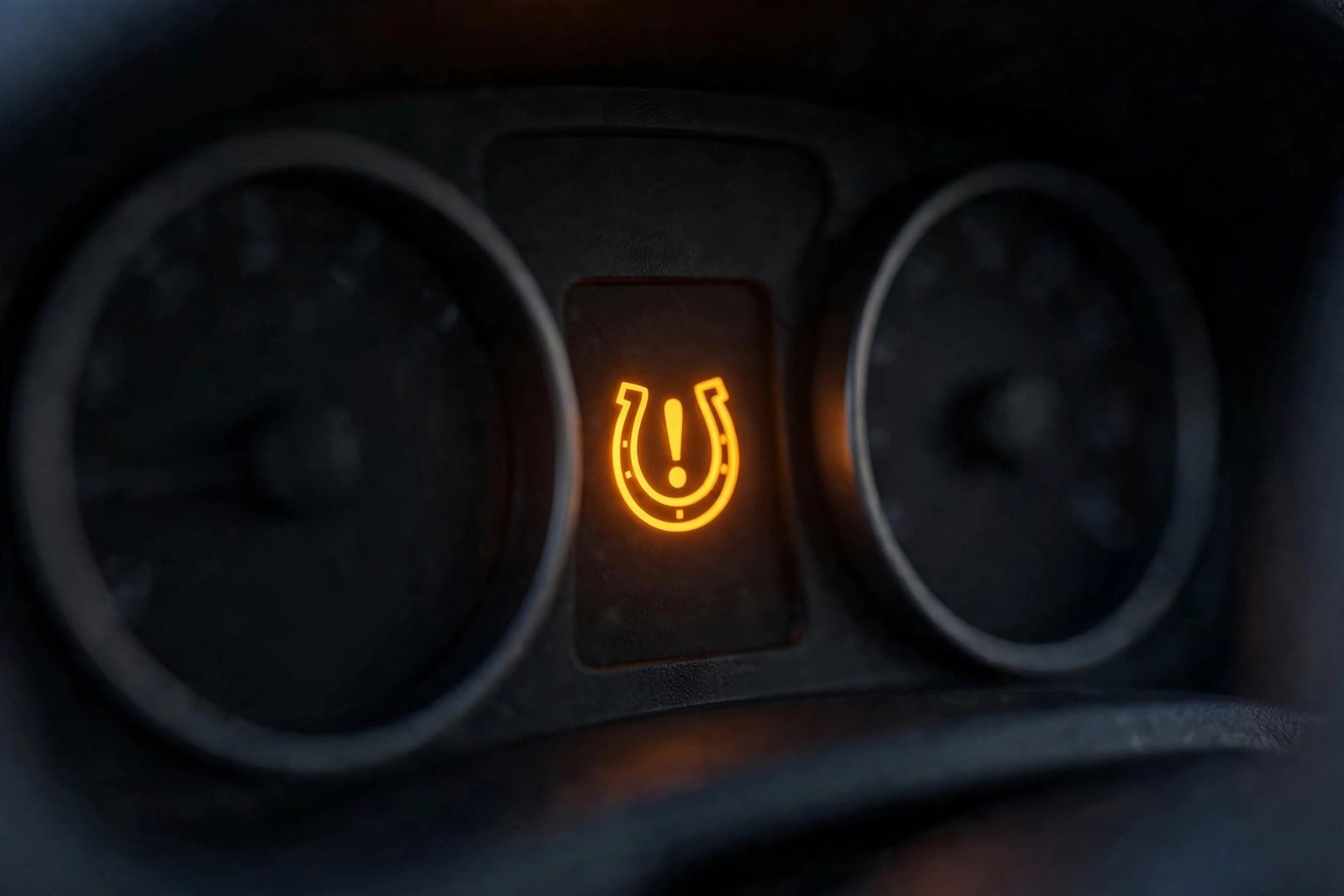
Your tire pressure light is on, but your tires look perfectly fine — no flats, no sagging sidewalls. Here’s the key fact: the light doesn’t wait for a tire to look low. Direct TPMS systems flag a tire when it drops roughly 25% below the placard pressure — and 25% under still looks round. A 35-psi tire can sit at 26 psi and look completely normal while the light stays on.
In this guide, you’ll learn:
- Why the light comes on when tires “look fine”
- The 25%-under rule and what your target pressure really is
- The exact safe steps to check and reset TPMS
- When the light is actually a sensor problem
- When to stop driving and call a mechanic
Safety first: Underinflated tires overheat at highway speed and can fail suddenly. Check pressures with a gauge — never by kicking a tire. If the light blinks, treat it as a fault: diagnose before a long drive.
Why the Light Comes On When Tires “Look Fine”
25% under still looks round. A tire at 26 psi (when it should be 35) looks basically identical to one at full pressure. TPMS triggers at roughly 25% under-inflation — well before your eyes can tell.
Cold mornings trigger it. Tire pressure drops about 1 psi for every 10°F of temperature drop. A tire that was at 32 psi on a 70°F afternoon sits at ~26 psi on a 10°F morning — right at the warning threshold. This is why the light appears in October and November and vanishes by noon.
All four can be low at once. If none of your tires look flat, check all four anyway — slow leaks and seasonal drops hit every tire, and TPMS only shows a general warning on basic systems.
The 25%-Under Rule and Your Real Target
The number on the tire sidewall (e.g., “Max 44 psi”) is a maximum, not your target. Your target is on the driver’s door-jamb placard — usually 30–36 psi for most cars. TPMS flags a tire at roughly 25% below that placard number.
Example: placard says 35 psi → 25% under = ~26 psi → light comes on. The tire at 26 psi looks fine. That’s not a malfunction — the system is working exactly as designed.
Check and Reset, Step by Step
- Get a gauge. A $10 digital gauge is more accurate than gas-station air pumps. Check tires cold (before driving or 3+ hours after).
- Read the placard. Driver’s door jamb — front and rear may differ. Inflate each tire to the placard number, not the sidewall maximum.
- Inflate and recheck. Fill slightly, recheck with the gauge. Don’t trust the gas station’s built-in gauge alone.
- Drive to let it relearn. Most direct-TPMS cars clear the light after 10–20 minutes of driving above ~25 mph as the sensors report in. No button needed.
- TPMS reset button (if equipped). Some cars (many Toyotas, Hondas) have a reset/relearn button — usually under the dash or in the glove box. Press and hold with the ignition ON (engine off) until the light blinks three times, then drive. Check your owner’s manual for your car’s procedure.
- Spare tire check. Some vehicles monitor the full-size spare — a low spare can keep the light on even with four perfect tires.
When It’s the Sensors, Not the Pressure
Blinking light = fault, not low pressure. A TPMS light that blinks for 60–90 seconds at startup then stays solid means the system itself has a fault — a dead sensor battery, a damaged sensor, or a receiver problem. Solid light = low pressure. Blinking-then-solid = system fault.
Sensor batteries die. TPMS sensors have built-in batteries that last roughly 7–10 years. On a 2016 car, sensors are now dying of old age — expect this on any car over ~8 years old.
After tire service. If the light appeared right after new tires, a rotation, or a repair, a sensor may have been damaged or the system needs a relearn — take it back to the shop that did the work.
When to Stop and Call a Mechanic
- The light blinks (system fault) — diagnose before a long trip; you have no low-pressure warning until it’s fixed.
- One tire keeps losing pressure after you fill it — slow leak or puncture; get it inspected.
- Visible damage, bulge, or sidewall cracking — don’t drive on it.
- The light stays on after correct inflation and a relearn drive — possible sensor or receiver fault.
FAQ
Can I just ignore the light if the tires look fine?
No — “looks fine” doesn’t mean properly inflated. Driving 25% under wears the shoulders, hurts fuel economy, and risks a heat-related blowout at highway speed.
Why does the light come on in the morning and go off by afternoon?
Temperature. Cold air contracts — pressure drops ~1 psi per 10°F. Morning cold pushes a borderline tire under the threshold; afternoon warmth pushes it back over.
Will the light reset itself?
Usually yes, after correct inflation and 10–20 minutes of driving. Some cars need the manual reset button procedure from the owner’s manual.
Is it the spare?
Possible on vehicles that monitor it. Check the spare’s pressure too — it’s the forgotten fifth tire.