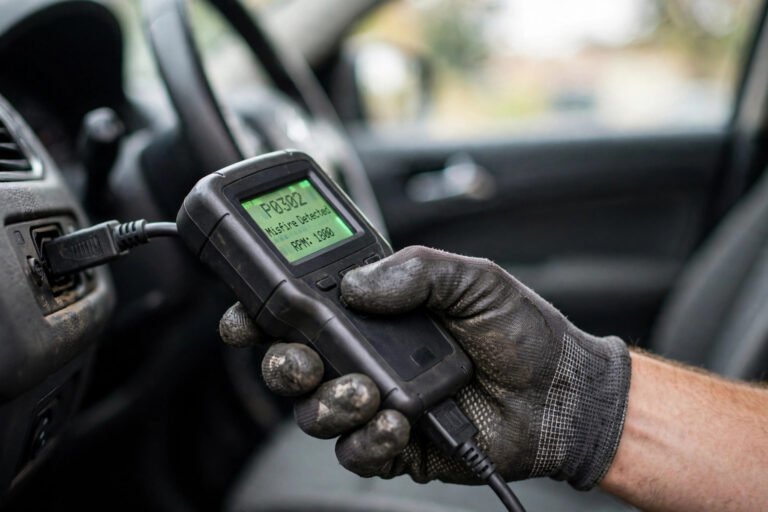
P0442 Code Chevy: 7 Causes and How to Fix Them
Updated Nov 21, 2026

In This Guide
- The Quick Answer: A Small Fuel Vapor Leak
- What Does the P0442 Code Mean on a Chevy?
- How the EVAP System Works
- Symptoms of a P0442 Code on a Chevy
- 7 Causes of a P0442 Code Chevy
- Which Chevys Set P0442 Most Often
- How a Shop Diagnoses P0442
- What It Costs to Fix a P0442 Code in 2026
- Can You Drive With a P0442 Code?
- What You Can Check Yourself
- Frequently Asked Questions
The Quick Answer: A Small Fuel Vapor Leak
A P0442 code Chevy owners see means the engine computer found a small leak in the evaporative emission system, usually called the EVAP system. The leak is about 0.040 inch wide, roughly the size of a pinhole. The system is supposed to be sealed, so it traps fuel vapor from the tank instead of letting it escape into the air. When the computer runs its self test and the system cannot hold pressure, it stores P0442 and turns on the check engine light.
The most common cause is also the cheapest fix. On most Chevys, the first thing to check is the gas cap. A loose cap, a worn seal, or a cap that no longer clicks tight can set this code. If the cap is fine, the next suspects are the purge valve and the vent valve, and on GM trucks the vent valve is the part shops see most often. A smoke test is how a shop finds the leak when the cap and valves look fine.
P0442 is rarely an emergency by itself. The car usually drives normally, and the only symptom is the check engine light. There are two exceptions. If you smell gasoline, stop driving and have the car checked, because leaking fuel is a fire risk. And if the car stalls, will not restart, or the check engine light is flashing, that is a different problem that needs attention right away.
In this guide, you will learn:
- What a P0442 code means and how the EVAP system works
- The symptoms to look for on a Chevy
- The 7 most common causes, in the order a shop checks them
- Which Chevys set this code most often, and the GM service bulletins behind it
- How a shop diagnoses the leak, and what a smoke test costs
- What each repair costs in 2026
- Whether you can keep driving with the code set
- What you can safely check yourself
What Does the P0442 Code Mean on a Chevy?
P0442 is a generic OBD-II code. Its full definition is “Evaporative Emission System Leak Detected (Small Leak).” Generic means the definition is the same on every brand, but the parts that fail and the patterns behind the code are different on a Chevy than on a Ford or a Toyota.
Here is how the code gets set. Your Chevy runs a leak test on the EVAP system every so often, usually after the car has been parked overnight and then driven. The computer closes the vent valve, opens the purge valve briefly to pull a small vacuum, then seals the system and watches the pressure. If the pressure rises faster than it should, fuel vapor is escaping somewhere, and the computer stores P0442.
The size matters. The test is designed to catch a leak of about 0.040 inch, or roughly one millimeter. That is the dividing line between P0442 and its two neighbors. A smaller leak sets P0456, a very small leak. A bigger one sets P0455, a large leak. P0442 sits in the middle, and it tells you the size of the leak, not where it is. The code never names the failed part. Finding the part is the diagnosis.
On a Chevy, the computer that runs this test is the engine control module, or ECM. It watches the fuel tank pressure sensor during the test, and it is that sensor reading that decides whether the code sets. A faulty sensor can set the code on its own, but that is uncommon. Most of the time, the leak is real.
How the EVAP System Works
The EVAP system exists to keep gasoline vapor out of the air. Gasoline evaporates easily, even at room temperature, and a parked car with a full tank gives off a surprising amount of vapor. Instead of venting that vapor, the system catches it and burns it in the engine later.
The parts that matter for a P0442 code are few, and knowing them makes the causes below easy to follow.
The fuel tank and filler neck. Vapor leaves the tank through vent lines at the top. The filler neck is where you put the nozzle in, and on most Chevys it is sealed by the gas cap. Newer Chevys use a capless filler, where a spring loaded flap seals the neck instead of a cap.
The charcoal canister. Vapor from the tank flows into a canister filled with activated charcoal, which absorbs and holds the vapor like a sponge. The canister sits near the rear of the car, close to the tank.
The purge valve. When the engine is warm and running, the computer opens this valve and engine vacuum pulls the stored vapor out of the canister and into the intake, where it burns with the regular fuel. The valve is normally closed, and it opens only when the computer tells it to.
The vent valve. This valve, also called the canister vent solenoid, controls fresh air going into the system. It is normally open so the tank can breathe while you drive and fill up. During the leak test, the computer closes it to seal the system. On GM trucks and SUVs, it sits low near the tank, exposed to road spray, dirt, and salt.
The fuel tank pressure sensor. This sensor watches the pressure inside the tank during the leak test and reports it to the computer.
When any one of these parts leaks, sticks open, or stops sealing, the system fails its test and P0442 sets.
Symptoms of a P0442 Code on a Chevy
Most of the time, the check engine light is the only symptom. A pinhole vapor leak does not change how the engine runs, because it does not touch the fuel the engine burns. That is why many drivers learn about the code only when a scanner reads it, or when the car fails an emissions test.
There are a few other signs, and they help narrow down where the leak is.
A steady check engine light. This is the most common symptom, and usually the only one. The light stays on steady, not flashing. A flashing check engine light means a misfire, which is a different and more urgent problem.
A faint fuel smell. If the leak is at the filler neck or the gas cap, you may smell gasoline when the car is parked in a garage, or near the rear of the car after a fill up. A strong fuel smell, or fuel you can see on the ground, means liquid fuel is escaping. Stop driving and have the car towed to a shop.
A “Check Fuel Cap” message. Some GM vehicles show this warning on the dashboard when the computer suspects the cap seal. It is the same problem as P0442, just reported in plain words. Tighten or replace the cap first.
Slightly worse fuel economy. Vapor escaping from the system is fuel you paid for, leaving the tank as gas instead of burning in the engine. The loss is small, and most drivers never notice it on the gauge.
Trouble filling the tank. If the vent valve is stuck closed, the tank cannot vent while you fill it, and the pump nozzle may keep clicking off. This points at the vent valve, not the cap.
Rough idle or stalling after a fill up. A purge valve stuck open can let raw vapor flood the engine right after a fill up. This is more common on the Equinox and Terrain than on the trucks, and it usually comes with a second code for the purge valve itself.
If the car drives normally and the only symptom is the light, you have time to work through the causes in order. If you smell fuel, see fuel, or the car stalls, do not keep driving it.
7 Causes of a P0442 Code Chevy
Shops see these causes in roughly this order, from most common to least common. Work through them the same way, cheapest and easiest first.
1. Loose, worn, or wrong gas cap
This is the most common cause of P0442 on any car, and the cheapest to fix. The gas cap has a rubber O ring seal that hardens and cracks with age and heat. Once the seal stops holding pressure, vapor escapes past it and the leak test fails. A cap that clicks can still leak, because the click only means the ratchet turned, not that the seal is good.
Check the cap first. Take it off, look at the seal for cracks, flattening, or grit, and wipe the filler neck clean. Put the cap back on and tighten it until it clicks several times. If the cap is more than five years old, replace it even if it looks fine. Use an OEM cap or an exact equivalent. A cheap aftermarket cap that does not seal is a common reason the code comes back.
On newer Chevys with a capless filler, there is no cap to check. The spring loaded flap in the filler neck is the seal, and dirt or damage on the flap can set the same code. Wipe the flap and the sealing surface clean, and make sure it springs shut.
2. Faulty vent valve
On GM trucks and SUVs, this is the part shops check early, and for good reason. The vent valve sits low near the fuel tank, exposed to road spray, dirt, and salt. The solenoid corrodes, or dirt keeps the valve from closing fully during the leak test, and the system cannot hold pressure. Experienced GM technicians report the vent valve as the cause in a large share of P0442 cases on Silverado, Sierra, Tahoe, and Suburban models.
GM has issued service bulletins on this exact problem. Bulletin 02-06-04-037J covers recurring P0442 codes on 2007 to 2014 Silverado, Sierra, Tahoe, and Suburban models, and the recommended fix is replacing the vent valve solenoid. A later bulletin, 21-NA-124 from December 2022, covers P0442 and P0455 on gasoline GM vehicles from model year 2000 through 2023. It tells technicians to check the vent and purge valves for sticking, inspect all seven purge line connections, and test with a smoke machine under both pressure and vacuum, because some leaks only show up one way.
A vent valve that is stuck closed causes a different symptom, trouble filling the tank, because the tank cannot vent while you pump gas. A vent valve stuck open sets P0442.
3. Faulty purge valve
The purge valve lives on or near the intake manifold, and it is normally closed. When its internal seal wears out, it leaks a little air even when closed, and the leak test fails. A purge valve stuck open can also cause a rough idle or stalling right after a fill up, because raw vapor floods the engine.
On the Equinox and Terrain, the purge valve is a known weak point, and it often sets P0442 together with a purge flow code such as P0496. If your Chevy has both codes, the purge valve is the first part to test.
4. Cracked or damaged EVAP hoses and lines
Rubber EVAP hoses dry out, crack, and split with age and heat, especially the lines near the engine and the ones running along the underside of the car. A small split in a hose is exactly the size of leak P0442 detects. Plastic lines can crack where they pass over a sharp edge, and connections can work loose over time. GM bulletin 21-NA-124 specifically tells technicians to inspect every purge line connection, because an unseated connection is a common cause.
5. Damaged charcoal canister
The canister itself can crack, and its seals can fail. A more common problem is a canister flooded with liquid fuel, which happens when a driver keeps pumping gas after the nozzle clicks off. Liquid fuel in the canister damages the charcoal and can set P0442. Stop pumping when the nozzle clicks off the first time.
6. Cracked filler neck or fuel tank
The filler neck can rust or crack where it meets the tank, and the tank itself can develop a small crack or a leaking sending unit gasket. These are less common than the valve and cap causes, but they do happen, especially on older trucks driven in road salt. A smoke test finds them, because the smoke escapes visibly at the crack.
7. Faulty fuel tank pressure sensor or computer
The pressure sensor can fail and report a leak that is not there, and in rare cases the computer itself is at fault. These are the last things a shop checks, after the smoke test has shown the system holds pressure. A sensor is cheap, but it should never be replaced on a guess.
Which Chevys Set P0442 Most Often
P0442 is a generic code, but it does not hit every Chevy equally. Data from FIXD, collected from its scanner users in 2023, puts the Chevrolet Silverado 1500, Impala, and Malibu among the most affected models. The pattern matches what shops see.
Silverado 1500, Sierra, Tahoe, and Suburban. The vent valve is the weak point, because of where it sits and what it is exposed to. The 2007 to 2014 trucks are covered by GM bulletin 02-06-04-037J, and the problem continues on newer trucks. If you own one of these and the gas cap does not fix the code, check the vent valve next, not last.
Equinox and Terrain. The purge valve is the usual suspect here, often with a rough idle or stalling after a fill up. The code often appears together with a purge flow code.
Malibu and Impala. Both show up often in scanner data, usually with the same cap and valve causes as the rest of the range. The Impala in particular is one of the most reported models for this code.
Cruze and Trax. Smaller Chevys set P0442 too, usually from the cap or a cracked hose, and the diagnosis is the same.
Your model year matters less than the pattern. If the code came on right after a fill up, think cap or purge valve. If it came on gradually with no other symptom, think vent valve or a hose. If the car is a GM truck, think vent valve first.
How a Shop Diagnoses P0442
A good diagnosis follows a sequence, and it is worth knowing what the shop should be doing before you approve any parts.
First, the shop reads the code and checks for other codes stored with it. A P0442 with a P0496 points at the purge valve. A P0442 with a P0455 points at a bigger leak. A P0442 alone means the leak test failed and nothing else is reporting.
Second, the shop checks the gas cap and the filler neck, and clears the code. Then the car is driven until the leak test runs again. If the code does not come back, the cap was the problem. If it does, the diagnosis continues.
Third, the shop runs a smoke test. A machine fills the sealed EVAP system with a harmless visible smoke, and the technician watches for smoke escaping at a hose, a valve, a connection, or the canister. This is the fastest way to find a small leak, and it is the test GM tells its technicians to use. A smoke test usually costs $90 to $150, and many shops credit the diagnostic fee toward the repair.
Fourth, the shop tests the valves. A scan tool can command the purge and vent valves open and closed while the technician watches the pressure sensor. A valve that does not seal when commanded closed is the failed part.
Replacing parts one at a time without a smoke test is the expensive way to fix P0442. The code names a leak size, not a part, and guessing costs more than testing.
What It Costs to Fix a P0442 Code in 2026
The cost depends entirely on which part is leaking. The ranges below are 2026 planning figures from current repair guides, parts and labor included unless noted. Your price will vary by model, by shop, and by where you live. Dealer labor usually runs higher than an independent shop.
| Repair | Typical range | Notes |
|---|---|---|
| Gas cap replacement | $20–$60 | Most common fix, and the cheapest |
| Smoke test diagnosis | $90–$150 | Finds the leak before parts are replaced |
| Vent valve replacement | $95–$280 | Common on GM trucks and SUVs |
| Purge valve replacement | $120–$400 | Common on Equinox and Terrain |
| EVAP hose or line repair | $100–$350 | Depends on where the line runs |
| Charcoal canister replacement | $250–$650 | The most expensive common fix |
Most drivers get away at the low end. A new gas cap fixes a large share of P0442 cases for under $60. Valve replacements sit in the middle of the range, and a canister is the top end. The smoke test is money well spent, because it stops the shop from replacing a good purge valve when the real leak is a cracked hose.
One more cost to keep in mind is the emissions test. A car with P0442 set will fail an emissions inspection in states that require one, because the check engine light is on and the EVAP monitor has not passed. Clearing the code before the test does not help. The computer needs to run the leak test again and pass it, which takes several drive cycles, so the repair has to be real before the car will pass.
Can You Drive With a P0442 Code?
In most cases, yes, for a short time. A small vapor leak does not affect how the engine runs, and the car will drive normally. But “can drive” is not the same as “ignore it.” A steady check engine light can hide a new problem, because you will not notice when a second, more serious code sets. The car will also fail an emissions test until the code is fixed and the monitor passes.
Stop driving and have the car checked right away if any of these show up: a strong smell of gasoline inside or outside the car, fuel dripping or pooling under the car, the car stalling while driving or after a fill up, or a flashing check engine light. A flashing light means a misfire, and driving with a misfire can damage the catalytic converter. Fuel on the ground is a fire risk, and the car should be towed, not driven.
If the car drives normally and the only symptom is the light, book a shop visit soon and work through the causes in order. Start with the cap, then get a smoke test before approving any parts.
What You Can Check Yourself
There are a few safe checks you can do in your driveway. Anything past these belongs to a shop with a smoke machine and a scan tool.
Check the gas cap. Take it off, inspect the rubber seal for cracks or flattening, wipe any grit off the seal and the filler neck, and put it back on until it clicks several times. If the cap is old or the seal is damaged, replace it with an OEM cap. Then clear the code with a scanner, or have a parts store read and clear it, and drive normally for a few days. If the light stays off, you are done.
Look under the rear of the car. With the car parked and the engine off, look at the hoses and lines near the fuel tank for anything cracked, disconnected, or hanging loose. Do not pull on lines or open any part of the fuel system. If you see liquid fuel or smell it strongly, stop and call a shop.
Check for other codes. A cheap OBD-II scanner, or a free code read at most parts stores, will tell you whether P0442 is alone or stored with another code. Write down every code before you clear anything. A second code, like P0496 for purge flow, points straight at the part to test.
Do not clear the code right before an emissions test. The computer needs to run the leak test again and pass it, and that takes several drive cycles. Clearing the code only turns the light off for a while. It does not fix the leak, and the test station will see that the monitor is not ready.
Frequently Asked Questions
What does P0442 mean on a Chevy?
It means the engine computer found a small leak, about 0.040 inch wide, in the EVAP system that traps fuel vapor. The code reports the size of the leak, not which part is leaking. The most common causes on a Chevy are a worn gas cap, a faulty vent valve on trucks and SUVs, and a faulty purge valve on the Equinox and Terrain.
Is P0442 serious?
Usually not by itself. The car normally drives fine, and the only symptom is the check engine light. It becomes serious if you smell gasoline, see fuel leaking, or the car stalls, because those signs mean liquid fuel or a fault that reaches the engine. The car will also fail an emissions test until the code is fixed.
How do I fix a P0442 code on my Chevy?
Check the gas cap first, tighten or replace it, clear the code, and drive for a few days. If the code comes back, have a shop run a smoke test to find the leak before replacing any parts. On GM trucks, ask the shop to check the vent valve early, since it is the most common cause there. On the Equinox, ask about the purge valve.
Can a loose gas cap cause P0442?
Yes, and it is the most common cause. The cap seal hardens with age, and once it stops holding pressure the leak test fails. Tighten the cap until it clicks several times, or replace it if the seal is cracked or the cap is more than five years old. A cap that clicks can still leak, so a new OEM cap is cheap insurance.
How much does it cost to fix P0442?
Most fixes run $20 to $650 in 2026. A gas cap costs $20 to $60, a smoke test $90 to $150, a vent valve $95 to $280, a purge valve $120 to $400, and a charcoal canister $250 to $650. Most drivers pay at the low end, because the gas cap fixes a large share of cases.
Will P0442 clear itself?
Sometimes, if the cause was a loose gas cap and you tighten it, the computer will run the leak test again on a later drive and turn the light off by itself. That can take several drive cycles. If the code keeps coming back, the leak is still there, and clearing the code will not fix it.
What is the difference between P0442, P0455, and P0456?
All three are EVAP leak codes, and they differ only by leak size. P0456 is a very small leak, P0442 is a small leak of about 0.040 inch, and P0455 is a large leak. A large leak is often a missing gas cap or a disconnected hose, while a small leak is usually a worn seal or a valve that does not close fully.
Does P0442 affect fuel economy?
Only slightly. Fuel vapor escaping through a small leak is fuel you paid for, but the amount is tiny, and most drivers never notice a change at the pump. A bigger effect is the failed emissions test, which is the real cost of leaving the code unfixed.

lily John
The Fixtorial team writes hands-on car troubleshooting guides for everyday drivers — symptom first, honest costs, and fixes you can verify yourself.