
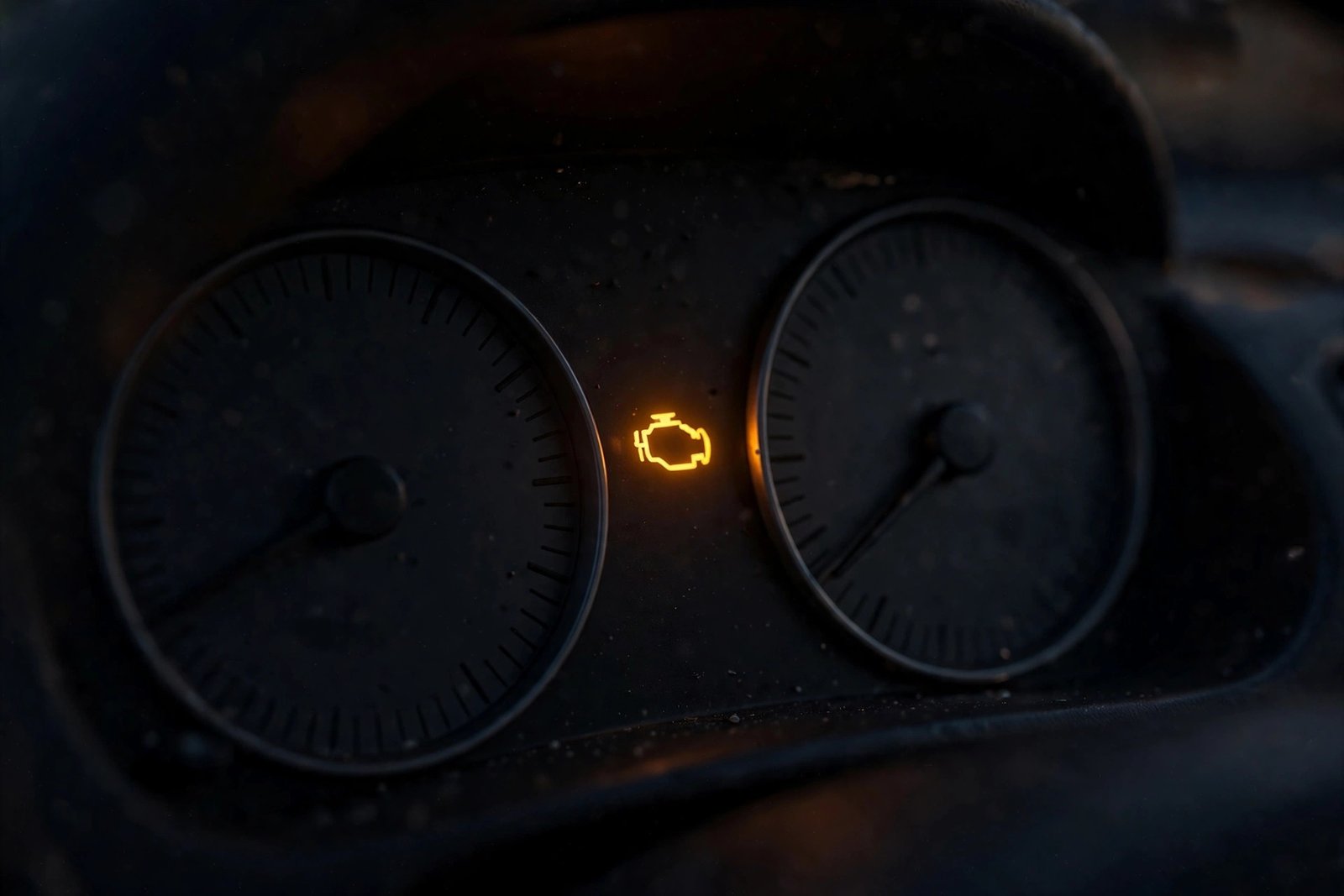
A solid check engine light with a car that drives perfectly normally is one of the most common dashboard mysteries — and one of the most misunderstood. It is rarely an emergency, but it is never nothing. This guide triages it by urgency, lists the most likely causes in order, and gives you a step-by-step plan that starts with the five-minute checks you can do in the driveway.
In this guide, you’ll learn:
- Why a solid light usually means “emissions,” not “engine damage”
- How to tell when the light is actually urgent (solid vs. flashing vs. red)
- The most common causes, in order of likelihood
- A safe step-by-step plan: gas cap, code scan, watch, diagnose
- When to stop and call a mechanic
Urgency Triage: Read This First
| What you see | What it means | What to do |
|---|---|---|
| Solid (steady) amber light, car runs fine | A stored fault — most often emissions-related. The engine itself is usually fine. | Safe to drive. Diagnose within the week. |
| Flashing / blinking light | Active misfire that can destroy the catalytic converter within minutes. | Reduce speed, avoid hard acceleration, get diagnosed immediately. |
| Solid light + the car feels wrong (rough, low power, smoke, smell) | A real drivability fault hiding behind “feels fine” is unlikely — treat it as urgent. | Diagnose as soon as possible; tow if symptoms worsen. |
The Most Likely Causes, in Order
1. Loose or damaged gas cap (most common quick fix)
The evaporative emissions (EVAP) system seals the fuel tank to trap gasoline vapors. The engine computer runs pressure/vacuum tests on that sealed system; a cap left loose, cracked, or with a worn seal fails the test and stores codes like P0455 (large EVAP leak) or P0457 (fuel cap loose/off). Tighten the cap until it clicks, then drive normally — the light usually clears on its own after several successful drive cycles (typically a few days of mixed driving).
2. Failing oxygen (O2) sensor
O2 sensors measure exhaust gases to fine-tune the air-fuel mixture. A failing sensor can drift before it dies, triggering the light while the car still feels normal. The first symptom drivers notice is usually worse fuel economy — a drop of a few MPG on your regular commute is a classic early sign.
3. EVAP system leak (not the cap)
If the cap is tight, the leak is somewhere else in the sealed fuel-vapor system: a cracked rubber hose, a failing purge valve, or a leaking charcoal canister. Small EVAP leaks don’t affect how the car drives at all — which is exactly why they turn on the light on an otherwise perfect-feeling car. Diagnosing these usually requires a smoke test at a shop.
4. Dirty or failing mass airflow (MAF) sensor
The MAF sensor measures incoming air so the computer can meter fuel correctly. Early MAF problems often set a code before you feel anything; later stages bring rough idle or hesitation. A shop can test it with live data before replacing anything.
5. Early-stage misfire (worn spark plugs or ignition coils)
A weak coil or worn plug can misfire just often enough to trip the misfire monitor without making the car shake noticeably. Ignoring intermittent misfires is expensive: raw fuel washing into the catalytic converter can destroy it, turning a minor repair into a four-figure one.
6. Stuck-open thermostat (code P0128)
If the engine runs too cool to reach its designed operating temperature, the computer sets a code — and the car otherwise drives fine. Clues: the temperature gauge reads low, the heater takes forever to warm up, and fuel economy drops.
7. Early catalytic converter efficiency loss
Converter problems start as a code long before you feel power loss or smell rotten eggs. Early diagnosis matters: once efficiency drops far enough, replacement is the only fix.
Your Step-by-Step Plan
- Tighten the gas cap (2 minutes). Click it shut firmly. This alone fixes a surprising share of cases — but give it a few days of normal driving before declaring victory.
- Look, listen, smell. Any rough idle, hesitation under acceleration, rotten-egg smell, or drop in MPG? Note it — these details help the diagnosis enormously.
- Get the code read. Many US auto parts stores scan codes free. Write down the exact code (e.g., P0455) — the code tells you which system flagged the fault, not which part failed.
- Decide by behavior. Light clears after the cap fix and stays off? Done. Light persists with one code? Book a professional diagnosis rather than replacing parts by guesswork — free scans identify the system, not the root cause.
- Don’t clear codes as a “fix.” Clearing the code without fixing the cause just erases the evidence; the light will come back, and you’ll have hidden the freeze-frame data that helps the diagnosis.
When to Stop and Call a Mechanic
- The light is flashing — possible converter-damaging misfire.
- The light comes with any symptom: rough running, power loss, smoke, burning smell, or overheating.
- Multiple codes appear, or the light returns after a code clear.
- The car is due for an emissions inspection — in most states it will fail with the light on.
FAQ
Can I drive for weeks with the check engine light on if the car runs fine?
Usually yes — a steady light with no symptoms is not a breakdown warning. But the longer you wait, the more a small fault (like a failing O2 sensor) can damage an expensive part (like the catalytic converter).
Will the light turn off by itself?
Often, yes — if the fault stops occurring, the computer turns the light off after enough clean drive cycles. The code usually stays stored, which is actually useful for diagnosis.
Why did the light come on right after refueling?
That timing points straight at the EVAP system — usually the gas cap, sometimes an overfilled tank or contaminated fuel.
Does a check engine light always mean an expensive repair?
No. Many of the most common causes on this list are inexpensive fixes. The expensive outcomes happen when small faults are ignored for months.
Sources
- Motorbiscuit — “Will Check Engine Light Turn Off by Tightening Gas Cap?” (P0455, P0457 EVAP codes) — https://www.motorbiscuit.com/check-engine-light-turn-off-tightening-gas-cap/
- Dale’s Auto Care — “What to Do When the Check Engine Light Comes On” (steady vs. flashing vs. intermittent guidance; history codes retained after light goes out) — http://dalesautocare.com/what-to-do-when-the-check-engine-light-comes-on/
- RX Mechanic — “Check Engine Light On, But Car Runs Fine” (causes: gas cap, O2 sensor, MAF, EVAP, spark plugs/coils) — https://rxmechanic.com/check-engine-light-on-but-car-runs-fine/
- Ran When Parked — “Check Engine Light On But Car Runs Fine” (thermostat P0128, catalytic converter early stage) — https://ranwhenparked.net/check-engine-light-on-but-car-runs-fine/