
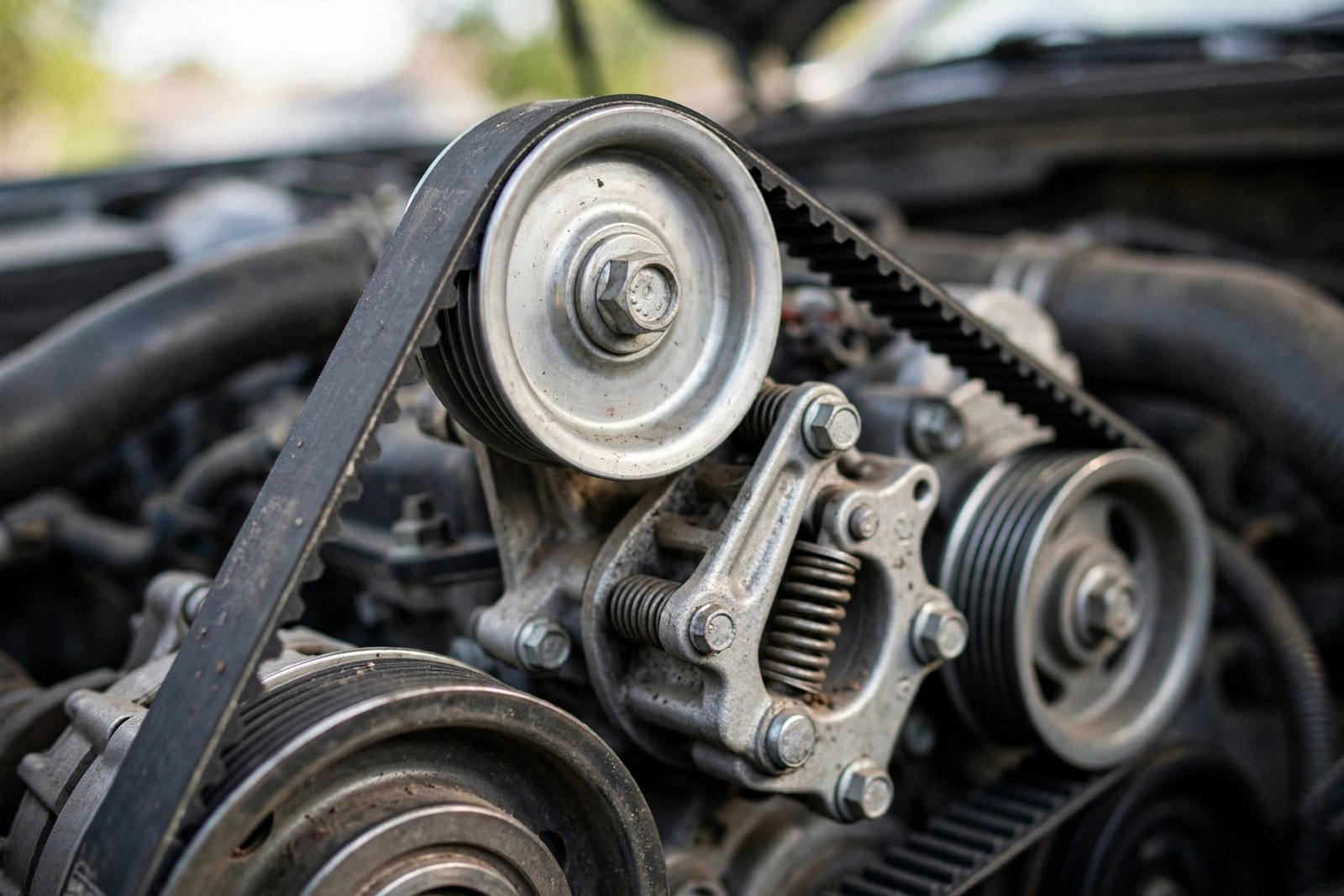
A high-pitched squeal that appears the moment you press the gas pedal — and stops when you lift off — is one of the most common noises drivers hear. The good news: it’s usually a simple, well-understood problem. The key is figuring out whether the squeal follows engine speed (belt and pulleys) or something else entirely.
In this guide, you’ll learn:
- How to tell belt slip from failing bearings and intake whistles
- The most common causes, in order of likelihood
- Simple checks you can do yourself in the driveway
- When a squeal means “stop driving now”
Safety first: Never reach into the engine bay while the engine is running — belts, fans, and pulleys can grab loose clothing, hair, or fingers instantly. All under-hood inspections below are done with the engine OFF and the key out.
Squeal vs Whine: Make Sure You Have the Right Noise
Before diagnosing, confirm the sound. A squeal is a high-pitched, slipping-rubber sound — like a chalkboard or a worn shoe on a gym floor. It typically bursts when you first hit the gas and may fade as engine speed stabilizes. A whine is a steadier, higher tone that rises smoothly with RPM (power steering pump, transmission, turbo).
If your noise is a sustained whine rather than a slip-type squeal, read whining noise when accelerating instead — different causes, different fixes. If the squeal happens only for a few seconds at cold start and then disappears all day, that’s covered in belt squeal on cold start.
The 30-Second Branch: When Does It Squeal?
Only when the AC is on? → The extra load of the AC compressor is making a marginal belt slip. The belt (or tensioner) is the problem — not the AC system itself.
Only for a few seconds on a cold morning? → Rubber belts are stiffer and slip more when cold. Still worth an inspection; cold-only squeals become all-the-time squeals as the belt wears further.
Every time you accelerate, hot or cold? → Worn belt, weak tensioner, or a failing pulley/accessory bearing.
Squeal tracks engine RPM even in Park when you rev it? → It’s belt-related. (Belt speed follows the engine, not the wheels.)
Squeal tracks road speed instead? → Not a belt — look at wheel bearings or tires, or see the hum/whine guides in the Noises & Vibrations hub.
The Most Likely Causes, in Order
1. Worn or loose serpentine (drive) belt (most common)
The serpentine belt drives the alternator, AC compressor, and (on many cars) the power steering pump and water pump. When it wears, glazes, cracks, or stretches, it slips on the pulleys under the sudden load of acceleration — producing the classic squeal. Slippage generates heat, which accelerates wear in a vicious cycle (Gumtree Q&A mechanic note).
2. Weak or failing belt tensioner
The spring-loaded tensioner keeps the belt tight. When it weakens, the belt can’t grip under load — even a healthy-looking belt will squeal. A stretched belt lets the tensioner arm oscillate (“tensioner flap”), which can also produce a rattle at idle (see rattling noise under the car at idle).
3. Worn idler or pulley bearings
Idler pulleys route the belt; the alternator, water pump, and AC compressor each have their own bearings. A dry bearing adds drag, which the belt has to fight — squeal. These often produce a rougher, more “metallic” squeal than pure belt slip.
4. Failing accessory: alternator, AC compressor, or power steering pump
If an accessory’s internal bearings are seizing, the belt slips trying to turn it. A squeal that appeared together with a battery warning light or suddenly heavy steering points here.
5. Throttle-body or intake whistle (sounds like a squeal)
At light throttle, air whistling past a partially open throttle plate or a small intake leak can sound like a faint squeal that changes with pedal position rather than engine RPM. Harmless on many cars (throttle-body whistle), but a vacuum/intake leak deserves a check.
6. Turbo spool (turbocharged cars)
A turbo winding up makes a whistle/whine under acceleration. Some turbo whistle is normal; a sudden loud change is not.
Quick Checks You Can Do Yourself
- The water test: With the engine OFF and cool, flick a few drops of water onto the belt’s inner surface, then start the car and blip the throttle briefly. If the squeal goes quiet for a few seconds and then returns, the belt is slipping (the water temporarily adds grip). This confirms the diagnosis — it is not a fix.
- Visual belt inspection (engine OFF): Look for cracks across the ribs, missing rib chunks, a shiny glazed surface, fraying edges, or contamination (oil/coolant on the belt). Any of these = replace the belt.
- Tensioner check (engine OFF): Press on the belt midway between two pulleys — it should have only slight give. Watch the tensioner arm while a helper cranks the engine briefly: excessive bouncing indicates a weak tensioner.
- AC on/off test: Turn the AC on and off while the squeal is happening. Noise that appears or worsens with the AC on confirms load-related belt slip.
- Listen with a mechanic’s stethoscope or long screwdriver: Carefully (engine idling, hands and clothing clear) touch the handle end to your ear and the tip near — not on — each accessory bracket. A failing bearing announces itself clearly. If this feels unsafe, skip it; a shop does it in minutes.
Do NOT use belt dressing as a “fix.” It can temporarily quiet the squeal but contaminates the belt and pulleys, masking the real problem (weak tensioner, glazed belt) while it gets worse — the consensus among working mechanics (engineerfix.com).
When to Stop Driving and Call for Help
- Squeal + battery warning light: The belt may be failing to drive the alternator. If the belt snaps, you lose charging, power steering assist, and (on many cars) the water pump — the engine can overheat within minutes. Pull over safely and tow it.
- Squeal + sudden heavy steering: Power steering pump isn’t being driven. At parking-lot speeds this is merely difficult; at road speed it can surprise you. Get it checked before your next drive.
- Burning rubber smell with the squeal: The belt is cooking against a seized pulley. Shut the engine off — a snapped or thrown belt can whip around and damage hoses and wiring.
- Squeal that appeared suddenly and loudly after being silent: Something changed — a pulley may be failing or the belt may have jumped. Inspect before driving far.
FAQ
Is it safe to drive with a squealing belt?
A mild squeal that only happens briefly on acceleration is usually safe to drive to a shop — but treat it as a countdown, not background noise. A belt that slips is a belt that’s wearing, and a snapped serpentine belt strands you immediately.
Why does the squeal stop when the engine warms up?
Cold rubber is stiffer and grips less. As the belt warms, it softens slightly and grips better. The underlying wear is still there and progressing.
Can I just tighten the belt?
Most modern cars use an automatic spring tensioner — there is no manual adjustment. A squealing belt on an automatic-tensioner system means the belt is worn or the tensioner is weak. Replacement is the fix.
How is a squeal different from a whine?
Squeal = slip (intermittent, bursts under load, rubbery). Whine = rotating component under strain (steady tone tracking RPM). See whining noise when accelerating for the whine diagnostic path.
Sources
- engineerfix.com — “Why Is My Car Making a Squealing Noise When Accelerating?” (belt slip under load; belt dressing warning; accessory bearing failure) — https://engineerfix.com/why-is-my-car-making-a-squealing-noise-when-accelerating/
- Christian Brothers Automotive — “Car Squeals: Causes, Diagnosis and Solutions” (squeal by scenario: start, turn, accelerate, brake) — http://www.cbac.com/media-center/blog/2025/may/car-squeals-causes-diagnosis-and-solutions/
- JustAnswer — “What causes my car to make a squealing noise when I accelerate” (belt/tensioner diagnosis; belt failure consequences) — https://www.justanswer.com/chevy/19k10-car-makes-squealing-noise-when-accelerating.html
- YourMechanic Q&A — “My car squeals when in reverse & in first gear” (belt stretch under acceleration load) — https://www.yourmechanic.com/question/my-car-squeals-when-in-reverse-in-first-gear-it-stops-when-the-car-is-warmed-up-any-idea-what-s-wrong-by-aaron-v