Ceramic Brake Pads: 6 Pros and 5 Cons Before You Buy
Updated Nov 21, 2026

In This Guide
- The Quick Answer: Ceramic Pads Are the Quiet, Clean Choice for Daily Driving
- What Are Ceramic Brake Pads?
- The 6 Pros of Ceramic Brake Pads
- The 5 Cons of Ceramic Brake Pads
- Ceramic vs Semi-Metallic vs Organic Brake Pads
- What Do Ceramic Brake Pads Cost in 2026?
- How Long Do Ceramic Brake Pads Last?
- How to Check Ceramic Brake Pad Thickness
- How to Bed In New Ceramic Brake Pads
- Good Brake Pad Brands: What to Look For
- When to Choose Ceramic, and When Not To
- Warning Signs Your Brake Pads Need Attention
- Frequently Asked Questions
The Quick Answer: Ceramic Pads Are the Quiet, Clean Choice for Daily Driving
Ceramic brake pads are the default choice on most new passenger cars, and for good reason. They stop quietly, they throw off very little visible dust, they are gentle on rotors, and they usually last longer than the other common pad types. A set of ceramic pads typically lasts 50,000 to 70,000 miles in normal daily driving, according to 2026 parts pricing guides.
They are not the right pick for every car, though. Ceramic pads cost more up front than semi-metallic or organic pads, they can feel a little soft on the first stop on a cold morning, and they are not built for heavy towing, track days, or repeated hard braking down long grades. If you drive a regular car to work, run errands, and take the occasional highway trip, ceramic pads are hard to beat. If you tow a trailer or drive a heavy truck, a quality semi-metallic pad is often the better call.
This guide covers what ceramic pads are made of, the real pros and cons, what they cost in 2026, how long they last, how to check pad thickness, how to bed new pads in, and which brands are worth your money. Brakes are a safety system, so this article stays on diagnosis and decision making. Pad replacement itself is a job for a qualified shop unless you are trained and equipped for it, and any grinding noise, soft pedal, or warning light means stop driving and get help right away.
In this guide, you’ll learn: what ceramic brake pads are made of and how they work; the 6 real advantages of ceramic pads; the 5 drawbacks you should know before you buy; ceramic vs semi-metallic vs organic, side by side; what ceramic pads cost in 2026, parts and installed; how long ceramic pads last and how to check their thickness; how to bed in new pads so they stop smoothly and stay quiet; which brands to trust and when ceramic is the wrong choice.
What Are Ceramic Brake Pads?
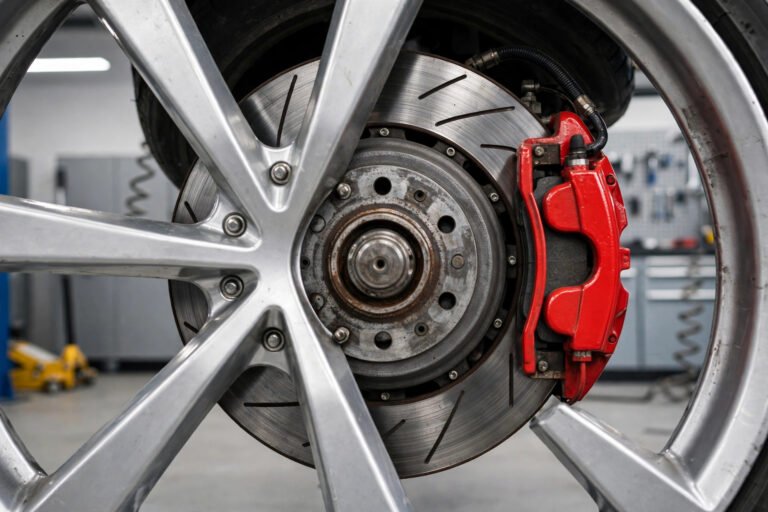
A brake pad is a steel backing plate with a block of friction material bonded to it. When you press the brake pedal, the caliper squeezes the pads against the spinning rotor, and the friction between pad and rotor turns your speed into heat. The material that friction block is made from decides how the brakes feel, how much noise they make, how much dust lands on your wheels, and how fast the pads and rotors wear out.
Ceramic pads are made from a dense ceramic compound blended with fine copper fibers and other fillers. The ceramic base handles heat well and stays stable across a wide temperature range, which is why the braking feel stays smooth and predictable from one stop to the next. The copper fibers add strength and help move heat away from the friction surface. Most modern passenger cars leave the factory with ceramic pads, and many shops fit them as the standard replacement because they suit the way most people actually drive.
There are three other pad materials you will run into. Semi-metallic pads mix 30 to 70 percent metal fibers, such as steel, iron, and copper, into the friction material. Organic pads, also called non-asbestos organic or NAO pads, use fibers such as glass, rubber, and Kevlar with resin binders. Low-metallic NAO pads sit between organic and semi-metallic. Each material trades off noise, dust, cost, and heat handling differently, and the comparison table later in this guide lays those trade-offs out side by side.
One thing ceramic pads are not: carbon-ceramic brakes. Carbon-ceramic rotors and pads are a high performance system found on sports cars and supercars, and they cost thousands of dollars per axle. Regular ceramic pads for a daily driver are a completely different product at a completely different price.
The 6 Pros of Ceramic Brake Pads
1. They Are Quiet
The single biggest reason drivers pick ceramic pads is the quiet. Ceramic compounds produce far less squeal and groan than semi-metallic pads, especially in normal street driving. The material damps vibration at the pad and rotor surface instead of transmitting it, so you get a smooth, silent stop in most conditions. If your current pads squeak every morning and you want that noise gone, ceramic is the first thing to try, along with fresh hardware and proper lubrication of the contact points. If your brakes are already squeaking, read our guide on brakes squeaking when you stop first, because worn pads and glazed rotors can squeal no matter what material you fit.
2. They Keep Your Wheels Clean
Ceramic pads produce fine, light-colored dust that barely shows on a wheel. Semi-metallic pads throw off dark, metallic dust that coats wheels in a gray-black film within days of washing the car. If you have alloy wheels you like to keep looking good, or you are tired of cleaning brake dust off every weekend, ceramic pads make a visible difference. The total amount of dust is not zero, but it is lighter in color, finer, and far less noticeable.
3. They Are Gentle on Rotors
Ceramic friction material is softer than the steel fibers in semi-metallic pads, so it wears the rotor surface more slowly. That matters because rotors are the expensive part of a brake job. Pads that are easy on rotors mean fewer rotor replacements over the life of the car, which can save you more money than the extra cost of the ceramic pads themselves. Shops often find that rotors last through two sets of ceramic pads, while a semi-metallic set can score or wear a rotor enough to need replacement after one.
4. They Last Longer
Ceramic pads typically last 50,000 to 70,000 miles in daily driving, according to 2026 parts and pricing guides. That is longer than organic pads, which often wear out in 25,000 to 35,000 miles, and roughly on par with or slightly longer than a good semi-metallic set used the same way. The wear rate stays steady because the ceramic compound holds its friction level across a wide temperature range instead of wearing fast when it gets hot. Gentle highway driving stretches pad life toward the top of that range, while stop-and-go city driving, hills, and heavy loads pull it toward the bottom. For the full picture on lifespan by driving style, see our guide on how long brake pads last.
5. Braking Feel Stays Consistent
Ceramic pads give a smooth, linear pedal feel. You press the pedal and the car slows in a predictable way, without a sudden grab at the top of the pedal travel. That consistency holds up across a wide temperature range, so the brakes feel the same on a cold morning start and after a long drive in traffic. Semi-metallic pads can feel grabbier when cold and change character as they heat up. For a daily driver, the ceramic feel is calmer and easier to modulate in traffic.
6. They Resist Rust-Related Squeaks
In damp climates and on cars that sit for days at a time, a thin layer of rust forms on the rotor surface. Ceramic pads are less prone to the rust-related squeaking that follows, because the compound does not grab the rust film as aggressively as a metallic pad. That is one reason ceramic pads are popular in regions with wet winters and salted roads, where a car that sits over the weekend can squeal loudly on Monday morning with semi-metallic pads fitted.
The 5 Cons of Ceramic Brake Pads
1. They Cost More Up Front
Ceramic pads are the premium tier of the three common materials. A set of ceramic pads costs 60 to 120 dollars per axle for parts alone in 2026, against 40 to 70 dollars for semi-metallic and 25 to 50 dollars for organic. On a shop quote, ceramic adds roughly 50 to 100 dollars per axle over organic, and 10 to 30 percent over a comparable semi-metallic set. The longer life and lower rotor wear often make up the difference over time, but the bill on the day is higher, and that matters if you are replacing pads on a tight budget.
2. Weaker Cold Bite
Ceramic pads can feel slightly soft on the very first stop of a cold morning. They need a small amount of heat in the friction material before they reach full grip, while semi-metallic pads bite hard right away because the metal fibers grip the rotor immediately. In normal driving this is a minor difference you will barely notice, but if you live somewhere with very cold winters and your first stop of the day is a short downhill run to a stop sign, the difference is real. It is also why many performance and heavy-duty applications stick with semi-metallic.
3. Not Built for Heavy Towing or Track Use
Ceramic pads handle normal street heat without trouble, but they are not the best choice for repeated heavy braking. Towing a trailer, hauling a full load down a long mountain grade, or running track days generates far more heat than daily driving, and semi-metallic pads handle that abuse better. They shed heat faster and keep their bite under repeated hard stops, while a ceramic pad can glaze or fade sooner under the same punishment. If your truck tows regularly, ask your shop about a heavy-duty semi-metallic pad instead.
4. Heat Goes Elsewhere in the System
Because ceramic pads do not shed heat as quickly as semi-metallic pads, more of the heat from braking can transfer into the caliper and brake fluid. On a normal car in normal use this is not a problem, but it is one more reason to keep your brake fluid fresh. Old fluid absorbs moisture and boils at a lower temperature, and hot fluid is what causes a soft pedal on a long descent. If your brake fluid has not been changed in years, ask the shop to check it when the pads are done, and see our guide on how to check your brake fluid level for what to look for between services.
5. They Can Hide a Worn Rotor Problem
This is not a flaw in the pad, but a habit to watch. Because ceramic pads are quiet and smooth, they can mask the early signs of a rotor problem that a noisier pad would have announced. A rotor that is warped or scored can still feel fine under ceramic pads until the wear gets severe. That is why a pad change should always include a rotor measurement, not just a glance. If the rotor is below its minimum thickness or has deep scoring, it needs replacing or resurfacing, no matter how good the new pads feel.
Ceramic vs Semi-Metallic vs Organic Brake Pads
Here is the honest comparison across the three materials most drivers actually choose between.
| Feature | Ceramic | Semi-metallic | Organic (NAO) |
|---|---|---|---|
| Noise | Quietest | Louder, more squeal | Very quiet |
| Brake dust | Low, light-colored | Higher, dark dust | Moderate, dark dust |
| Rotor wear | Gentle | More abrasive | Gentle |
| Lifespan | 50,000-70,000 miles | 40,000-60,000 miles | 25,000-35,000 miles |
| Parts cost per axle | $60-$120 | $40-$70 | $25-$50 |
| Cold bite | Softer at first | Strong right away | Soft |
| Heat handling | Good for street use | Best for heavy use | Weakest, fades first |
| Best for | Daily drivers, commuters | Trucks, towing, mountains | Light cars, tight budgets |
The table makes the trade-off clear. Ceramic wins on noise, dust, rotor life, and longevity. Semi-metallic wins on cold bite and heat handling under hard use. Organic wins on price and quiet, but wears out fastest and fades first when it gets hot.
Ceramic or semi-metallic, which should you pick? For a daily driver that mostly does commuting, school runs, and highway trips, ceramic is the better buy. For a truck that tows, a car that regularly climbs and descends steep grades, or a driver who brakes hard and often, semi-metallic is the safer choice. The right answer depends on how you drive, not on which pad costs more.
What Do Ceramic Brake Pads Cost in 2026?
A ceramic brake pad job has two parts: the parts and the labor. The parts are the pads themselves plus a hardware kit and grease. The labor is the time to remove the wheels and calipers, fit the new pads, check the rotors, and test the brakes.
| Job | Typical cost per axle | Notes |
|---|---|---|
| Ceramic pads, parts only | $60-$120 | One axle set, premium brands at the top end |
| Installed at an independent shop | $200-$300 | Parts plus about 1 hour of labor |
| Installed at a dealer | $300-$500 | Higher labor rate, often OEM parts |
| RepairPal national average, pad only | $335-$394 | Labor $122-$179, parts $213-$215, updated September 3, 2026 |
| Pads plus rotors, per axle | $322-$586 | Jerry estimate, April 2026 |
RepairPal’s national estimate for a pad-only job, updated September 3, 2026, is 335 to 394 dollars per axle, with labor at 122 to 179 dollars and parts at 213 to 215 dollars. That figure excludes taxes, disposal fees, and diagnostics, and it varies by location and vehicle. A small sedan like a Honda Civic lands near the bottom of the range, while a large SUV or a luxury car lands near the top.
If the rotors need replacing too, the bill jumps. Jerry’s April 2026 estimate puts pads plus rotors at 322 to 586 dollars per axle on mainstream cars, and 900 dollars or more on some luxury and performance models. That is why the rotor check matters so much at pad-change time: a rotor that can be reused saves you hundreds of dollars, and a rotor that cannot be reused should never be skipped to save money.
Three things move the price more than anything else. The first is the vehicle: bigger, heavier cars need bigger pads and cost more. The second is the brand: a premium ceramic set from a known maker costs more than a budget set, and usually lasts longer and runs quieter. The third is the shop: a dealer charges a higher labor rate than an independent shop, often 30 to 60 percent more for the same job. Always ask which pad material the quote includes. A low price often means the cheapest pad, and switching from the quoted semi-metallic set to ceramic typically adds 50 to 100 dollars per axle.
How Long Do Ceramic Brake Pads Last?
In normal daily driving, a set of ceramic pads lasts 50,000 to 70,000 miles. That range comes from 2026 parts guides that track lifespan by material, and it lines up with what shops see in practice. Some drivers get more. A car that spends most of its life on the highway, with long stretches between stops, can see ceramic pads last beyond 70,000 miles. Some drivers get less. A car that does short trips in stop-and-go traffic, climbs steep hills, or carries heavy loads can wear a set out in 40,000 miles or less.
The biggest factor is how you drive. Hard braking from speed wears pads far faster than gentle, early braking. Riding the brake pedal downhill, sitting in traffic with your foot on the brake, and late braking at every light all eat pad material. The second factor is where you drive. City miles wear pads roughly twice as fast as highway miles. The third is the car itself: heavier vehicles and cars with more power wear pads faster.
Ceramic pads usually outlast organic pads by a wide margin and last about as long as, or a little longer than, a semi-metallic set used the same way. The difference is that ceramic pads wear evenly and stay quiet as they age, while a semi-metallic set can get noisier and rougher on rotors as it wears down. For the full breakdown of lifespan by driving style, see our guide on how long brake pads last.
How to Check Ceramic Brake Pad Thickness
You do not need to guess when your pads are worn. Pad thickness is a number you can measure, and the numbers are simple.
| Pad condition | Friction material thickness | What to do |
|---|---|---|
| New front pads | 10-12 mm | Nothing, just drive |
| New rear pads | 8-10 mm | Nothing, just drive |
| Half worn | About 6-8 mm | Fine, check again at the next service |
| Plan a replacement | 3-4 mm | Book the job in the next few weeks |
| Replace now | 2-3 mm or less | Get to a shop right away, limit driving |
| Legal minimum in many areas | About 1.5-2 mm | Do not drive on pads this thin |
A new front pad starts with 10 to 12 millimeters of friction material, and a new rear pad starts at 8 to 10 millimeters. Most manufacturers and mechanics agree you should plan a replacement when the friction material reaches 3 to 4 millimeters. At 2 to 3 millimeters the wear indicator, a small metal tab built into the pad, starts to touch the rotor and make a high-pitched squeal when you brake. That squeal is a warning, not background noise. Below 2 millimeters the pad is nearly gone, and the metal backing plate can contact the rotor. That contact scores the rotor, kills braking performance, and turns a pad job into a pad plus rotor job.
You can check thickness yourself with a flashlight and a brake pad gauge. With the wheel turned to full lock, look through the wheel spokes at the edge of the caliper. You will see the pad sandwiched between the rotor and the metal backing plate. Measure only the friction material, not the backing plate. A dedicated pad gauge is the easiest tool for this, because its prongs sit against the backing plate and read the friction layer directly. Check the thickness about every 5,000 miles, or at every tire rotation, and always check both the inner and outer pads, because the inner pad often wears faster.
If you cannot see the pads through the wheel, or you are not comfortable looking, ask the shop to measure them at your next service. Any shop can give you a millimeter reading in a few minutes, and a written measurement beats a guess every time.
Stop driving and get help right away if: you hear a grinding noise when braking, the pedal feels soft or sinks toward the floor, the car pulls hard to one side when you brake, or the brake warning light comes on. A grinding noise when braking usually means the pads are worn through to metal, and every stop after that damages the rotor and lengthens your stopping distance. This is a tow-to-the-shop situation, not a drive-it-tomorrow situation.
How to Bed In New Ceramic Brake Pads
Bedding in, also called burnishing or breaking in, is the process of transferring a thin, even layer of pad material onto the rotor surface. That layer is what the pads grip from then on, and a good bed-in gives you smooth stops, consistent pedal feel, and quiet brakes for the life of the pads. Skip it, and the pads can deposit material unevenly, which causes vibration, noise, and a pulsing pedal.
Many pad makers publish their own bedding procedure, and their instructions win if they differ from the general steps below. For a typical street pad, the standard method is:
- Find a safe, open road. You need a stretch where you can speed up and slow down several times without traffic behind you. An empty industrial road or a quiet rural highway works. Never do bedding stops in traffic, on a steep hill, or anywhere other drivers could be caught out by your repeated slowing.
- Warm up with moderate stops. Speed up to about 35 mph, then brake with moderate pressure down to about 5 mph. Do not come to a complete stop. Speed up again and repeat 5 to 6 times.
- Move to firmer stops. Speed up to 45 to 50 mph, then brake firmly down to 5 to 10 mph, again without coming to a complete stop. Repeat 4 to 5 times. Do not brake hard enough to trigger the anti-lock system. You may notice a slight smell or a wisp of smoke. That is normal: it is the resins in the new pad compound curing under heat.
- Cool down. Drive at a steady speed for 5 to 10 minutes with as little braking as possible. This lets the rotors cool gradually and evenly, which sets the transfer layer properly.
- Park and let the brakes cool. Leave the car parked for at least an hour. Do not hold the brake pedal down or set the parking brake while the brakes are still very hot, because a hot pad held against one spot on the rotor can leave an uneven deposit there.
For the first 400 to 500 miles after new pads are fitted, drive gently and avoid unnecessary hard stops. Normal driving over the first 100 to 200 miles beds most street pads in well enough on its own, so if you are not comfortable doing the controlled procedure, gentle driving is a fine alternative. What matters is avoiding hard stops and full stops with hot brakes in those first few hundred miles.
Do not attempt a bedding procedure if the brakes are grinding loudly, the pedal feels soft, the car pulls hard to one side, a wheel smells hot, or you suspect a bad installation. Those are signs of a problem that needs a shop, not a break-in drive.
Good Brake Pad Brands: What to Look For
The brand matters more than most drivers think. A premium ceramic pad from a known maker uses a consistent compound, fits the caliper properly, and comes with the hardware and shims that keep it quiet. A no-name budget pad can vary from batch to batch, fit loosely, and squeal from day one.
Two names come up again and again in 2026 buying guides. Akebono is widely sold as an original equipment supplier, and its ProACT ceramic line is one of the most commonly fitted premium ceramic pads in the United States. Wagner is another long established maker, and its own guides describe the three common friction materials and how each trades off noise, dust, and wear. Other reputable brands sold by major parts stores include Brembo, Bosch, and PowerStop. The exact best brand for your car depends on fitment, so check the parts catalog for your year, make, and model rather than buying on brand name alone.
When you compare brands, look for these four things. First, exact fitment for your car, including the correct shape, clips, and wear sensor if your car has one. Second, a complete hardware kit in the box: new clips, shims, and grease. Old hardware is a common cause of noise after a pad change. Third, a warranty you can actually use, which is usually longer on premium pads. Fourth, a price that makes sense: a ceramic set that costs half the price of every other ceramic set is usually not the same quality.
Ask the shop which brand and material it plans to fit, and get it written on the quote. If the quote just says brake pads, you do not know what you are paying for.
When to Choose Ceramic, and When Not To
Ceramic pads are the right choice for most drivers, but not all of them. Use this quick decision guide.
Choose ceramic if: you drive a regular car or SUV mostly in town and on the highway; you want quiet brakes and clean wheels; you keep your car for years and value long pad life; you drive gently and brake early; your car came with ceramic pads from the factory and you are happy with how it stops.
Choose semi-metallic instead if: you tow a trailer or haul heavy loads; you drive steep mountain grades regularly; you drive a heavy truck or a performance car; you want the strongest possible cold bite on the first stop; your shop recommends a heavy-duty pad for the way you use the vehicle.
Stick with what the car came with if: you are unsure. The manufacturer chose the pad material for a reason, and matching it is the safest default. Switching compounds changes pedal feel and wear patterns, and on some cars the factory pad is the one the braking system was tuned around.
One more note for electric and hybrid cars. Regenerative braking does much of the stopping on these cars, so the friction pads last far longer than on a gas car, sometimes over 100,000 miles. Ceramic pads suit them well because they stay quiet and resist corrosion during long periods of light use. The same thickness checks still apply, because a pad that sits unused can corrode or crack, and the wear indicator still needs to be able to do its job.
Warning Signs Your Brake Pads Need Attention
Ceramic pads are quiet by design, which means you should pay attention to the signs that do appear. Get your brakes checked promptly if you notice any of these:
- A high-pitched squeal when you brake, which usually means the wear indicator is touching the rotor and the pads are down to 2 to 3 millimeters.
- A grinding or growling noise, which usually means the pads are worn through and metal is touching the rotor. Stop driving and get the car to a shop.
- A brake pedal that feels soft, spongy, or sinks toward the floor. This can mean worn pads, air in the lines, or a fluid problem, and it needs a shop diagnosis.
- The car pulling to one side when you brake, which can mean uneven pad wear or a sticking caliper.
- A vibration or pulsing in the pedal, which can mean uneven pad deposits on the rotor or a warped rotor.
- A brake warning light or a pad wear message on the dashboard.
Brake work is diagnosis only for most drivers. A shop can measure pad thickness, check the rotors, inspect the calipers, and test the fluid in one visit. If a shop tells you the pads are at 3 millimeters, book the replacement within a few weeks. If they are at 2 millimeters or you hear grinding, do not wait.
Frequently Asked Questions
Are ceramic brake pads better than semi-metallic?
For daily driving, yes. Ceramic pads are quieter, produce less visible dust, are gentler on rotors, and usually last longer. Semi-metallic pads are better for heavy towing, steep grades, and track use, because they handle repeated hard braking and bite harder when cold. The best choice depends on how you drive, not on price alone.
Do ceramic brake pads wear out rotors faster?
No. Ceramic pads are gentler on rotors than semi-metallic pads, because the ceramic compound is softer than the steel fibers in a semi-metallic pad. Rotors often last through two sets of ceramic pads. Semi-metallic pads wear rotors faster, which is one of their real long-term costs.
How long do ceramic brake pads last?
Typically 50,000 to 70,000 miles in normal daily driving. Highway driving stretches that toward the top of the range, while stop-and-go city driving, hills, and heavy loads pull it toward the bottom. Check thickness every 5,000 miles or at each tire rotation, and plan a replacement at 3 to 4 millimeters.
Are ceramic brake pads worth the extra cost?
Usually, yes. A ceramic set costs 60 to 120 dollars per axle for parts, against 40 to 70 dollars for semi-metallic, but the longer life, lower dust, and slower rotor wear often make up the difference. If you keep the car for years and value quiet brakes, ceramic is good value. If you are selling the car soon or you tow regularly, a cheaper semi-metallic set can be the smarter spend.
Do ceramic brake pads need to be bedded in?
Yes, like any new pad. Follow the pad maker’s procedure if one is published. Otherwise, do moderate stops from 35 mph and firmer stops from 45 to 50 mph on a safe open road, never coming to a full stop during the cycles, then cool down with a steady drive. Gentle driving for the first 400 to 500 miles also beds street pads in well. Skip hard stops in those first few hundred miles.
Why do my ceramic brake pads still squeak?
A squeak after new ceramic pads usually comes from something other than the pad material: old or missing hardware, dry slide pins, a glazed rotor, or pads fitted without grease on the contact points. A shop can check the hardware and rotor surface quickly. If the squeak started after the pads wore thin, the wear indicator is doing its job and the pads need replacing.
Can I put ceramic pads on any car?
On most passenger cars, yes, as long as the pads are made for your exact year, make, and model. Check fitment before you buy, and keep the same material on both wheels of an axle. Do not mix ceramic on one side and semi-metallic on the other. For heavy trucks, towing vehicles, and performance cars, check with the shop first, because a heavy-duty semi-metallic pad may suit the vehicle better.

lily John
The Fixtorial team writes hands-on car troubleshooting guides for everyday drivers — symptom first, honest costs, and fixes you can verify yourself.