
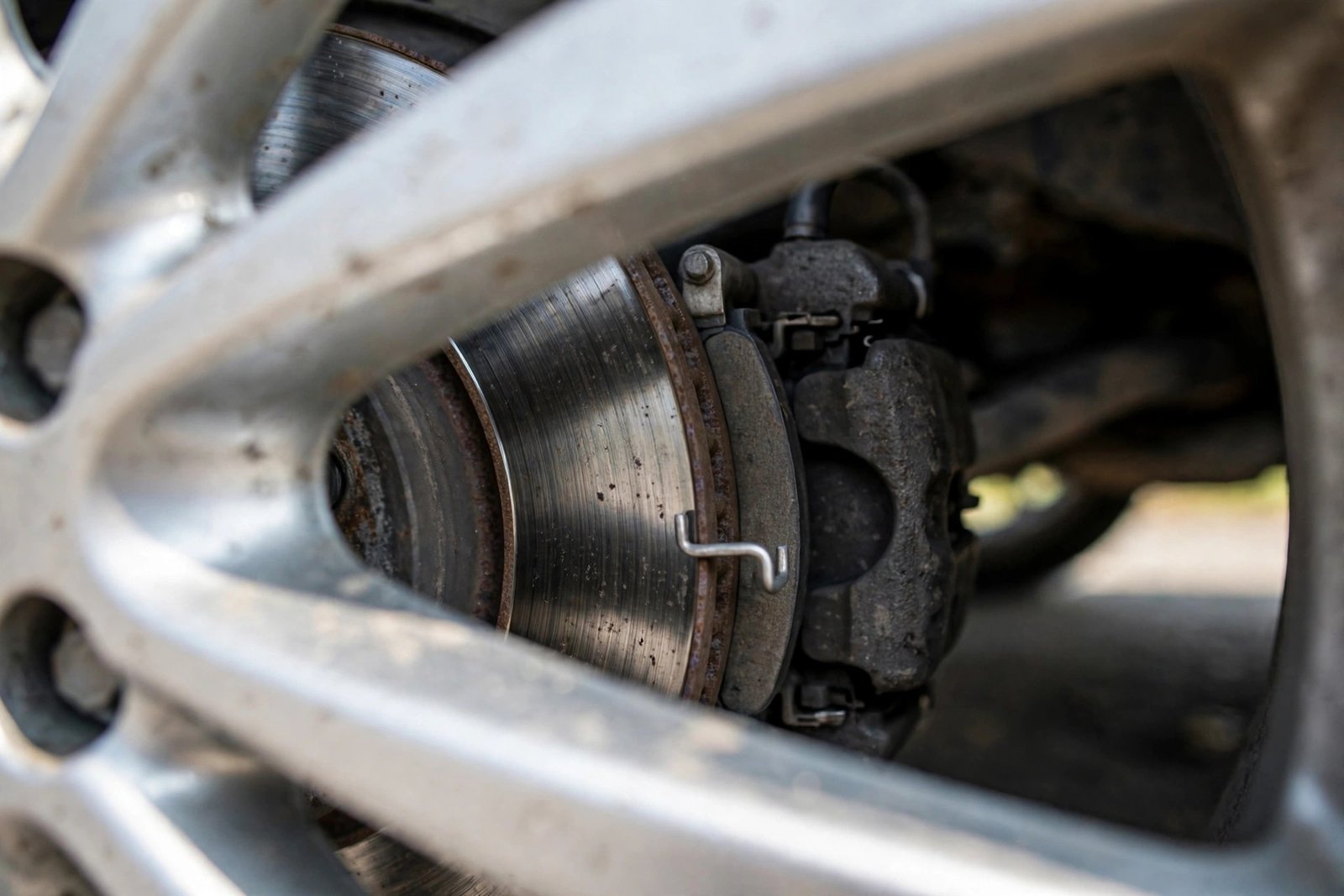
That high-pitched squeak every time you roll to a gentle stop is one of the most common brake complaints in the world — and one of the most misunderstood. The odd thing about it: squeaking is usually loudest during light braking at low speed and disappears when you brake firmly. That’s not a mystery; it’s physics. Light pedal pressure lets the brake pads vibrate at a frequency your ears pick up, while firm pressure clamps everything tight and kills the vibration.
This guide translates the squeak, in order of likelihood, and tells you exactly what to report to a certified mechanic. (Brake work is safety-critical — this guide covers diagnosis only; repairs belong to the pros.)
Safety first: A squeak on its own is rarely an emergency. But if the squeak turns into grinding, the brake pedal feels soft or pulsing, the car pulls to one side, or a brake warning light comes on, get the car to a certified mechanic promptly — those are signs of a real braking problem, not just noise.
In this guide, you’ll learn:
- Why squeaking is loudest at slow speeds and light braking
- The most common causes, in order of likelihood
- How to tell a harmless noise from a wear-indicator warning
- Safe observations you can make without touching brake parts
- What to tell your mechanic so the diagnosis is fast
The Quick Decision Tree: What Does Your Squeak Sound Like?
Squeaks only on the first few stops of the day, then goes away — most likely: light surface rust from overnight moisture. Usually normal; report it only if it never clears.
Constant high-pitched squeal every time you brake, started a few weeks ago — most likely: the pad wear indicator warning that pads are nearly gone. Action: schedule brake service — this is the designed early warning.
Squeak started right after new brakes were installed — most likely: bedding-in noise or missing hardware/shims. Action: mention it to the shop that did the work.
Intermittent squeak, worse after rain or in humidity — most likely: moisture, brake dust, or debris. Usually clears as the brakes warm up and dry.
Squeak plus pulsing, pulling, or a warning light — no longer just noise. Action: see a certified mechanic promptly.
The Most Likely Causes, in Order
1. Brake pad wear indicator (the designed warning)
Most modern brake pads include a small metal tab — the wear indicator, or “squealer” — positioned to scrape against the rotor when roughly 2–3 mm of pad material remains. The result is a deliberate, persistent high-pitched squeal when braking. It’s the single most important squeak to take seriously: it means the pads are due, and ignoring it leads to metal-on-metal contact. grinding noise when braking
What to do: Tell your mechanic the squeak is constant and appeared recently. A shop measures actual pad thickness before quoting.
2. Light surface rust on the rotors
Rotors are bare cast iron. Overnight dew, humidity, or rain leaves a thin film of rust that the first few brake applications scrape off — a brief squeak or light grind that fades within a few stops. This is normal and self-clearing, and it’s the classic “only in the morning” pattern.
What to do: If it clears within a few stops every time, note it and move on. If it doesn’t clear, or only started after the car sat for weeks, have a certified mechanic check for deeper corrosion.
3. Brake dust and road debris buildup
Friction material wears into fine dust that coats pads and rotors; road grit adds to it. Dust and small particles increase stick-slip vibration between pad and rotor — especially at low speed and light pressure, where nothing masks the noise. A sudden onset after driving on gravel or dirt roads points here.
What to do: Note when it started (sudden = debris; gradual = dust/wear). Don’t try cleaning brake parts yourself — report the pattern to your mechanic.
4. Glazed pads or rotors
Excess heat — hard braking, riding the brakes downhill — can harden the pad surface into a shiny glaze with less grip. Glazed surfaces slip and vibrate, producing a squeal that tends to persist regardless of temperature. You’ll often hear it alongside a slightly longer stopping feel.
What to do: A shop identifies glazing by inspecting the pad and rotor surfaces; correction is their call.
5. High-metal-content or mismatched pads
Cheaper semi-metallic pads contain more metal particles, and some aftermarket pads simply run noisier than the factory compound. If the squeak appeared immediately after a pad change and the car stops fine, the pads themselves may be the noise source.
What to do: Tell the shop that installed them when the noise started — pad choice and proper bedding are their domain.
6. Sticking caliper or dry hardware (less common, more serious)
If caliper slide pins corrode or pad hardware (clips, shims) is missing or dry, a pad can sit at an angle and drag against the rotor. Clues that separate this from harmless squeak: the squeak is accompanied by one wheel feeling hotter after a drive, a slight pull when braking, or uneven stopping.
What to do: This one deserves prompt professional attention. Report the heat, pull, or unevenness — those clues point a certified mechanic straight at the caliper.
Simple Observations You Can Make Safely
No wrenches needed — and none required. Diagnosis here is observation only.
- Track the pattern: Morning-only and self-clearing (rust) vs. every stop and getting louder (wear indicator)? Note pedal pressure too — noise that vanishes under firm braking points to vibration rather than wear.
- Locate the wheel: In a quiet area, brake gently with the windows down. A squeak from one corner narrows the diagnosis.
- Check the history: When did it start? After rain? After the car sat? Right after a brake job? Did squealing come first, or did it skip straight to this? History is gold for your mechanic.
- Watch for company: Pulling, pulsing, heat, burning smell, or warning lights turn a noise complaint into an urgency — report all of them together.
When to See a Mechanic
- The squeak is constant on every stop and appeared within the last weeks — wear indicator territory; schedule service before it grinds.
- Squeak plus pulling, pulsing, heat, smell, or a warning light — prompt, minimize driving.
- Noise that started right after a brake job — go back to the shop that did the work.
- Morning-only, self-clearing noise — observe; bring it up at the next service.
What to Tell Your Mechanic
“Squeak when braking” gets you in the door; this gets you an accurate diagnosis fast: which wheel (or “can’t tell”), whether it’s morning-only or every stop, whether it started suddenly or gradually, whether it followed a brake job, rain, or a period parked, and any pulling, pulsing, heat, smell, or warning lights. A good shop will measure pad thickness and inspect the rotor surfaces before quoting anything.
FAQ
Is it safe to drive with squeaky brakes?
Usually, yes — a squeak on its own is typically noise, not failure. The exception is the wear indicator: that’s a warning with a deadline. If it graduates to grinding or comes with pulsing, pulling, or a warning light, minimize driving and see a mechanic.
Why do my brakes squeak only when I stop slowly?
Light pedal pressure lets the pads vibrate at an audible frequency; firm pressure clamps them tight and silences the vibration. Slow speed also means less road and wind noise to mask it.
Will the squeak go away on its own?
Morning rust noise clears after a few stops. Wear-indicator squeal never fixes itself — it only stops when the pads are replaced. Dust-related squeak may fade as conditions change but returns until the cause is addressed.
My brakes squeak in reverse in the morning — same thing?
Related, but with a direction-specific twist: reversing changes the pad contact angle and can amplify the sound of flash rust and worn hardware. If the noise only happens in reverse, that distinction helps your mechanic. brakes squeal in reverse