
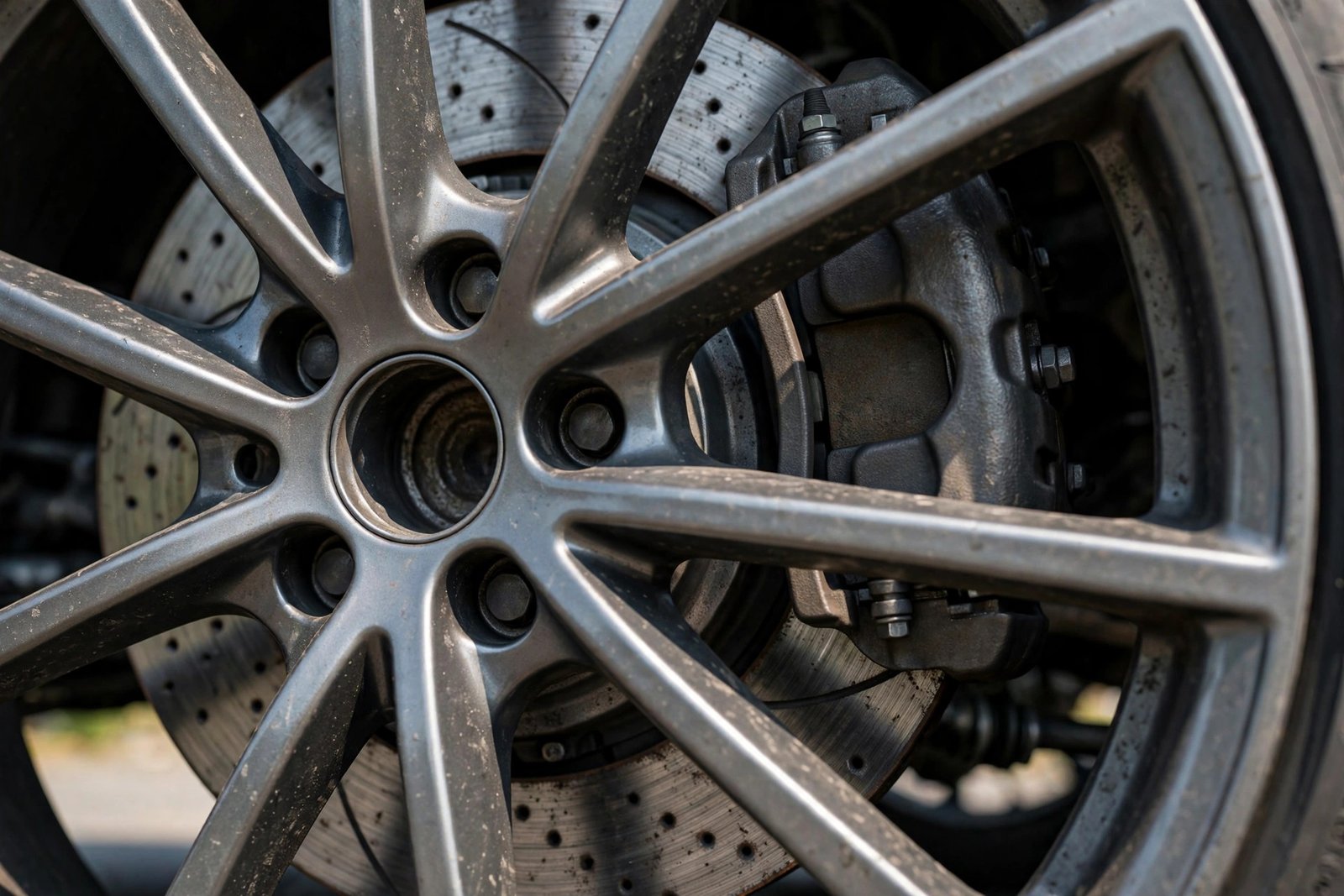
A grinding noise when you press the brake pedal is one of those sounds you shouldn’t ignore. In most cases it means metal is touching metal somewhere in the braking system — and every mile you drive is wearing expensive parts. This guide helps you figure out what’s likely going on and how urgent it is. (Brake work itself belongs to a certified mechanic — this guide is about diagnosis, not repair.)
In this guide, you’ll learn:
- What grinding vs. squealing tells you
- The most common causes, in order of likelihood
- How to tell whether it’s urgent
- Simple observations you can make safely
- What to tell your mechanic so you get an accurate diagnosis
Safety first: Grinding brakes mean reduced braking performance. Drive gently, increase following distance, and get the car to a shop promptly. If braking feels weak, the pedal sinks, or a brake warning light is on, treat it as urgent.
Grinding vs. Squealing — Know the Difference
| Sound | Usually means | Urgency |
|---|---|---|
| High-pitched squeal when braking | Wear indicators (small metal tabs) touching the rotor — pads are getting thin | Schedule service soon |
| Grinding / growling when braking | Pad friction material gone — metal backing plate grinding the rotor | Prompt: rotors are being damaged now |
| Brief grinding first thing in the morning, then clears | Light surface rust on rotors from overnight moisture | Normal-ish: observe; if it always clears within a few stops |
| Grinding that never stops or gets louder | Continuous metal-on-metal contact | Prompt to urgent |
The Most Likely Causes
1. Brake pads worn to the metal (most common)
Pads start with a squeal (wear indicators), and if ignored, the friction material wears away completely. Then the steel backing plate grinds directly against the rotor. Telltale sign: the noise started as squeaking weeks ago and turned into grinding.
2. Heavy rust or corrosion on rotors
Light overnight rust causes brief grinding that clears after a few brake applications — normal. But cars that sit for weeks, or rotors with deep corrosion, grind persistently. Look through the wheel spokes: heavy orange-brown roughness or flaking on the rotor surface is the clue.
3. Debris trapped between pad and rotor
A small stone or road debris can lodge in the caliper and grind against the rotor — often sudden onset, sometimes affecting one wheel only, occasionally with a rhythmic scraping that matches wheel speed.
4. Worn or missing hardware/shims
Anti-rattle clips and shims keep pads positioned quietly. When they corrode or go missing (sometimes after a pad slap without hardware replacement), pads can shift and grind.
5. Sticking caliper
A caliper that doesn’t release keeps the pad pressed against the rotor — grinding plus extra clues: the car pulls to one side, one wheel runs hotter, or you smell hot brakes after driving.
Simple Observations You Can Make Safely
- When does it grind? Only first thing in the morning (rust)? All the time (worn pads)? Only when turning (could be wheel bearing, not brakes)?
- Which wheel? Roll down the windows in a quiet area and brake gently — the sound’s location narrows it down.
- Look through the spokes: Compare rotors side to side. Deep grooves, heavy rust, or a visible lip on the rotor edge are all informative.
- Check for heat: After a normal drive (careful — wheels can be hot), one wheel noticeably hotter than the others suggests a sticking caliper on that corner.
- Note the history: When did it start? Was there squeaking first? Recent brake work? Sitting unused?
Do NOT attempt to disassemble brakes yourself — diagnosis stops at observation. A certified mechanic measures pad thickness and rotor condition properly.
When It’s Urgent — See a Mechanic Right Away If
- Grinding is loud and constant
- The brake pedal feels soft, spongy, or sinks
- The car pulls hard to one side when braking
- A brake warning light is on
- Stopping distances feel longer than normal
- You smell burning from a wheel
What to Tell Your Mechanic
“I hear grinding when braking” is a start — this gets you an accurate diagnosis faster: which wheel (or “can’t tell”), when it started, whether there was squeaking first, whether it’s worse when cold/hot/turning, and any pulling, heat, or warning lights. A good shop will measure pad thickness and rotor runout/thickness before quoting.
Typical Cost Ranges
(Verified 2026-10-13 against current US cost sources; ranges vary by vehicle and region.)
- Brake pad replacement (per axle): roughly $150–$300
- Pads + rotors (per axle): roughly $300–$600+
- Sticking caliper replacement: roughly $200–$500+ per corner
- The expensive lesson: driving on grinding pads destroys rotors — catching it at the squeal stage saves the rotors.
FAQ
Is it safe to drive with grinding brakes?
Short distances, gently, to reach a shop — but understand that metal-on-metal contact is actively damaging the rotors and lengthening stopping distances. Don’t postpone.
Will grinding brakes go away on their own?
Morning surface-rust grinding clears after a few stops. Persistent grinding never fixes itself — it only gets more expensive.
Can I just replace the pads myself?
This guide stays at diagnosis by design. Brake work is safety-critical; improper installation risks brake failure. A certified mechanic is the right call.
How long do brake pads normally last?
Typically 30,000–70,000 miles depending on driving style, vehicle, and pad quality — city stop-and-go wears them fastest.
Why does only one wheel grind?
Single-wheel grinding often means a stuck caliper, trapped debris, or uneven wear on that corner — all worth having inspected promptly.