
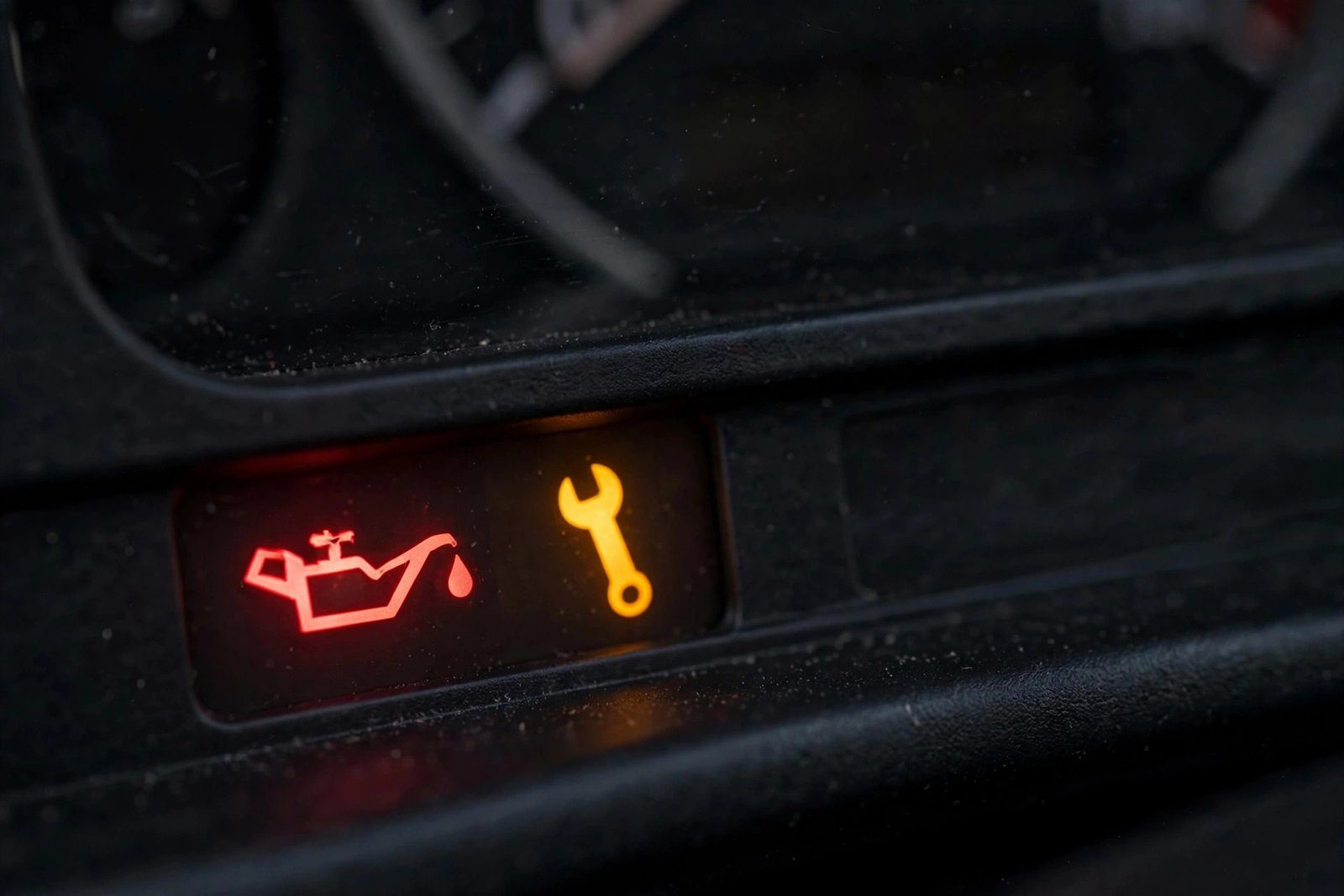
Few dashboard confusions are more dangerous than this one. There are three different oil-related lights, they look similar, and mixing up the harmless one with the critical one can cost you an engine. This guide puts them side by side so you never confuse them again.
In this guide, you'll learn:
- The three oil lights: what each looks like and what it means
- The one rule that decides your response (red vs. everything else)
- Why the maintenance reminder says nothing about your oil level
- What to do for each light, step by step
The Three Oil Lights, Side by Side
| Light | What it looks like | What it means | Urgency |
|---|---|---|---|
| 1. Oil pressure warning | Red oil can (sometimes with a drip) | The engine has lost oil pressure — moving parts are being starved of lubrication right now | STOP the engine immediately |
| 2. Oil level warning (not all cars) | Amber/yellow oil can, sometimes with a wavy line under it | Oil level is low, but pressure is still okay | Top up the same day — don't ignore it for weeks |
| 3. Oil change / maintenance reminder | Wrench icon, "OIL CHANGE REQUIRED," "SERVICE DUE," or an oil-life percentage | A mileage/time-based service timer — it knows nothing about your actual oil condition | Schedule an oil change soon; not urgent |
The One Rule
Red oil can = stop the engine now. Everything else oil-related can wait for a convenient moment. If you remember nothing else, remember the color: red is the engine screaming; amber is the engine asking.
Why the Maintenance Reminder Says Nothing About Your Oil Level
This is the confusion that strands engines. The "oil change required" light is typically driven by an oil life monitor algorithm — it counts miles, engine hours, temperature cycles, and driving conditions, then estimates when the oil's additives are used up. It does not measure:
- How much oil is in the engine (level)
- Whether the oil pump is working (pressure)
- Whether the oil is contaminated
So you can have a glowing "oil change due" message with a perfectly full sump — or, dangerously, a silent reminder system with the oil a quart low. The dipstick is the truth; the reminder is a calendar.
Similarly, the amber level light measures quantity, not pressure. An engine can be full of oil and still lose pressure (failed pump, blocked pickup, worn bearings) — and an engine can be a quart low and still hold pressure. Level ≠ pressure.
What to Do for Each Light
Red oil can (pressure)
- Pull over safely, hazards on.
- Shut the engine off — do not idle, do not "drive to the next exit."
- Wait 10–15 minutes, check the dipstick on level ground.
- Level low? Top up with the correct grade and look for leaks.
- Level normal? Do not restart. Tow it — likely pump, pickup, sensor, or internal wear.
Full guide: oil pressure warning light
Amber oil level light
- Check the dipstick at your next stop (engine off, level ground).
- Top up with the exact grade your owner's manual specifies.
- Recheck in a week — if it's dropping again, you have a leak or the engine is burning oil.
Oil change / maintenance reminder
- Check the dipstick anyway — a 30-second habit that catches low oil the computer never mentions.
- Schedule the oil change. Most manufacturers build in a grace window after the light appears, but don't stretch it for months — degraded oil accelerates engine wear.
- After the service, make sure the reminder is reset — a light that comes back immediately after an oil change usually just means the shop forgot the reset, not that something is wrong.
FAQ
My oil change light is on but the dipstick shows full — is something wrong?
No. The reminder is a timer, not a level sensor. Get the oil changed on schedule and have the reminder reset.
Can low oil level trigger the check engine light?
Sometimes — low oil can set codes related to variable valve timing systems that depend on oil pressure. But low level doesn't always set a CEL, so don't rely on the dash to tell you about oil level. Check the dipstick.
The red oil light flickers at idle but goes out when I rev — what does that mean?
Classic early sign of a weakening oil pump, worn bearings, or oil that's too thin. Get it diagnosed before it becomes a constant light.
Does synthetic oil change which light means what?
No. Synthetic oil lasts longer between changes, but the three lights mean exactly the same things regardless of oil type.
how to check your engine oil level
Sources
- AutoZone — "Why is My Oil Change Light On?" (maintenance reminder vs. oil pressure light; red-light response) — https://www.autozone.com/diy/motor-oil/oil-change-light
- Engineer Fix — "How Long Can I Drive With the Oil Change Light On?" (oil life monitor vs. pressure warning distinction) — https://engineerfix.com/how-long-can-i-drive-with-the-oil-change-light-on/
- WowOwow — "Car Oil Changes: Intervals, Types & Common Problems" (oil level vs. pressure vs. reminder; stop-engine guidance) — https://wowowow.com/automotive/oil-change