
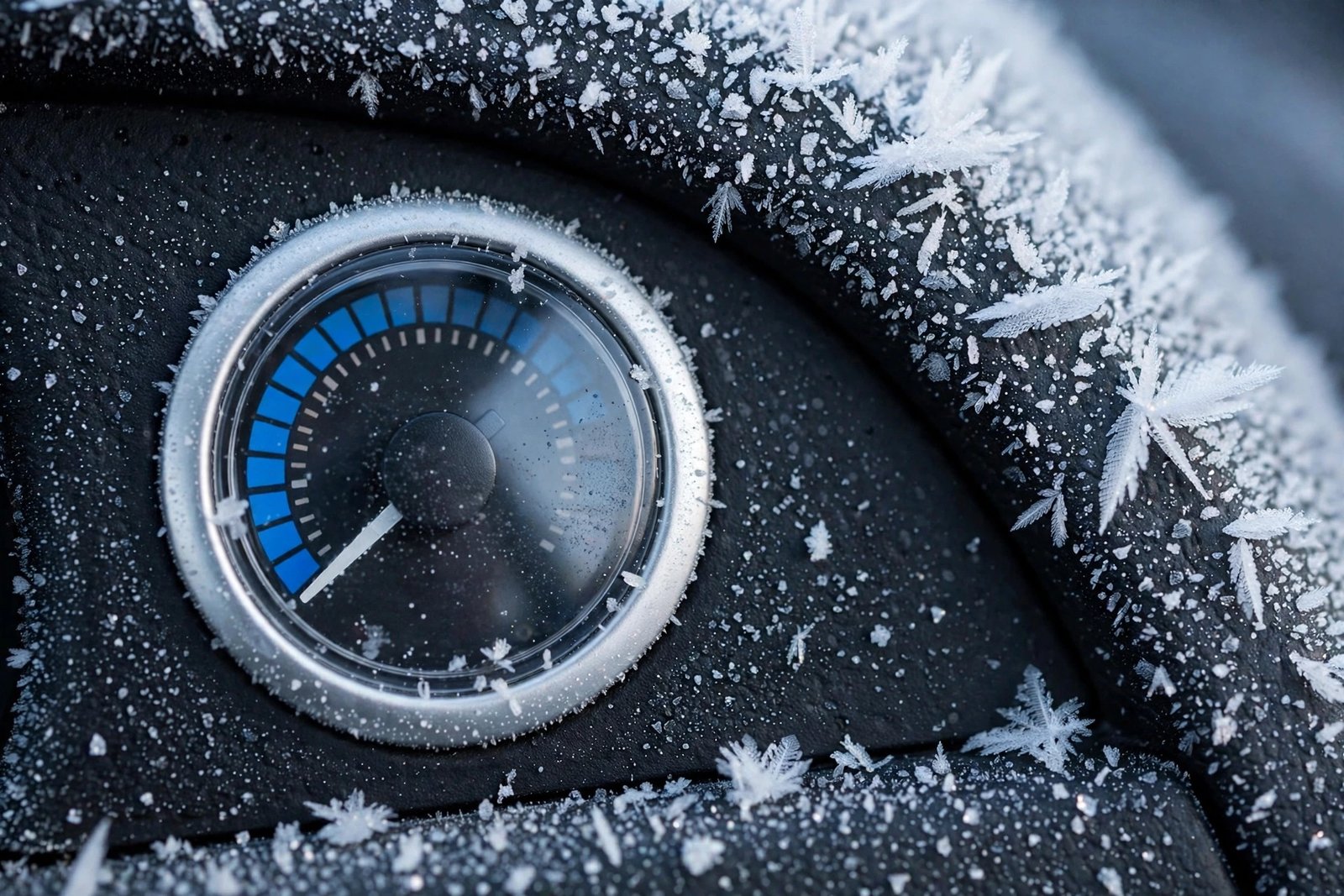
Ten minutes of driving and the temperature gauge still hasn't reached normal — and the heater is lukewarm at best. First, the baseline: on a mild day, most cars reach operating temperature within 3–5 minutes of gentle driving; in freezing weather it can take up to 10. Driving warms the engine far faster than idling. If yours consistently takes much longer than that — or the gauge never reaches the middle — something is preventing the engine from holding its heat. The prime suspect is a thermostat stuck open.
In this guide, you'll learn:
- What's normal warm-up vs. what's a symptom
- Why a stuck-open thermostat causes slow warm-up (and its companion clues)
- The other, less common causes
- Simple checks you can do yourself
Safety first: All checks below are observation-only with a cold or normally-running engine. Never open the radiator or reservoir cap on a hot engine.
Normal vs. Symptom: The Baseline
| Situation | Expected |
|---|---|
| Mild weather, gentle driving | Gauge reaches middle in ~3–5 minutes |
| Freezing weather | Up to ~10 minutes |
| Idling in the driveway | Much slower than driving — idling is the worst way to warm up |
| Gauge never reaches middle, even after 15+ min driving | Symptom — investigate |
| Gauge reaches middle, then drops on the highway | Symptom — classic stuck-open thermostat |
Note: 30 seconds to a minute of idle before driving gently is plenty for modern cars — extended idling wastes fuel and warms the engine slowly.
The Most Likely Causes, in Order
1. Thermostat stuck open (most common)
The thermostat should stay closed until the engine reaches operating temperature (~195–220°F / 90–105°C), then open to let coolant flow to the radiator. Stuck open, coolant circulates through the radiator from a cold start and the engine can't hold its heat. The companion clues are unmistakable:
- Gauge parks below normal or takes far longer than it used to
- Gauge drops on the highway (extra ram-air over-cools the radiator) but creeps up in town
- Weak cabin heat that never gets truly hot
- Worse fuel economy (the engine computer stays in cold-start enrichment mode)
- Sometimes a check-engine light with code P0128 (coolant temperature below thermostat regulating temperature)
2. Cooling fan stuck on
An electric fan running constantly — or a fan clutch locked engaged — over-cools the radiator the same way ram air does. If you hear the fan roaring from a cold start, that's wrong.
3. Low coolant level
Less thermal mass and possible air pockets make warm-up erratic. Check the reservoir cold.
4. Faulty coolant temperature sensor
If the engine feels normal (heat works, no drivability issues) but the gauge reads low, the sensor may be lying. A scan tool reading live coolant temperature settles it — compare with the gauge.
5. Missing or damaged thermostat
Sometimes a previous repair left the thermostat out entirely, or installed the wrong temperature rating. Same symptoms as stuck-open.
Safe Checks You Can Do Yourself
- Time it: Note how long the gauge takes to reach the middle on a normal drive. Compare with the baseline table.
- Highway test: Does the gauge sag on the highway and recover in town? Classic stuck-open thermostat.
- Fan listen: From a cold start, the electric fan should NOT be roaring immediately.
- Heater test: Weak heat + low gauge = the engine genuinely isn't warming up (thermostat). Good heat + low gauge = suspect the sensor.
- Code scan: Many auto parts stores read codes free — P0128 points at the thermostat circuit.
When to See a Mechanic
- Gauge never reaches normal after 15+ minutes of driving
- P0128 code present
- Noticeably worse fuel economy alongside the slow warm-up
- Any overheating episodes mixed in (a thermostat can stick both ways over time)
A stuck-open thermostat won't destroy your engine tomorrow, but running perpetually cool increases wear, emissions, and fuel consumption — and it always gets worse, never better.
FAQ
Is slow warm-up damaging my engine?
Running below operating temperature long-term increases fuel consumption, carbon buildup, and wear — the engine is designed around a specific temperature range. It's not an emergency, but it's not harmless either.
Why is my heat weak too?
The heater runs on hot engine coolant. No fully-warm engine = no fully-hot heat. Fix the warm-up problem and the heat usually follows.
Could it be the sensor instead of the thermostat?
Yes — that's why the heater test matters. Weak heat confirms the engine is genuinely cool (thermostat). Good heat with a low gauge reading points at the sensor.
Do I need to warm up my car by idling?
No — 30 seconds to a minute, then drive gently. Idling warms the engine slowly and wastes fuel; driving warms everything (engine, transmission, tires) together.
Sources
- CarsInfos — "Car Thermostat Failure Symptoms: Signs, Causes & Fixes" (stuck-open pattern; NHTSA overheating guidance reference) — https://carsinfos.com/car-thermostat-failure-symptoms/
- Cati.ca — "Bad Thermostat Symptoms: Overheating And Diagnosis" (stuck-open vs stuck-closed patterns; confirm-before-replacing) — https://www.cati.ca/bad-thermostat-symptoms-overheating-diagnosis/
- BW Garage — "Bad Thermostat Symptoms: 7 Signs + AC & Heater Effects" (slow warm-up, low gauge, P0128, heater effects) — https://bw-garage.com/symptoms-of-a-bad-thermostat-on-a-car/
- Dunn Ram Trucks — "Thermostat Stuck Open: Symptoms in Winter" (gauge sags on highway; weak heat; fuel economy; P0128 per KBB) — https://www.dunnramtrucks.ca/blog/thermostat-stuck-open-engine-not-warming-up/
- Car From Japan — "How Long Should You Warm Up Car Before Driving?" (3–5 min normal warm-up; driving warms faster than idling) — https://carfromjapan.com/article/how-long-should-you-warm-up-car-before-driving/