
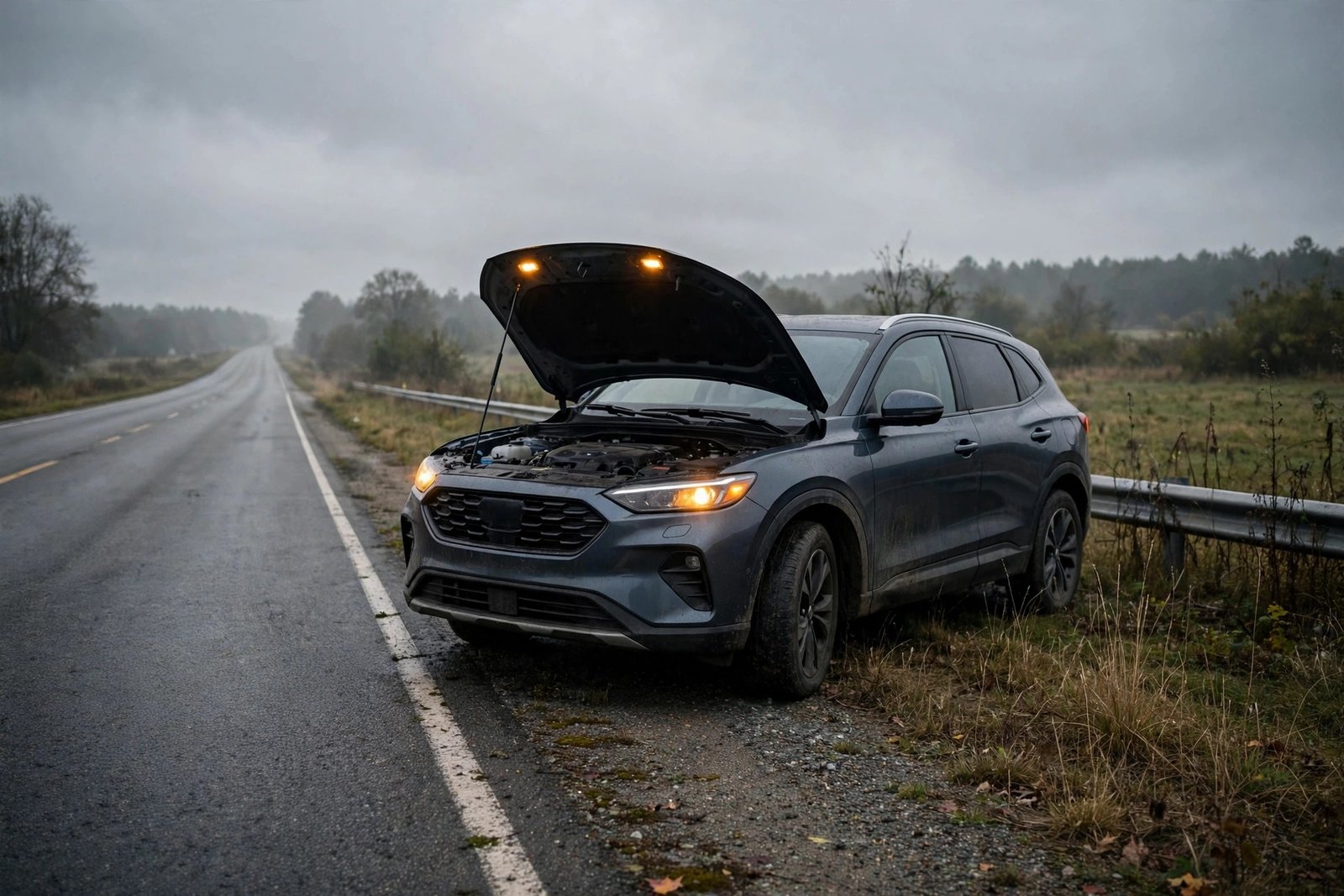
The engine catches — it actually runs — and then it dies. Seconds later. Maybe instantly, like someone flipped a switch. Maybe with a sputter. That brief moment of running is pure diagnostic gold: it proves the starter, battery, and basic spark all work. Something is taking away fuel, air, spark, or permission right after startup. The way it dies tells you which.
In this guide, you’ll learn:
- How to read the death pattern (instant cut vs. sputter vs. idle-only stall)
- The most likely causes, in order of likelihood
- Simple checks you can do yourself
- When to stop and call a mechanic
- Typical repair cost ranges (verified 2026-10-14)
Safety first: If you smell raw fuel, see leaking fuel, or the engine bay is smoking — stop trying to start it and call for a tow. Fuel-system diagnosis beyond the basic checks below is shop work.
Read the Death Pattern
Watch and listen to exactly how it dies. This is your diagnosis:
Catches, then dies within 1–2 seconds — like a switch was flipped — Something is actively cutting the engine: the immobilizer/anti-theft system, or a main power relay dropping out. Check the security light (below).
Sputters, fades, and dies over several seconds — It’s starving: fuel delivery is dying after the initial prime. Suspect the fuel pump or a clogged filter.
Dies the moment you take your foot off the gas, but stays alive with light throttle — Idle airflow problem: dirty throttle body, stuck idle air control valve, or a vacuum leak. The engine can’t hold idle on its own.
Dies with the security/key light flashing on the dash — The immobilizer isn’t recognizing the key. Try your spare key.
Starts and dies only when hot, fine when cold — Heat-sensitive sensor (usually crankshaft position). See won’t start when hot.
Never actually catches — just cranks and cranks — That’s not this article. See cranks but won’t start.
The Most Likely Causes, in Order
1. Immobilizer / anti-theft system cutting the engine (most common for instant deaths)
Many cars allow a brief start, then kill fuel or spark if the key isn’t approved. Clues: a flashing or solid security/key symbol on the dash, or the problem started after a battery disconnect. Try your spare key first — a failing transponder chip in the main key is a classic cause. If the spare works, get the main key reprogrammed or replaced.
2. Failing fuel pump
The pump primes the system (which is why it catches), then can’t maintain pressure — the engine starves seconds later. Clue: no humming from the rear seat area when you turn the key to ON (you should hear it for 1–3 seconds). Tapping the fuel tank lightly while a helper cranks can sometimes wake a dying pump for one start — then drive straight to a shop.
3. Clogged fuel filter
A restricted filter lets enough fuel through for the initial prime but not for sustained running. More likely on high-mileage cars overdue for filter service.
4. Dirty throttle body / stuck idle air control valve
If the engine only dies at idle but runs with your foot on the gas, carbon buildup is choking off idle airflow. Cleaning the throttle body often resolves it — but on electronic-throttle cars, this is best left to a shop (improper cleaning can damage the coating or require a relearn procedure).
5. Vacuum leak
Cracked hoses or a leaking intake gasket lets unmetered air in, leaning the mix until the engine can’t sustain idle. Listen for hissing around the intake with the engine running (briefly).
6. Bad sensors (MAF, crankshaft, camshaft, coolant temp)
A failing mass airflow sensor, crank/cam position sensor, or coolant temp sensor can feed the computer bad data right after startup, causing it to cut fuel or spark. These usually set trouble codes — a scan tool (free code reads at most auto parts stores) points the way.
7. Main/ASD power relay dropping out
The relay that powers the injectors and coils can drop out seconds after startup from heat, corrosion, or a failing relay — an instant, switch-like death. Swapping it with an identical relay from the fuse box is a valid test (check your manual).
8. Weak battery / charging problems (rare here)
A severely weak battery or bad ground can deliver unstable voltage that confuses the engine computer. Rare as the primary cause of start-then-die, but worth ruling out if the battery is ancient. See battery or alternator.
Quick Checks You Can Do Yourself
- Watch the security light: Turn the key to ON. A key/security symbol should light briefly, then go out. Flashing or staying on = immobilizer. Try the spare key.
- Listen for the fuel pump: Key to ON (not START), listen near the rear seat. A 1–3 second hum = pump priming. Silence = pump or relay problem.
- The gas-pedal test: If it stays running with light throttle but dies at idle → idle airflow (throttle body/IAC/vacuum leak).
- Check fuel honestly: A faulty gauge can read a quarter tank on fumes. If in doubt, add a couple of gallons.
- Scan for codes: Free at most auto parts stores. MAF, crank, cam, and temp-sensor faults usually leave codes.
When to Stop and Call a Mechanic
- You smell fuel strongly or see it leaking — stop, tow it.
- The security system is involved and the spare key doesn’t help — immobilizer diagnosis needs dealer-level tools.
- The fuel pump is confirmed dead — in-tank replacement is shop work for most drivers.
- Codes point to sensors buried deep in the engine — get a quote before authorizing.
Typical Cost Ranges
(Observed 2026-10-14; ranges vary widely by vehicle, region, and shop labor rates.)
- Fuel pump replacement: roughly $400–$800 (themotorguy.com, 2026)
- Mass airflow sensor: roughly $150–$300 (themotorguy.com, 2026)
- Crankshaft/camshaft position sensor: roughly $120–$350 (themotorguy.com, 2026)
- Immobilizer key reprogramming: roughly $150–$500 (themotorguy.com, 2026)
- The point of reading the pattern: an instant switch-like death is usually security/relay (cheap to diagnose); a sputtering fade is usually fuel (pricier) — don’t guess between them.
FAQ
Can a bad battery cause the car to start then die?
Rarely, but possible — severely unstable voltage can confuse the engine computer. It’s far down the list; rule out immobilizer and fuel first.
Why does it stay running if I keep my foot on the gas?
Because the problem is idle airflow — a dirty throttle body, stuck idle valve, or vacuum leak. Extra throttle bypasses the idle circuit, masking the fault.
Is it safe to drive it to the shop?
Not if it’s stalling unpredictably — it can die in traffic. If it reliably stays running with light throttle, a careful short drive may be okay; otherwise, tow it.
It only does this on cold mornings. What then?
Cold-start fuel mix problems — often the coolant temperature sensor or carbon buildup. Note the pattern and mention it to the mechanic; it narrows the diagnosis.