
Windshield Defroster Not Working? 8 Causes and Quick Fixes
Updated Nov 22, 2026
In This Guide
- The Quick Answer: Check Three Things Before Anything Else
- Pattern Match: What Each Failure Usually Means
- How a Front Defroster Works (in 30 Seconds)
- 1. Recirculation Is On, or the Fresh-Air Intake Is Blocked
- 2. Blown Fuse, Failed Blower Motor, or a Bad Resistor
- 3. Clogged Cabin Air Filter: A Common Windshield Defroster Not Working Cause
- 4. Mode Door Actuator Stuck — Air Goes Everywhere Except the Windshield
- 5. No Heat: Low Coolant, an Air Pocket, or a Thermostat Stuck Open
- 6. Heater Core Clogged or Leaking — the Shop-Only One
- 7. The Air Conditioning Is Not Drying the Air
- 8. Blocked Defroster Vents, or a Failed Climate Control Switch
- The 5-Minute Diagnostic Order
- What Defroster Repairs Typically Cost
- When to Stop and Call a Shop
- Keeping the Defroster Working All Winter
- Frequently Asked Questions
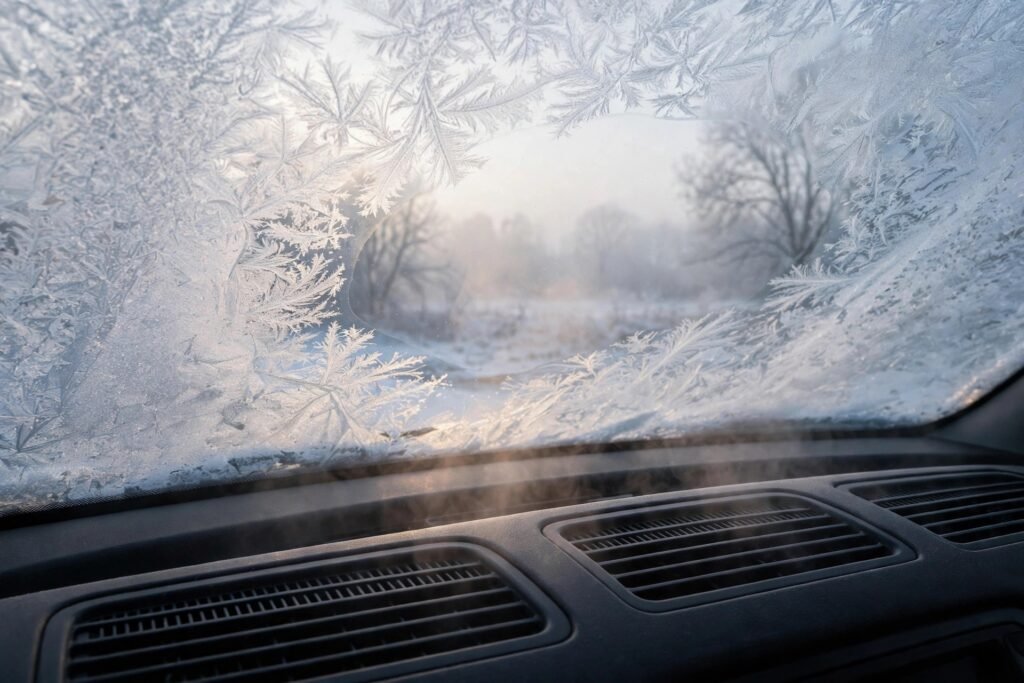
With your windshield defroster not working, you turn the defroster on full, the fan roars, and five minutes later the windshield looks exactly the same — fogged on the inside, frosted on the outside, and impossible to drive behind safely. Or worse, the air comes out fine everywhere except at the windshield, as if the defroster setting itself has stopped working.
A front defroster is not one part. It is a chain: the heater makes heat, the blower moves air, a set of doors aims that air at the windshield, and the air conditioning dries the air so fog actually lifts instead of smearing around. Break any one link and the glass stays cloudy, even when the rest of the heating system seems fine. That is also why the fix is rarely “replace the defroster” — there is no single defroster part to replace. The job is finding which link broke, and most of the time the check that finds it costs nothing.
Safety first: never drive with a fogged or iced windshield hoping it will clear on the road — if you cannot see clearly, you are not ready to drive. Clear the glass fully before moving, scrape ice from the outside rather than pouring hot water on it, and keep the ignition off when checking fuses or connectors. Never open a radiator cap or coolant reservoir cap on a hot engine: the system is pressurised and can scald. If you smell sweet coolant inside the car, see coolant loss, or the temperature gauge climbs toward hot, stop and get the car to a shop — those are not keep-driving symptoms.
The Quick Answer: Check Three Things Before Anything Else
If your defroster is not clearing the glass, run these three free checks first — they solve a surprising share of cases, and they tell you which section of this guide applies to you:
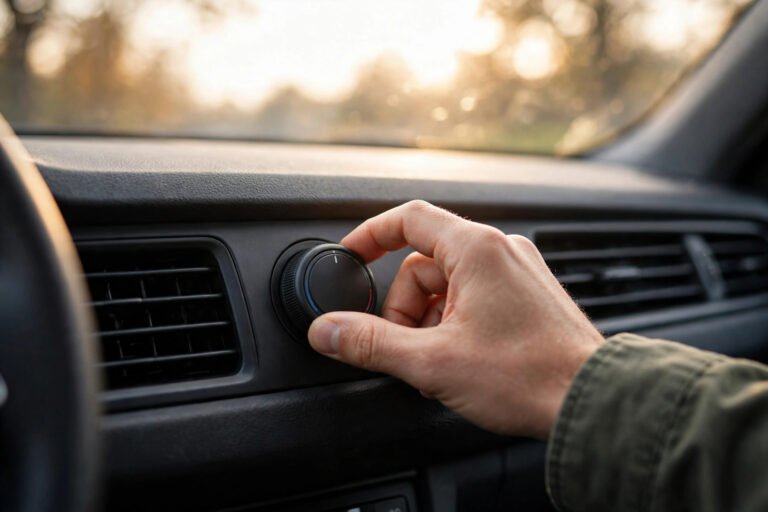
- Recirculation is off and fresh air is selected. Recirculation traps every breath, wet coat, and damp mat’s moisture inside the cabin. In defrost mode the system should pull in drier outside air. If the recirculation light is on, switch it off.
- Air is actually reaching the windshield. Hold a hand at the defroster vents at the base of the windshield, then switch between face, floor, and defrost. If the airflow never moves to the windshield, you have a door problem (cause 4), not a heat problem.
- The air is hot, strong, and dry — or it is not. Hot and strong but the glass still fogs points to the air conditioning (cause 7). Weak air points to the filter or blower (causes 2–3). Air that never warms up points to coolant, thermostat, or heater core trouble (causes 5–6).
In this guide, you’ll learn:
- How a front defroster actually works — and why it needs the AC even in winter
- The 8 most common causes, with the exact check for each
- How to tell a door fault from a heat fault from an airflow fault in two minutes
- What you can fix yourself, and what belongs in a shop
- What defroster repairs typically cost, and how to keep the system working all winter
Pattern Match: What Each Failure Usually Means
| What you notice | Most likely explanation | First check |
|---|---|---|
| Glass fogs again the moment you wipe it, even with hot air blowing | Recirculation on, or the AC is not drying the air | Recirculation off; does the AC blow cold in summer? |
| No air from any vent, on any setting | Blown fuse, failed blower motor, or bad switch | Fuse first, then fan speeds |
| Air only on the highest fan speed | Failed blower motor resistor | Fan-speed test (cause 2) |
| Weak air from every vent | Clogged cabin air filter or a tired blower motor | Cabin filter (cause 3) |
| Strong air from the face or floor vents, but nothing at the windshield | Mode door actuator stuck or broken | Vent-switch test, listen for clicking (cause 4) |
| Air flows but never gets properly hot | Low coolant, air pocket, or thermostat stuck open | Coolant level cold, temperature gauge (cause 5) |
| Sweet smell inside, fog that smells sweet, or coolant disappearing | Heater core leaking | Shop diagnosis — do not keep topping up and driving (cause 6) |
| Hot, strong air but the glass stays foggy | AC compressor not dehumidifying | AC performance in warm weather (cause 7) |
| Defroster worked, then slowly got worse over months | Clogged filter, weakening blower, or a door wearing out | Filter first, then causes 2 and 4 |
How a Front Defroster Works (in 30 Seconds)
Engine coolant, heated by the engine, flows through a small radiator behind the dashboard called the heater core. The blower motor pushes cabin air across that core, warming it, and a set of doors — moved by small electric motors called actuators — aims the warmed air up through the vents at the base of the windshield. On most cars, selecting defrost also switches the air conditioning compressor on, even in winter. The compressor is not there to cool you: it dries the air by passing it over the cold evaporator, wringing moisture out before the air is heated and blown at the glass. Dry, warm air clears fog. Warm, humid air just moves it around. That is why a defroster can blow hot air and still fail — if the air is never dried, the fog has nowhere to go.
Note the difference from the rear window: the rear defroster is an electric heating grid printed on the glass, a completely separate system with its own fuse, switch, and grid lines. Nothing in this guide applies to it, and a working rear defroster tells you nothing about why the front one failed.
1. Recirculation Is On, or the Fresh-Air Intake Is Blocked
This is the most common “fault” that is not a fault at all, and it is the first thing to rule out because the fix is a button press.
Recirculation reuses cabin air instead of pulling in outside air. That is useful briefly — for maximum air conditioning on a hot day, or for a few seconds behind a smelly truck — but left on in winter it traps humidity inside. Four people breathing, wet coats, snow tracked onto the mats, and a damp cabin filter all add moisture, and the defroster ends up blowing humid air at a cold windshield. The glass fogs, you wipe it, and it fogs again, because the moisture source never leaves the car.
The check: with the engine running and the defroster on, make sure the recirculation indicator is off and the system is set to fresh air. Many cars switch to fresh air automatically in defrost mode — if yours does not, switch it manually. Then check the fresh-air intake itself: on most cars it sits under the windshield cowl, below the wipers. Leaves, pine needles, and snow packed over that grille starve the whole HVAC system of air and can leave the defroster wheezing even on full fan. Clear it by hand with the engine off.
The fix: fresh air on, intake clear, and give the system a minute. If the glass starts clearing, you have found it. Keep recirculation off whenever you are defogging, and save it for short bursts only.
2. Blown Fuse, Failed Blower Motor, or a Bad Resistor
If no air comes out of any vent, the problem is upstream of the defroster entirely: the blower is not moving air at all. Work in this order, cheapest first.
Blown fuse. The blower circuit is fused, and a blown fuse cuts power to the fan completely. Find the blower/HVAC fuse in your owner’s manual fuse diagram, pull it with the ignition off, and inspect it — a broken wire inside the fuse is visible on most blade fuses. Replace it only with the same amperage. If the new fuse blows again immediately, there is a short in the circuit: stop replacing fuses and book a shop, because repeatedly feeding a short risks wiring damage. If your car has a habit of blowing fuses elsewhere, that pattern points to the same kind of electrical fault.
Blower motor. A blower motor that has failed makes no sound and moves no air on any speed. Motors wear out gradually — brushes and bearings degrade over years of running in every season — so a defroster that got weaker over months before dying outright often ends here. A tap test is sometimes quoted online, but it is not a diagnosis: if the motor is dead, it needs testing for power and ground, then replacement if power arrives and the motor still does not run. That test and replacement is a shop job on many cars, because the motor can sit deep behind the dashboard or glovebox.
Blower motor resistor (fan only works on high). This is the classic tell: the fan works on the highest speed and on no other speed, or it works on some speeds and not others. Lower speeds run through a resistor pack that drops the voltage; the highest speed bypasses it. When the resistor pack fails, only the bypass speed survives. On manual climate systems the resistor is often accessible near the blower motor; on automatic climate cars a control module does the same job and the diagnosis needs a scan tool. Either way, “only works on high” is one of the most reliable symptom-to-part matches in HVAC diagnosis, and it is worth naming to a shop exactly that way.
3. Clogged Cabin Air Filter: A Common Windshield Defroster Not Working Cause
If the fan sounds healthy but the airflow at every vent feels weak — defroster included — the cabin air filter is the prime suspect, and it is also the cheapest genuine fix on this list.
The cabin filter traps pollen, dust, and debris before air enters the cabin. Left unchanged, it packs solid, and airflow drops across the whole system: the heater feels feeble, the AC feels feeble, and the defroster cannot push enough warm, dry air at the glass to keep up with condensation. AutoZone’s defroster guide puts the usual replacement interval at every 15,000 to 30,000 miles, and cars parked under trees, driven on dusty roads, or used with the fan on constantly will clog faster.
The check: the filter usually lives behind the glovebox or under the cowl, and the owner’s manual shows the location. Pull it out and hold it to the light. If you cannot see light through it, or it is matted with leaves and grey dust, it is done. A filter that smells musty when the fan runs is another giveaway.
The fix: a new filter, fitted in the correct airflow direction (there is usually an arrow on the frame). This is one of the few HVAC jobs most owners can do with no tools in a few minutes, and it is worth doing before paying for any deeper diagnosis — a shop will check it first anyway, and a clogged filter can mimic a failing blower convincingly.
4. Mode Door Actuator Stuck — Air Goes Everywhere Except the Windshield
This is the cause drivers describe as “the defroster itself is broken,” because the fan works, the air is hot, and yet nothing comes out of the windshield vents.
Inside the HVAC housing, doors direct air to the face vents, the floor, or the windshield. A small electric motor — the mode door actuator — moves the mode door when you change settings. When that actuator fails, or its plastic linkage breaks, the door sticks in one position. Air keeps flowing, just to the wrong place: strong at your feet or face, nothing at the glass. The opposite fault exists too — air stuck on defrost no matter what you select — which is the same part failing in the other direction.
The check: with the engine running and the fan on a middle speed, switch slowly between face, floor, and defrost, and listen. On many cars you can hear the doors thump or whir as they move. A repetitive clicking or grinding noise from behind the dashboard when you change settings is a strong actuator clue: the motor is trying to move a door whose gears are stripped, so it clicks against the stop. Then hold a hand at the windshield vents: if airflow never increases there in defrost mode while the floor or face vents stay strong, the door is not moving.
The fix: actuator replacement is a fiddly job — the part is small and often inexpensive, but reaching it can mean working in tight dashboard space, and on some cars the dashboard has to come partly apart. On automatic climate systems, a scan tool can command the doors and confirm the fault before anything is dismantled, which is worth asking a shop to do rather than replacing parts by guesswork. This is a diagnosis-and-replacement job, not a dashboard-disassembly DIY project for most owners.
5. No Heat: Low Coolant, an Air Pocket, or a Thermostat Stuck Open
If the air at the windshield is strong but never gets properly hot, the heater core is not receiving hot coolant — and the three usual reasons are all in the cooling system, not the HVAC controls.
Low coolant. The heater core sits high in the system on many cars, so it is one of the first things starved when coolant runs low. A small leak, a weeping hose, or coolant lost over time can leave the core partly filled, and partly filled means partly heated. Check the level only when the engine is cold, in the overflow reservoir against its markings. If it is low, top up with the coolant type your manual specifies — mixing types is a bad idea — and then look for why it dropped: puddles under the car, a sweet smell, or a level that keeps falling all point to a leak that needs finding, not just topping up.
Air pocket. After cooling-system work, or after a slow leak lets air in, a trapped air pocket can block flow through the heater core even with a full reservoir. Symptoms include heat that comes and goes, gurgling behind the dashboard, and a temperature gauge that behaves oddly. Bleeding the system — releasing trapped air by the procedure in the manual — is a shop or experienced-DIY job, because it involves hot coolant if done wrong. Never open the system hot.
Thermostat stuck open. The thermostat holds coolant in the engine until it reaches operating temperature, then opens to let it circulate through the radiator. If it sticks open, coolant circulates through the big radiator from the start, the engine never fully warms up, and the heater core receives only lukewarm coolant. Clues: the temperature gauge reads low or takes far longer than usual to rise, the heater is lukewarm at idle but improves slightly at highway speed, and fuel economy may dip a little in cold weather. Thermostat replacement is a routine shop job, and it fixes both the heater and the engine running too cool.
6. Heater Core Clogged or Leaking — the Shop-Only One
The heater core is a small radiator, and like any radiator it can clog with corrosion and sediment over years, or it can leak. Both kill defroster performance, and both are firmly shop territory because the core lives behind the dashboard.
Clogged core. A partially blocked core passes some coolant but not enough, so the air coming off it is lukewarm even with a healthy engine temperature and a full coolant level. One diagnostic clue a shop uses is temperature: with the engine warm and the heater on, the two heater hoses going through the firewall should both feel hot. If one is hot and the other is much cooler, flow through the core is restricted. Flushing sometimes helps a mild restriction; a severely blocked core needs replacement.
Leaking core. This one announces itself: a sweet, syrupy smell inside the car, a greasy film on the inside of the windshield that smears when wiped and keeps coming back, damp carpet on the passenger footwell, or coolant level that keeps dropping with no puddle under the car. That film is coolant vapour condensing on the glass — and it will defeat the defroster no matter how well the fan and doors work, because the moisture source is inside the HVAC housing itself. Stop driving on a leaking core beyond getting to a shop: coolant loss leads to overheating, and coolant vapour in the cabin is not something to breathe for a commute.
Cost and scale. AutoZone’s defroster guide notes that heater core replacement often requires dashboard disassembly, taking roughly six to ten hours, with total costs in the range of $500 to $1,500 depending on the vehicle. That is why verifying the diagnosis first — with a coolant pressure test and a flow check — matters so much: it is an expensive job to do on a guess, and a clogged filter or stuck thermostat can mimic it.
7. The Air Conditioning Is Not Drying the Air
This is the cause most drivers never suspect, because it fails in summer first and shows up in winter second.
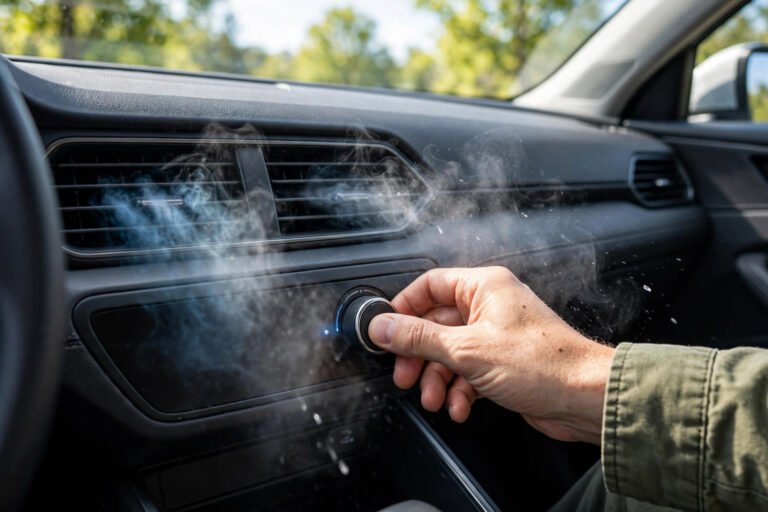
Fog is condensation: warm, moist cabin air hitting cold glass. Warm air alone melts frost on the outside of the glass, but it does not clear condensation on the inside unless the air is also dry. That is why most cars run the AC compressor automatically in defrost mode. The compressor drives refrigerant through the evaporator, which chills and dehumidifies the air before it is reheated and blown at the windshield. Dry, warm air clears fog fast. Humid, warm air does not.
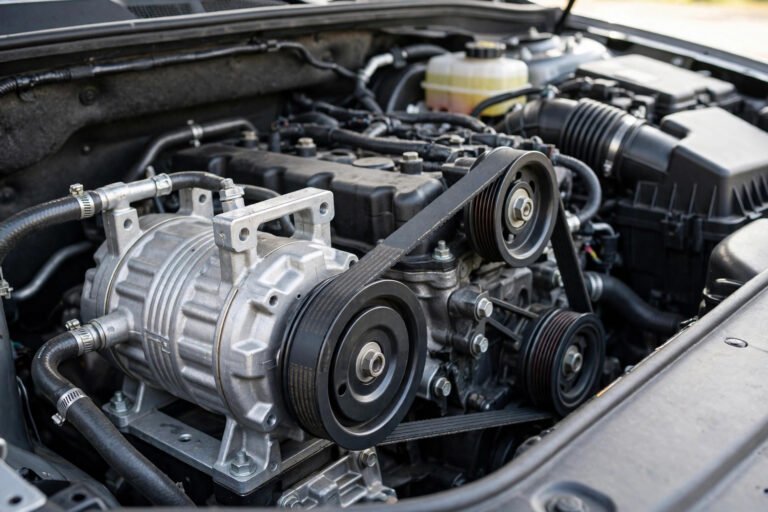
The check: think back to summer. Did the AC blow properly cold? If the AC was weak, warm, or dead in summer, and now the defroster blows hot air that never clears the glass, you are very likely looking at the same fault: low refrigerant from a slow leak, a compressor clutch that no longer engages, or another AC system failure. The defroster did not break in November — the AC broke months earlier, and winter is when the missing dehumidifying finally matters.
The fix: AC diagnosis is shop work. Refrigerant handling requires proper equipment and is not a DIY top-up job, and a compressor that will not engage needs electrical and pressure testing before any part is replaced. When you describe the problem, tell the shop both halves — “the AC was weak in summer, and now the defroster won’t clear the glass” — because that history points them straight at the AC system instead of a heating fault that is not there. Note that on very cold days some systems deliberately keep the compressor off below a temperature threshold to protect it; a shop can tell you whether that applies to your car, but a compressor that never engages in mild weather is a fault, not a feature.
8. Blocked Defroster Vents, or a Failed Climate Control Switch
Two smaller causes round out the list, and both are worth checking before a shop visit because they are cheap to rule out.
Blocked vents and intake. The defroster vents at the base of the windshield are a magnet for objects: a parking pass, a phone mount pad, a dashboard mat, or a sunshade left draped over them blocks the very slots the air must exit through. Inside the housing, small objects dropped down the defroster slots can jam a door. Outside, the fresh-air intake under the cowl can pack with leaves and snow (see cause 1). Clear the vents and the intake, with the engine off, and retest before assuming a deeper fault.
Climate control switch or module. The defroster button, the mode knob, or the climate control module itself can fail — worn contacts, a button that no longer registers, or a module that stops commanding the doors. Clues: the defroster indicator never lights, other climate buttons behave erratically, or the system ignores mode changes entirely while the fan itself works. AutoZone’s guide puts switch replacement roughly in the $100 to $300 range including labour, but module diagnosis on automatic systems needs a scan tool, so this is a “describe the exact behaviour to the shop” item rather than a parts-guessing one.
The 5-Minute Diagnostic Order
Work through these in order, and stop at the first one that explains your symptom — most defroster failures are found in the first three steps:
- Recirculation off, fresh air on, intake clear. Engine running, defroster on full, temperature on hot.
- Hand at the windshield vents. Switch between face, floor, and defrost. Air must move to the windshield in defrost mode. If it never does, suspect the mode door (cause 4). If no air comes from any vent, suspect fuse, blower, or resistor (cause 2).
- Feel the air. Weak everywhere: cabin filter (cause 3). Strong but never hot: coolant, air pocket, or thermostat (cause 5). Hot and strong but the glass stays foggy: AC dehumidifying (cause 7).
- Smell and look. Sweet smell, greasy windshield film, or falling coolant: heater core (cause 6) — shop, promptly.
- Listen. Clicking or grinding behind the dashboard when changing modes: actuator (cause 4). Silence from the fan on every speed: fuse or blower (cause 2).
What Defroster Repairs Typically Cost
Costs vary widely by vehicle, region, and labour rates, so treat these as planning ranges from AutoZone’s defroster troubleshooting guide (updated March 2026), not quotes for your car. Get a local quote once the fault is identified:
| Repair | Typical range (AutoZone guide) |
|---|---|
| Fuse replacement | Under $10 |
| Blower motor resistor | $50 to $150, including labour |
| Blower motor replacement | $150 to $500 |
| Climate control switch replacement | $100 to $300 |
| Heater core replacement (dashboard removal, roughly 6–10 hours) | $500 to $1,500 |
A cabin filter is usually the cheapest part on this list and is often owner-replaceable. A mode door actuator’s part cost is usually modest, but labour depends heavily on how buried it is behind your dashboard — ask for the labour time, not just the part price, when comparing quotes.
When to Stop and Call a Shop
Some defroster checks are safe driveway work: switching recirculation off, clearing the intake and vents, inspecting a fuse with the ignition off, and replacing a cabin filter. Stop and book a professional if you hit any of these: a fuse that blows again immediately, coolant loss or a sweet smell, a temperature gauge climbing toward hot, a blower motor that needs power testing, an AC system that needs refrigerant work, or any repair that requires dashboard removal. The heater core and the mode doors both live in that category, and a wrong guess there is an expensive one.
Keeping the Defroster Working All Winter
A few habits keep the system effective through the cold months, and they are mostly the same checks above done early: replace the cabin filter before winter rather than in the middle of it, keep the cowl intake clear of leaves and snow, run the AC for a few minutes periodically even in winter (the system does this automatically in defrost mode on most cars), and do not leave recirculation on after the cabin is warm. If you are preparing the car for winter generally, our guide to how to winterize your car covers the wider cold-weather checklist, and if the glass itself keeps misting for reasons beyond the defroster, our guide on why a windshield keeps fogging up inside walks through the moisture sources. A fuse that keeps failing is a separate warning sign — see our guide on why a car fuse keeps blowing — and if visibility is also suffering from the wipers rather than the glass, our windshield wipers not working guide covers that side of winter visibility.
Frequently Asked Questions
Why does my defroster blow air but the windshield stays foggy?
Because clearing fog needs dry air, not just warm air. If recirculation is trapping humid cabin air, or the AC compressor is not dehumidifying, hot air will keep the glass foggy. Switch recirculation off first, then suspect the AC system.
Why does air come out of the floor vents but not the windshield on defrost?
The mode door that aims air at the windshield is stuck, usually because its actuator failed. Listen for clicking behind the dashboard when you switch modes — that is the classic actuator symptom.
Why does my defroster only work on the highest fan speed?
The blower motor resistor has almost certainly failed. Lower speeds run through the resistor; the highest speed bypasses it, which is why only that speed survives.
Is it safe to drive if the defroster is not working?
Not until the glass is fully clear. A fogged or iced windshield is a crash risk, and in many places driving with an obscured windshield can also draw a ticket. Clear the glass before moving, and fix the underlying fault rather than driving on a workaround.
Can low coolant really stop the defroster?
Yes. The heater core is high in the cooling system, so it is starved early when coolant runs low, and the defroster gets lukewarm air or none at all. Check the level cold, top up with the correct coolant type, and find out why it dropped.
Does the rear defroster have anything to do with this?
No. The rear defroster is an electric grid on the back glass with its own circuit. A working rear grid tells you nothing about the front HVAC system, and front defroster faults do not affect it.

lily John
The Fixtorial team writes hands-on car troubleshooting guides for everyday drivers — symptom first, honest costs, and fixes you can verify yourself.
One Comment