
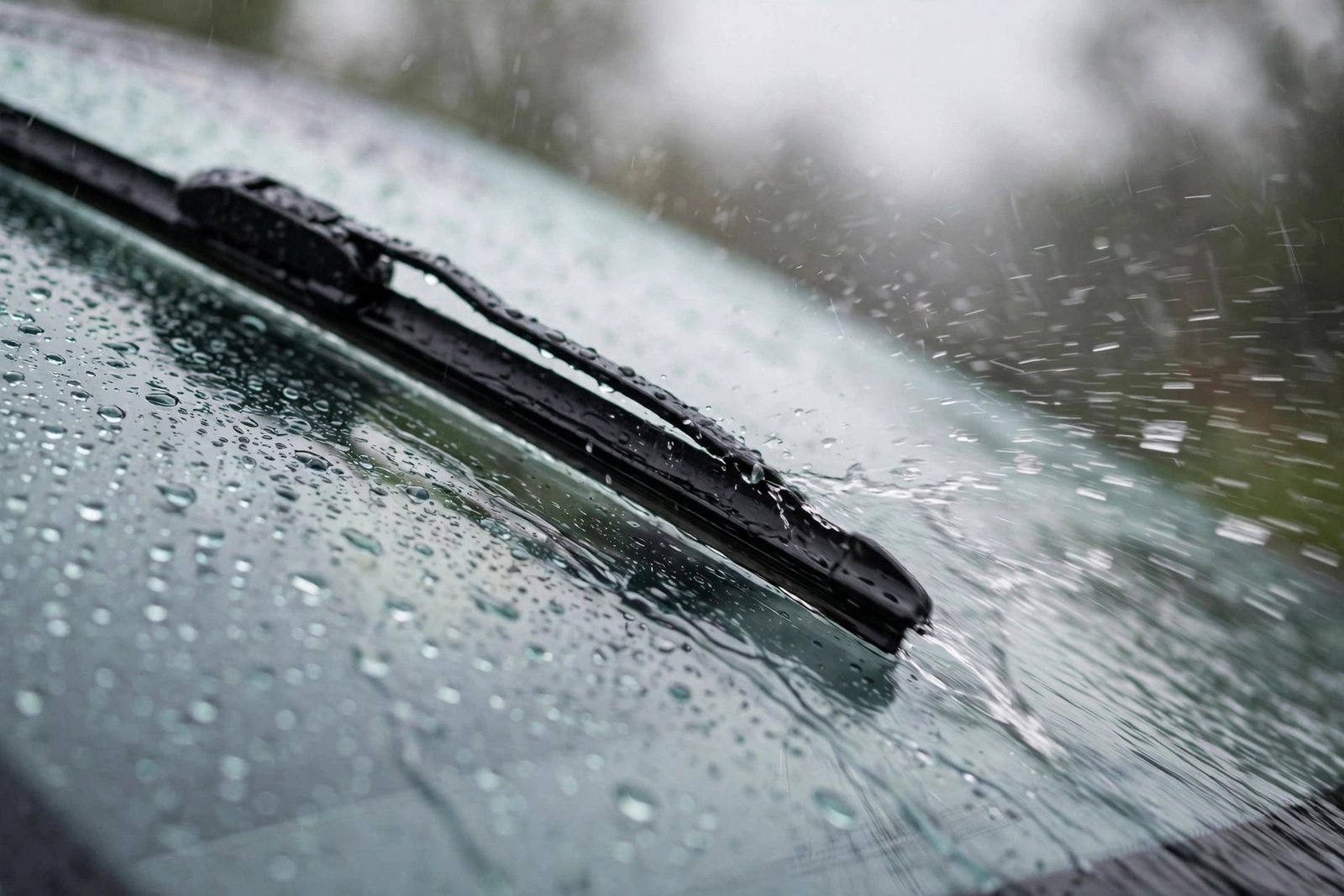
Wipers are a safety device you only think about when they fail — usually in the rain, at night, on the highway. The good news: each failure mode (streaking, chattering, smearing, squeaking) points to a different cause, and half of them don't require new blades. Diagnose first, spend second.
Symptom → Cause → Fix
STREAKING — thin lines of water left behind
- Cause: the rubber edge is nicked, torn, or has hardened unevenly; or the blade is contaminated.
- Fix: clean the blade first (see below). If lines persist in the same spots, the edge is damaged — replace the blade.
CHATTERING / SKIPPING — blade jumps or vibrates across the glass
- Cause: hardened rubber that can't flex and "flip" at each stroke reversal; or a bent wiper arm holding the blade at the wrong angle; or a dry windshield (wipers need water as lubricant).
- Fix: if the rubber feels stiff, replace. If new blades still chatter, check the arm (see the arm check below) — a bent arm causes chattering even on brand-new blades.
SMEARING — hazy film spread across the glass instead of cleared
- Cause: contaminated blade (road oil, wax, tree sap) or a filthy windshield — the blade is redistributing grime, not removing water.
- Fix: clean both the blades AND the windshield thoroughly. This one is usually a cleaning job, not a replacement job.
SQUEAKING / SQUEALING — high-pitched noise
- Cause: dry, hardened rubber dragging on glass; sometimes the blade frame contacting the windshield.
- Fix: clean first; if the rubber is visibly cracked or the noise persists wet, replace. Don't ignore it long — metal-on-glass scratches the windshield.
The Clean-First Decision
Before buying blades, try this — it fixes smearing and mild streaking surprisingly often:
- Lift the wiper arms (many cars need the wipers in "service position" — check the manual).
- Wipe the rubber edge with a cloth dampened with glass cleaner or isopropyl alcohol until no more black residue comes off.
- Clean the windshield itself with proper glass cleaner — road film and wax buildup cause half of all "bad wiper" complaints.
- Test in rain or with the washer fluid. Still streaking in the same lines? The edge is physically damaged — replace.
The Wiper Arm Check (The Step Everyone Skips)
If new blades streak or chatter, the arm is the suspect:
- Tension: the arm's spring should hold the blade firmly and evenly across the glass. A weak spring = skipping at the ends; too much bend = chattering.
- Angle: the blade should sit perpendicular to the glass. A bent arm (from ice, car washes, or lifting it carelessly) holds the blade at an angle that chatters no matter how new the rubber is.
- The towel trick: when changing blades, never let the bare metal arm snap back onto the windshield — lay a towel on the glass first. A cracked windshield costs far more than blades.
Buying Replacement Blades: The Three Types
- Conventional (frame) blades: cheapest; metal frame with pressure points. Fine, but can clog with ice/snow.
- Beam blades: frameless, even pressure along the whole blade, better in winter. The best all-around choice for most drivers.
- Hybrid blades: frame-blade structure with a beam-style cover. A middle ground.
Match the lengths — driver and passenger blades are often different sizes (your manual or any parts site lists them by car). Replace in pairs; a new blade paired with an old one wipes unevenly.
How long do blades last? Typically 6–12 months depending on sun exposure, climate, and use. Parked-in-the-sun cars kill blades fastest (UV hardens rubber). If you can't remember when you changed them, they're due.
Winter-Specific Notes
- Never use wipers to clear ice. You'll shred the rubber edge. Scrape first.
- Lift blades off the glass when ice is forecast (if your arms allow it) so they don't freeze down.
- Don't run wipers on a dry windshield to "test" them — dry friction wears the edge fast.
Common Mistakes
- Replacing blades when the windshield is the problem. Road film causes smearing that new blades can't fix.
- Buying the wrong lengths. Driver/passenger sides differ on most cars.
- Letting the bare arm snap onto the glass during a blade change.
- Ignoring chattering on new blades instead of checking the arm.
- Running one new + one old blade.
FAQ
Why do my new wiper blades still streak?
Either the windshield has road film (clean it properly), or the wiper arm is bent/weak (check tension and angle). New rubber can't fix either.
Can I just replace the rubber refill instead of the whole blade?
On conventional frame blades, yes — refills are cheaper. On beam blades, replace the whole unit.
Are expensive silicone blades worth it?
Silicone blades generally last longer and perform better in extreme weather than natural rubber. Whether the premium is worth it depends on your climate — in harsh sun or deep winter, often yes.
How do I know what size blades my car takes?
Your owner's manual, or any auto parts site's blade finder (enter year/make/model). Note both sides — they're usually different.
Sources
- EngineerFix — "How to Tell If You Need New Windshield Wipers" (chattering = hardened rubber/arm angle; streaking = worn/nicked edge; smearing = contamination; squealing = stiff rubber) — https://engineerfix.com/how-to-tell-if-you-need-new-windshield-wipers/
- YourMechanic — "Symptoms of a Bad or Failing Windshield Wiper Arm" (bent arm causes streaking on new blades; chattering from arm angle; blade not touching glass) — https://www.yourmechanic.com/article/symptoms-of-a-bad-or-failing-windshield-wiper-arm
- SS Tire — "When Should You Replace Your Windshield Wipers?" (streaking/smearing/skipping/squeaking/cracked rubber signs; safety framing) — https://www.sstire.com/tracy/when-should-you-replace-your-windshield-wipers-heres-what-to-look-for/
- Torque (Singapore) — "Wiper blades: What causes them to streak?" (dirty windshield as primary cause; clean glass + blades before replacing) — https://www.torque.com.sg/advice/wiper-blades-what-causes-them-streak/
- AnythingNeat — "How Long Windshield Wiper Blades Actually Last" (6 months–2 years, ~1-year typical; UV/heat degradation mechanism) — https://anythingneat.com/m-auto/afs/default/rsoc/a5435a36-5eb0-4472-8cd6-8652d5945363/how-long-windshield-wiper-blades-actually-last?channel=Ch_4011