
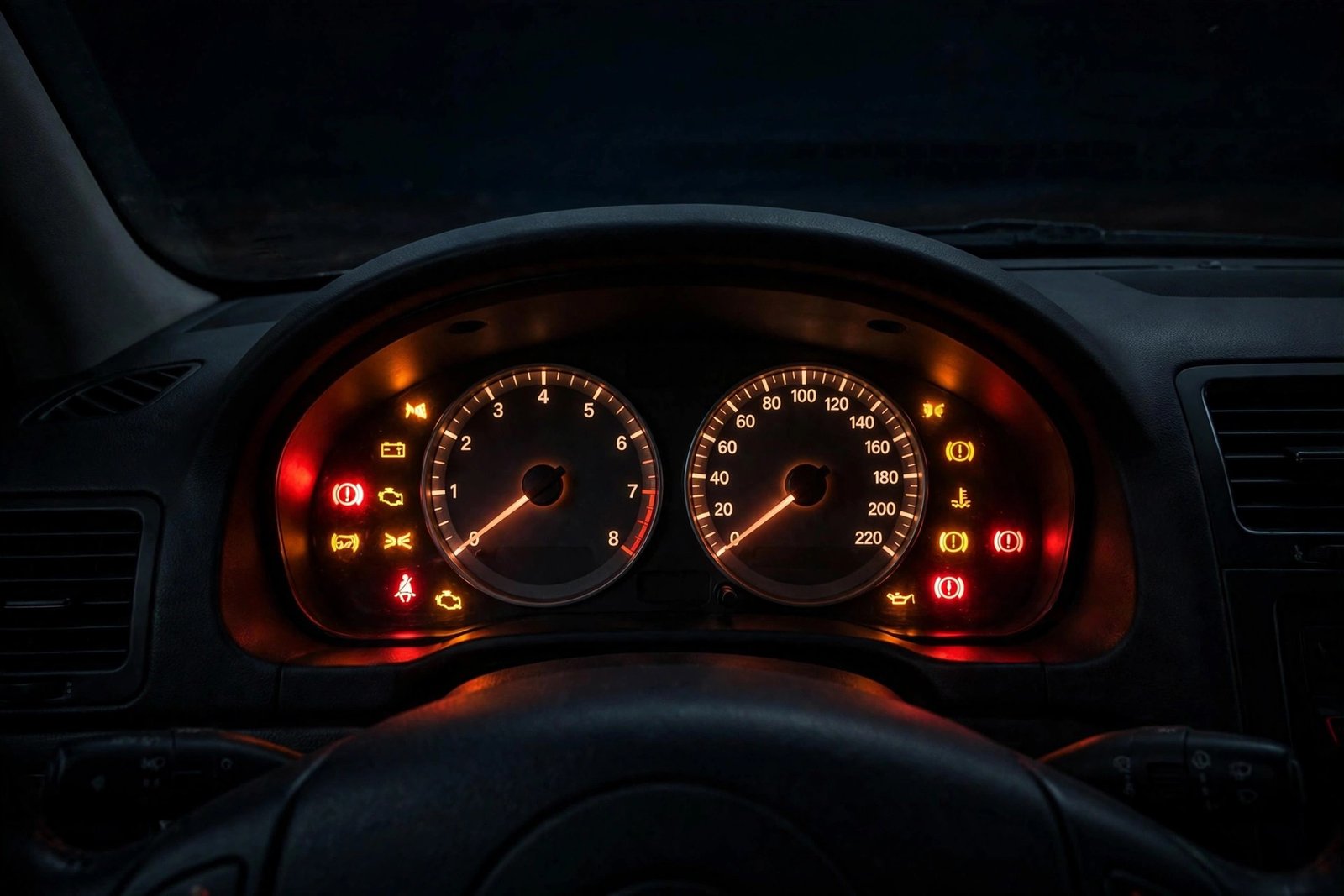
Modern dashboards carry dozens of symbols, and most drivers only learn them in a moment of panic. This guide takes the opposite approach: read the color first, not the symbol. The color tells you how urgent the situation is; the symbol tells you which system to think about. Then each light links to a dedicated Fixtorial diagnosis guide.
In this guide, you’ll learn:
- The traffic-light color system: red, amber, green/blue — and what each demands of you
- The 8 warning lights every US driver must know, with exact responses
- A quick-triage table for when a light appears while driving
- Links to full diagnosis guides for each warning light
The Color Rule (Read This Before Any Symbol)
Dashboard lights follow a traffic-light logic that works across nearly every make and model:
- Red = stop. A serious, potentially dangerous fault. Pull over safely and switch off as soon as you can.
- Amber/yellow = caution. A fault or condition that needs prompt attention, but you can usually drive carefully to a shop if the car feels normal.
- Green/blue/white = information. A system is on and working (headlights, cruise control, turn signals). No action needed.
- Flashing red (or flashing anything urgent) = treat it as red-plus. A flashing warning means the fault is active right now, not stored history.
Two more rules: it’s normal for several lights to glow briefly when you start the car — that’s the bulb check; they should all go out. And a warning plus bad symptoms always outranks the color alone: an amber light with smoke, shaking, or power loss is an emergency too.
The 8 Warning Lights Every Driver Must Know
1. Oil pressure light (red oil can) — STOP
The engine has lost oil pressure. Shut the engine off as soon as it’s safe to pull over. Driving on can seize the engine within minutes.
2. Coolant temperature light (red thermometer) — STOP
The engine is overheating. Pull over, switch off, and let it cool — never open a hot radiator cap or coolant reservoir.
3. Brake system light (red BRAKE / (!) ) — STOP (after one check)
Check the parking brake first — if it’s released and the light stays on, the brake system has a fault. Possible brake failure: pull over safely and tow it.
4. Battery / charging light (red battery) — PLAN A SAFE STOP SOON
The alternator isn’t charging; you’re running on battery power alone. The car will stall once the battery drains (typically well under an hour). Turn off non-essential electronics and drive straight to a shop — don’t switch the engine off mid-trip, as it may not restart.
5. Airbag / SRS light (red person + airbag) — GET IT CHECKED PROMPTLY
The airbag system has a fault and may not deploy in a crash. The car drives normally, but a critical safety system is offline. Diagnosis only — never attempt DIY airbag work.
6. Check engine light (amber engine outline) — CAUTION
The engine computer stored a fault code. Solid + car drives fine: schedule a diagnosis within the week. Flashing: possible catalytic-converter-damaging misfire — get diagnosed immediately.
check engine light on but car runs fine
7. ABS light (amber “ABS”) — CAUTION
Anti-lock braking is disabled, but normal brakes still work. Keep extra following distance and avoid hard stops, especially on wet roads. ABS + red BRAKE light together = stop immediately.
8. TPMS tire pressure light (amber horseshoe with !) — CAUTION
A tire is roughly 25% below its recommended pressure — or the monitoring system has a fault. Check pressures with a gauge.
TPMS light on but tires look fine
Quick Triage: A Light Just Came On While Driving
- What color is it? Red → pull over safely and switch off. Amber → note it and drive carefully.
- Is it flashing? Flashing urgent lights (check engine, oil, temperature) mean the fault is happening now.
- How does the car feel? Any new noise, smell, shaking, power loss, or change in braking/steering escalates everything — treat it as urgent regardless of color.
- Check your owner’s manual for the exact meaning on your model — symbols vary slightly by manufacturer.
FAQ
What do green and blue dashboard lights mean?
They’re status indicators, not warnings — high beams (blue), cruise control, turn signals, fog lights. No action needed.
Why do all the lights come on when I start the car?
That’s the system’s self-test (bulb check). Every light should go out within a few seconds of the engine starting. Any that stay on need attention.
Can an amber light ever mean stop immediately?
The color is a starting point, not a verdict. An amber light plus bad symptoms — smoke, shaking, power loss, weird smells — always means stop and investigate.
Do warning light colors work the same on every car?
The red/amber/green logic is near-universal, but exact symbols and a few colors vary by manufacturer. Your owner’s manual is the final authority for your car.
Sources
- RAC Drive — “Dashboard warning lights: all symbols explained” (red/amber/green traffic-light logic) — https://www.rac.co.uk/drive/advice/know-how/car-dashboard-warning-lights-meaning/
- JD Power — “Car Dashboard Warning Lights Explained” (per-light meanings) — https://www.jdpower.com/cars/shopping-guides/car-dashboard-warning-lights-explained?make=
- TechDrivePlay — “Dashboard warning lights explained: which ones mean stop driving” (color-first triage; symptoms escalate urgency) — https://techdriveplay.com/dashboard-warning-lights-explained-which-ones-mean-stop-driving-now-and-which-ones-are-oka/