
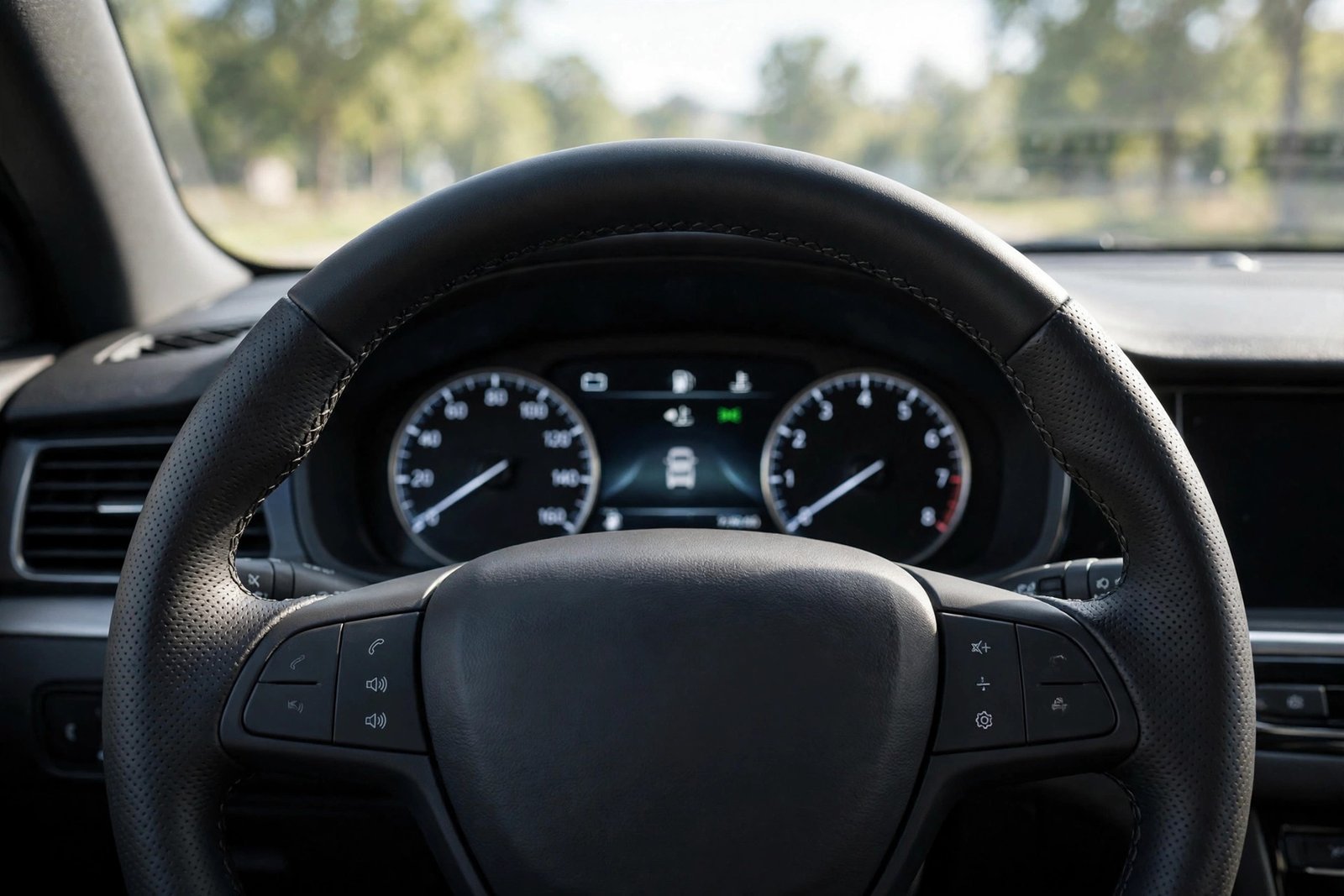
A squeak when you turn the steering wheel is annoying — and tricky, because the sound can come from inside the cabin (right at the wheel) or from under the hood (power steering system), and the two have nothing in common. The first job is figuring out which side of the firewall your squeak lives on.
In this guide, you'll learn:
- The inside-vs-outside test (the whole diagnosis in one step)
- The most common causes on each side, in order of likelihood
- The one simple fluid check you can do yourself
- Why this topic is diagnosis-only — including the airbag-circuit warning
Safety first — read this: A squeak from inside the steering wheel can involve the clock spring — the ribbon cable that connects the airbag and steering-wheel controls. A failing clock spring can interrupt the airbag circuit. Never disassemble the steering wheel or airbag yourself. This article is diagnosis-only: locate the sound, do the safe checks, and hand it to a certified mechanic.
The Inside-vs-Outside Test
Sit in the parked car, engine off, and slowly turn the wheel lock to lock. Listen carefully:
- The squeak is clearly coming from inside the car, right at the steering wheel or column → cabin-side causes (clock spring, trim friction, column bearing, floor mat). Keep reading the "Inside the cabin" section.
- The squeak comes from in front of the firewall / under the hood (have a helper turn the wheel while you listen at the open hood — engine off) → power steering system or belt. Skip to "Under the hood."
- The squeak only happens while driving, never when parked → suspension components (ball joints, strut mounts, bushings) moving under load — see knocking noise when turning and popping noise when turning.
Inside the Cabin: Causes in Order
1. Steering wheel rubbing on trim or a floor mat (most common, most harmless)
In hot weather, materials expand; an oversized aftermarket floor mat can rub the rotating column; the wheel's plastic shroud can squeak against trim. If the squeak changes when you press on the trim or move the mat — found it.
2. Dry upper steering column bearing or seal
The column passes through a rubber seal at the firewall. When it dries out, turning the wheel produces a squeak that resonates up the column and sounds like it's inside the wheel.
3. Failing clock spring (the one to take seriously)
The clock spring is the coiled ribbon cable inside the steering wheel that maintains the airbag and button connections as the wheel turns. A dry or failing one squeaks or clicks from inside the wheel itself. Warning signs it's the clock spring: the squeak comes from within the wheel (not the column), and — critically — the airbag warning light is on or steering-wheel buttons act up. This needs a mechanic: the airbag circuit is involved.
4. Turn-signal cancel cam (normal, not a fault)
A light clicking — not squeaking — right after using the turn signal is the cancel cam resetting. Normal operation; no action needed.
Under the Hood: Causes in Order
1. Low power steering fluid (most common)
Hydraulic power steering needs fluid to do its job. When the level drops, the pump cavitates — sucking air — and produces a squeal, whine, or groan that's worst at full lock and low speed. The check: with the engine OFF and cool, find the power steering reservoir (often marked with a steering-wheel icon), and check the level against MIN/MAX. Low fluid usually means a leak somewhere — topping up without finding the leak is temporary.
2. Worn or loose belt driving the power steering pump
Under the sudden load of turning, a glazed or loose belt slips on the pump pulley — a sharp, momentary squeal. Same family as the acceleration squeal: see the belt checks in the Noises & Vibrations hub.
3. Contaminated or wrong power steering fluid
Dark, burnt-smelling fluid — or the wrong fluid type — makes the pump work harder and noisier. Power steering systems are fluid-specific; the owner's manual specifies the type.
4. Failing power steering pump or steering rack
A pump or rack on its way out groans and squeaks under load even with good fluid. If the fluid is full and clean and the squeak persists — especially with heavier-than-normal steering — it's shop time.
5. Dry ball joints or tie rod ends (heard while driving)
Boots tear, grease washes out, metal rubs — a rhythmic squeak or groan when turning while moving. This is a wear-and-safety issue for a mechanic, not a lubrication DIY.
The One Simple Check You Can Do Yourself
Power steering fluid level (engine OFF, cool): Locate the reservoir, wipe the cap area clean, open it, and check the dipstick or sight marks against MIN/MAX. Note the fluid's color too — healthy fluid is typically clear/reddish; dark brown or black with a burnt smell means it's degraded. If it's low, you have a leak — book a shop visit rather than just topping up repeatedly.
Everything else on the under-hood list (belt condition, pump, rack) is a visual inspection at most — repairs belong to a certified mechanic.
When to See a Mechanic — Soon vs Now
Soon: Trim-rub or mat-rub squeak you've positively identified; mild belt squeal; fluid slightly low with no visible leak.
This week: Persistent pump/rack squeak with full clean fluid; squeak plus heavier steering; any fluid leak (spots under the front of the car).
Now: Squeak from inside the wheel plus the airbag warning light or dead steering-wheel buttons (clock spring — airbag may not deploy); sudden loss of power steering assist; loud grinding from the pump (it's running dry and destroying itself).
FAQ
Why does it only squeak when I turn the wheel while parked?
Stationary turning ("dry steering") puts maximum load on the power steering pump and maximum twist on the strut mounts — it stresses everything hardest. Noises that only appear parked are still real; they're just revealing the weakest link under peak load.
Is it bad to hold the wheel at full lock?
Yes — holding full lock keeps the power steering pump at maximum pressure, which heats the fluid and strains the system. Turn to full lock, then ease back slightly. It's a good habit regardless of noises.
My car has electric power steering — no fluid to check. Now what?
Then the fluid/belt causes don't apply. An EPS squeak points at the electric motor, rack, or column components — all professional-diagnosis territory. The inside-vs-outside test still applies.
Squeak vs squeal vs whine — does the word matter?
For the power steering system, they blend: low fluid starts as a whine, becomes a squeal under load. What matters more is where (inside vs outside) and when (parked vs moving, full lock vs slight turn).
Sources
- engineerfix.com — "Why Does My Steering Wheel Make a Squeaking Noise When Turning?" (clock spring airbag warning; PS fluid cavitation; belt slip) — https://engineerfix.com/why-does-my-steering-wheel-make-a-squeaking-noise-when-turning/
- engineerfix.com — "Why Is My Steering Wheel Making a Squeaking Noise?" (column bearing; strut mount; ball joint boots) — https://engineerfix.com/why-is-my-steering-wheel-making-a-squeaking-noise/
- carparts.com — "Some Reasons Why You May Hear Squeaking Noises While Turning the Steering Wheel" (dry ball joints; PS fluid; belt; trim friction) — https://www.carparts.com/blog/some-reasons-why-you-may-hear-squeaking-noises-while-turning-the-steering-wheel/
- jdpower.com — "Why Does My Car Squeal When I Turn the Wheel?" (contaminated fluid; belt issues; trim rubbing) — https://www.jdpower.com/cars/shopping-guides/why-does-my-car-squeal-when-i-turn-the-wheel
- grenvia.com — "Steering Wheel Squeaks When Turning" (fluid check procedure; pump and belt failure signs) — https://www.grenvia.com/steering-wheel-squeaks-when-turning/