
A pop when turning is a sharp, sudden snap — like a knuckle cracking. The single most useful thing you can do is count: one pop per turn and repeated pops are completely different problems.
In this guide, you'll learn:
- The single-pop vs rhythmic-pop branch (the whole diagnosis in one question)
- The most common causes, in order of likelihood
- Why this topic is diagnosis-only — and the ball-joint red flag
- What to tell the mechanic so they find it fast
Safety first — read this: Popping from the front suspension or steering can involve ball joints, tie rods, and strut mounts — parts whose failure means sudden loss of steering control. This article is diagnosis-only: observe the pattern and take it to a certified mechanic. No steering or suspension repairs yourself, and no yanking on parts under the car.
The One-Question Branch: Single Pop or Rhythmic Pop?
Rhythmic, repeated pops that speed up with the wheels → This is really the CV-joint pattern wearing a pop costume. The outer CV joint binds and releases with each revolution at sharp steering angles. Go to clicking noise when turning — same cause, same fix, same urgency.
A single pop — once per turn, often right as you start turning → Something in the suspension or steering is binding and then releasing. Keep reading — this is the true "popping when turning" problem.
Single-Pop Causes, in Order of Likelihood
1. Binding strut mount bearing (most common single-pop)
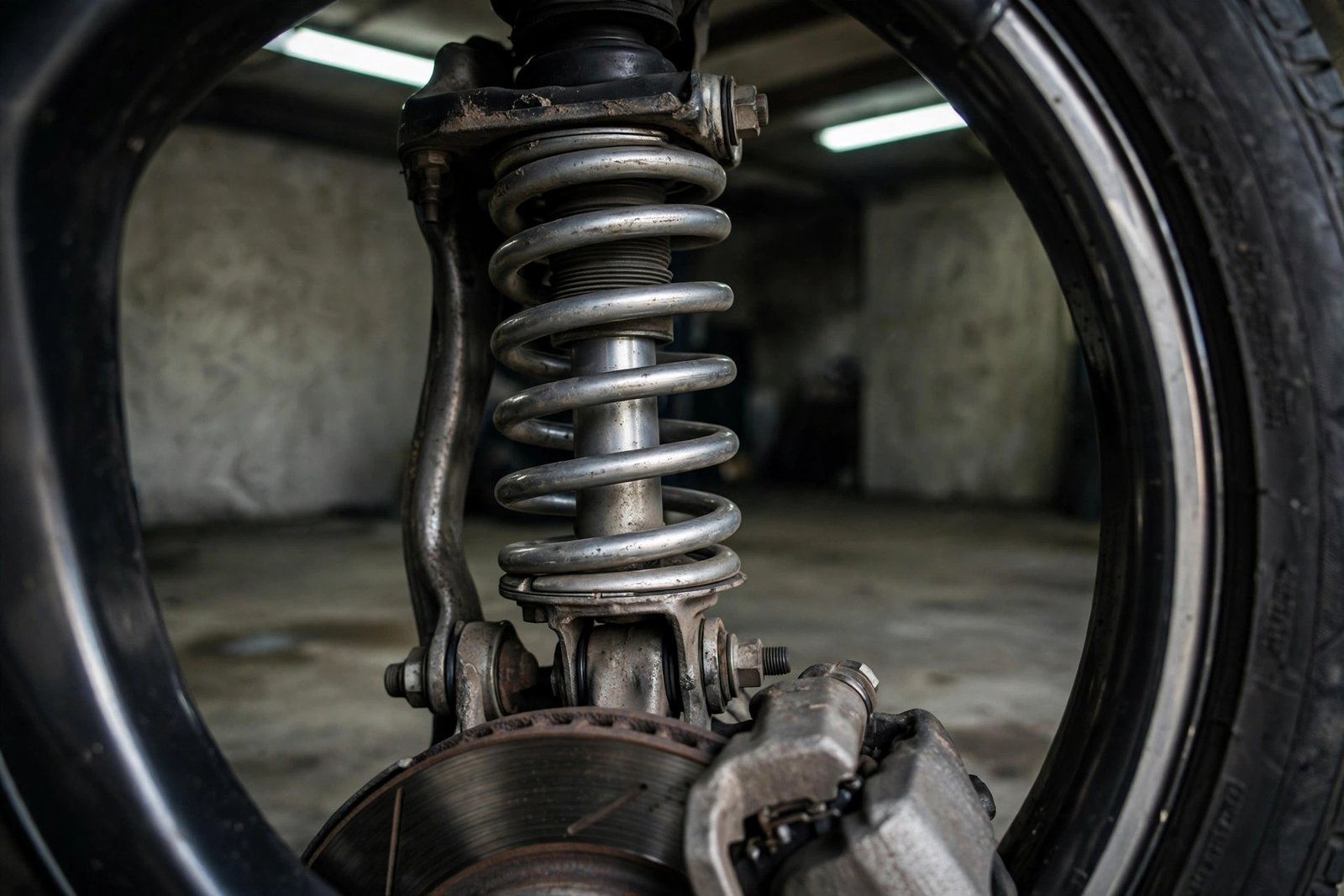
The upper strut mount contains a bearing that lets the whole strut rotate as you steer. When it dries out or seizes, the coil spring winds up instead of turning — then releases with a sharp pop or snap. Often felt as a slight resistance or vibration through the steering wheel right before the pop.
2. Worn ball joint
A ball joint with play pops as the suspension load shifts during the turn. Safety-critical: ball joints can separate, and a separated ball joint means the wheel folds under the car. A pop you suspect is a ball joint goes to a shop promptly — this is the red-flag cause on this list.
3. Broken coil spring
A fractured spring end shifts as the suspension compresses in a turn — a single loud pop or twang. A broken spring changes ride height on that corner and can damage the tire; look for the car sitting slightly lower on one side.
4. Worn control arm bushings
Cracked or separated bushings let the control arm shift suddenly under cornering load — a dull pop or clunk as the slack is taken up.
5. Worn tie rod ends
Play in the tie rod ball-and-socket pops as steering load reverses at turn initiation. Usually accompanied by vague steering feel or uneven tire wear.
6. Worn sway bar links or bushings
Typically more of a clunk over bumps (see clunking noise over bumps), but a badly worn link can pop once as the bar loads up in a turn.
Simple Observation Checks (No Tools)
- Count the pops: One pop per steering input = suspension bind. Repeated pops tracking wheel speed = CV joint → clicking guide.
- The turn-initiation test: Does the pop happen the instant you start turning from straight ahead? That's the strut-mount-bearing / tie-rod signature — the moment steering load first hits the parts.
- Parked steering test: Engine on, foot on brake, turn the wheel slowly lock to lock. A pop while parked = strut mount bearing or steering components (CV joints need wheel rotation to click).
- The ride-height glance: Walk around the car — does one corner sit lower? A broken spring announces itself visually.
- Note the direction: Pops only turning one way point at that side's components (the outside of the turn carries more load).
Bring these notes to a certified mechanic. "Single pop at turn initiation, left turns only, also pops when parked" is a diagnosis in a sentence.
When to Stop Driving Immediately
- Pop + steering feels loose, wanders, or clunks over bumps too: Possible ball joint or tie rod deterioration. Tow it.
- Pop + one corner visibly lower: Broken spring — the tire on that corner is at risk. Don't drive on it.
- A pop that becomes a grind or is joined by vibration: The part has worn past popping into destruction. Park it and call a tow.
FAQ
Is a popping noise when turning dangerous?
A single pop from a strut mount is usually a wear issue, not an emergency — but a pop from a ball joint or tie rod can precede sudden steering failure. Because you can't tell which by ear, treat any new popping as "inspect soon."
What's the difference between popping and clicking when turning?
Clicking is rhythmic and tracks wheel speed (CV joint). Popping is usually a single snap per steering input (suspension bind). Same area of the car, different parts, different urgency.
Can cold weather cause popping?
Cold stiffens rubber bushings and thickens grease, so a marginal strut mount bearing or bushing pops more on cold mornings. The wear was already there — cold just reveals it.
Will it fail inspection?
Worn ball joints, tie rods, and broken springs are common inspection failures in states with safety inspections. A documented pop is worth fixing before your inspection date.
Sources
- engineerfix.com — "What Causes a Front End Popping Noise When Turning?" (CV joint vs ball joint vs strut mount; single vs rhythmic) — https://engineerfix.com/what-causes-a-front-end-popping-noise-when-turning/
- engineerfix.com — "Why Is There a Popping Noise When Turning My Car?" (strut mount bearing bind-and-release; ball joint play) — https://engineerfix.com/why-is-there-a-popping-noise-when-turning-my-car/
- motorverso.com — "Popping Noise When Turning: Why Does My Car Make Noises?" (single pop: ball joint/strut mount; costs context) — https://www.motorverso.com/popping-noise-when-turning/
- mechanicbase.com — "What Causes A Popping Noise When Turning Steering Wheel?" (coil spring, strut mount, ball joint, control arm bushings) — https://mechanicbase.com/troubleshooting/popping-noise-when-turning/
- vehiclefreak.com — "Pop Noise When Turning The Wheel Left Or Right" (repetitive pop = CV; single pop = ball joint/tie rod/strut mount) — https://vehiclefreak.com/pop-noise-when-turning-the-wheel-left-or-right-causes-how-to-fix/