
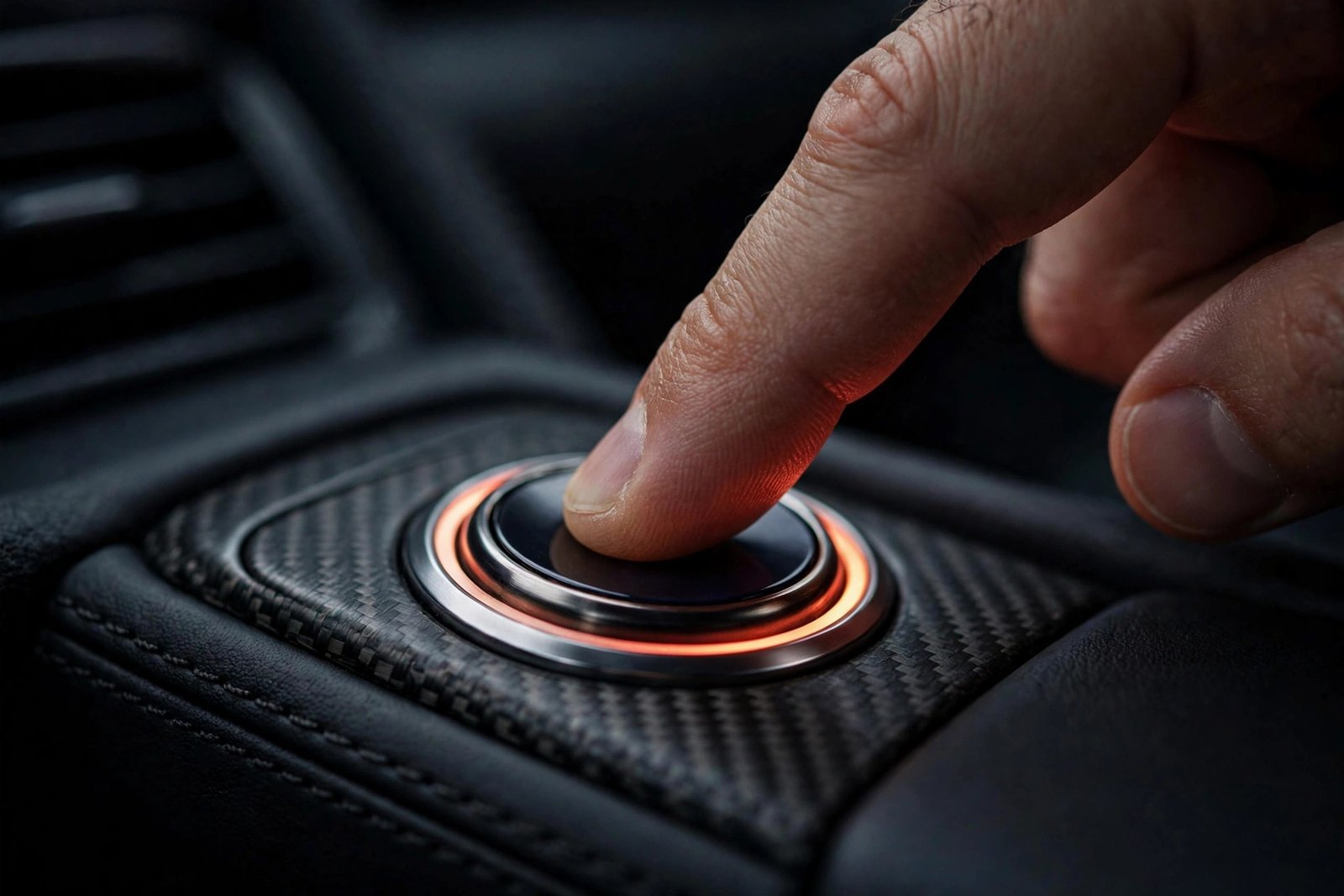
You press the button. Nothing. No crank, no click — maybe not even dash lights. Push-button systems add a layer of electronics between you and the starter, but the fix is usually one of four simple things, and most are solved in under a minute. Work this order: fob, brake, gear, battery.
In this guide, you’ll learn:
- The 30-second fob check (fixes most cases)
- What the dashboard is telling you (dead vs. lit vs. key warning)
- The most likely causes, in order of likelihood
- The backup start method every push-button car has
- When to call a mechanic
Safety first: Always press the brake firmly and confirm Park before pressing the button — the interlocks exist so the car can’t lurch. If you smell burning plastic or see smoke, stop and call for a tow.
First: What Does the Dashboard Do?
Press the button once and watch — the dash response splits the problem:
Dash is completely dead — The car’s 12V battery is dead (yes, push-button cars still have one). Jump-start it like any car. See no sound, no lights.
Dash lights up, but nothing cranks — Power is fine; the start signal isn’t getting through. Suspect: brake pedal switch, fob detection, or the starter circuit. Work the sequence below.
“Key not detected” or key warning — The car can’t see the fob. Fob battery or signal interference — Step 1 below.
Dash lights up and it cranks but won’t fire — Not a push-button problem at all; it’s a normal crank-no-start. See cranks but won’t start.
The Fix Sequence
Step 1: The 30-second fob check (most common)
A dead or weak fob battery is the #1 push-button no-start cause — typical fob batteries last 1–2 years.
- Backup method: Hold the fob directly against the start button (or in the backup slot — check your owner’s manual) while pressing it. Most cars have a passive transponder backup that works even with a dead fob battery.
- If that starts the car, replace the fob battery (usually a CR2032 coin cell — your manual shows how to open the fob).
- Signal interference: Keep the fob away from phones, laptops, and other electronics; move to a different spot and retry.
Step 2: Press the brake — firmly
Push-button systems require the brake pedal pressed to start (a safety interlock). A light touch may not register, especially if the brake light switch is wearing out.
- Press the brake pedal firmly — harder than you think — then press the button.
- Quick test: have someone watch your brake lights while you press the pedal. No brake lights = the switch isn’t registering, and the car won’t start. A failed brake light switch is a common, inexpensive fix — but replacement is shop work on most cars.
Step 3: Confirm Park
The shifter must be fully in Park. Push it firmly into P — it can look seated without quite engaging the switch. Some cars also allow Neutral as a backup; try that with your foot on the brake.
Step 4: Release the steering lock
If the wheel locked when you last parked, electronic steering locks can block the start. Gently turn the wheel left and right while pressing the start button (foot on brake).
Step 5: Check the 12V battery
The fob gets the attention, but the car’s own 12V battery runs everything. Dim dash, weak lights, or a slow crank = charge or jump-start it (safe sequence), then test the battery.
Step 6: When it’s deeper
If the fob is good, the brake registers, it’s in Park, and the 12V battery is healthy — but the button still does nothing — suspects are the start button itself, the starter circuit, or a control-module fault. Time for professional diagnosis.
Quick Reference
| What you see | Most likely cause | First move |
|---|---|---|
| Dash dead | 12V battery dead | Jump-start |
| “Key not detected” | Fob battery / interference | Hold fob to button; replace CR2032 |
| Dash lit, no crank | Brake not registered | Press brake firmly; check brake lights |
| Dash lit, no crank, brake fine | Not in Park / steering lock | Reseat in P; wiggle wheel |
| Cranks but won’t fire | Fuel/spark issue, not the button | See crank-no-start guide |
When to Call a Mechanic
- The brake lights don’t come on when you press the pedal — the brake light switch needs replacement.
- The backup fob method doesn’t work and the 12V battery is good — the start button, receiver, or a module is at fault.
- It cranks but won’t fire — that’s a standard no-start diagnosis, not a button problem.
- Any burning smell or smoke — stop, tow it.
FAQ
Where is the backup fob slot in my car?
It varies — some cars use a slot in the console, most newer ones just need the fob held against the start button. Your owner’s manual shows the exact spot; find it before you need it.
How long do key fob batteries last?
Typically 1–2 years. If your fob’s range has been shrinking (needing to be closer to unlock), the battery was already dying.
Can I start the car with a completely dead fob?
Usually yes, via the backup method above — the passive transponder doesn’t need the fob’s battery. Replace the fob battery at your earliest convenience.
Why does the car need the brake pressed to start?
It’s a safety interlock: it confirms a driver is in control before the engine can start, so the car can’t lurch forward unexpectedly. Never try to bypass it.