
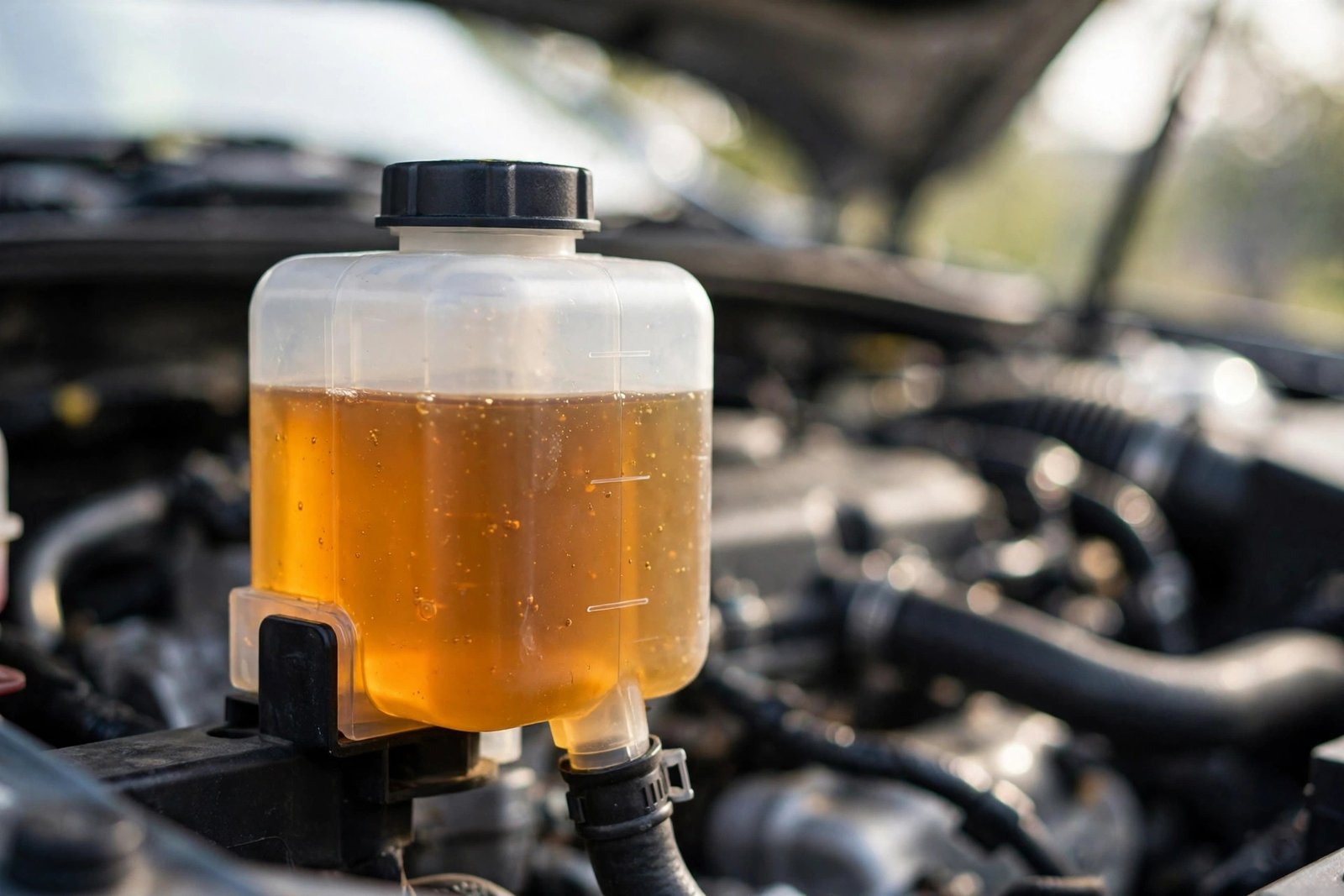
Brake fluid is the hydraulic lifeblood of your stopping system: pressing the pedal squeezes fluid through sealed lines to clamp the pads at each wheel. Here's the critical fact most drivers miss — brake fluid is a sealed system; it doesn't evaporate. If the level is low, something used it up (worn pads) or lost it (a leak). Either way, low fluid is never the problem itself — it's the warning sign pointing at the real one.
This guide lists the symptoms in order of importance, the one safe check you can do yourself, and — crucially — when to stop driving. Diagnosis only; brake hydraulics are certified-mechanic territory.
Safety first — do not drive if: the brake pedal feels soft, sinks toward the floor, the red brake warning light is on, or your stopping distance has suddenly grown. Low fluid can mean a leak or hydraulic failure. Stop safely, and have the brake system inspected by a certified mechanic. No symptom on this page is worth driving on.
In this guide, you'll learn:
- The 6 warning signs of low brake fluid, in order of urgency
- Why "low fluid" is always a symptom, never the disease
- The one safe check you can do at home (observation only)
- When topping up is reasonable — and when it's dangerous
- What to tell your mechanic
The Key Insight: Fluid Doesn't Disappear
The two reasons fluid drops:
- Worn pads (the benign one): as pads wear, caliper pistons extend farther, and fluid fills the space behind them — the reservoir level falls gradually. Low fluid here is the system's way of flagging pad wear.
- A leak (the dangerous one): corroded lines, weeping seals, or a failing component lets fluid out. The level falls faster, air can enter, and braking degrades.
You can't tell which one it is from the level alone — which is why a mechanic's inspection is the next step either way.
The 6 Warning Signs, in Order of Urgency
1. Red brake warning light on the dashboard
The reservoir's float sensor trips the red light when fluid drops below a threshold. This is the system's direct low-fluid alarm. Do the 30-second triage: parking brake released? Pedal feel normal? If the pedal has changed at all, treat it as urgent. brake warning light on the dashboard
2. Spongy or soft brake pedal
Air in the lines (from a leak, or fluid so low it drew air) compresses where fluid doesn't. The pedal feels mushy, needs more travel, or seems to "give" before the brakes bite. Spongy + low fluid together strongly suggests the system has been opened by a leak — a certified mechanic's inspection, not a top-up.
3. Pedal sinks toward the floor
Low fluid from an active leak means pressure isn't being held. If the pedal sinks while you're holding the brakes — at a stoplight, say — this is an urgent sign of hydraulic trouble. brake pedal sinks intermittently
4. Longer stopping distance
With reduced hydraulic pressure, the same pedal effort produces less clamping force. If your car suddenly needs more road to stop, assume the braking system is compromised until a professional says otherwise.
5. Visible fluid near the wheels or under the car
Brake fluid is typically clear to light-amber, oily, and slippery. Puddles or dampness near a wheel, under the master cylinder area, or along the underbody are leak evidence. If you're unsure what a fluid is, don't guess — have a certified mechanic identify it.
6. The reservoir level sits below MIN
The direct observation: a translucent reservoir with MIN/MAX marks under the hood. Below MIN confirms the system has lost fluid — it just doesn't tell you why.
The One Safe Check: Reading the Reservoir (Observation Only)
- Park on level ground, engine off, parking brake on.
- Find the brake-fluid reservoir under the hood (your owner's manual shows the location; it's usually a small translucent plastic container on the driver's side of the firewall).
- Read the level through the plastic against the MIN/MAX marks. Don't open the cap just to look — opening it invites moisture into hygroscopic fluid.
- Note the result: at MIN, between MIN and MAX, or below MIN. Note whether the fluid looks dark (aged) — that's information for the mechanic, not a DIY fix.
That's the end of the safe checks. Everything else — finding the leak, repairing lines, bleeding — is certified-mechanic work.
Topping Up: When It's Reasonable, When It's Not
- Reasonable (temporary): the level is slightly low with a normal, firm pedal and no other symptoms — top up to the MAX line with the exact fluid type from your owner's manual or the reservoir cap (usually DOT 3 or DOT 4; never mix types). This gets you to a shop safely.
- Not reasonable: spongy or sinking pedal, warning light, any leak evidence, or the level dropped again soon after topping up. Topping up a leaking system masks a failure that can become total. Get the car towed instead.
Either way, the low level is a symptom. A mechanic needs to find the worn pads or the leak behind it.
What to Tell Your Mechanic
"Low brake fluid" plus: the exact level you saw, how the pedal feels compared to normal, when the symptoms started (suddenly = leak; gradually = wear), any fluid spots you noticed and where, and whether you've topped up recently (and how fast it dropped again). Those facts point the inspection straight at the cause.
FAQ
Can I drive with low brake fluid?
If the pedal feels normal and the light isn't on, drive gently to a shop — promptly. If the pedal is soft, sinks, or the warning light is on, don't drive. A sealed system shouldn't lose fluid; something is wrong.
How often should I check brake fluid?
Most manufacturers recommend checking it at every service interval, and replacing the fluid roughly every 2–3 years (it absorbs moisture over time, which lowers its boiling point). Check your owner's manual for your car's schedule.
What type of brake fluid does my car need?
The type is printed on the reservoir cap and in the owner's manual — usually DOT 3 or DOT 4. Never mix types, and only use fluid from a new, sealed container. If you're unsure, let the shop handle it.
Does low brake fluid always mean a leak?
No — gradual pad wear lowers the level normally. But you can't distinguish wear from a slow leak by looking at the reservoir, which is why a professional inspection is the right next step.