
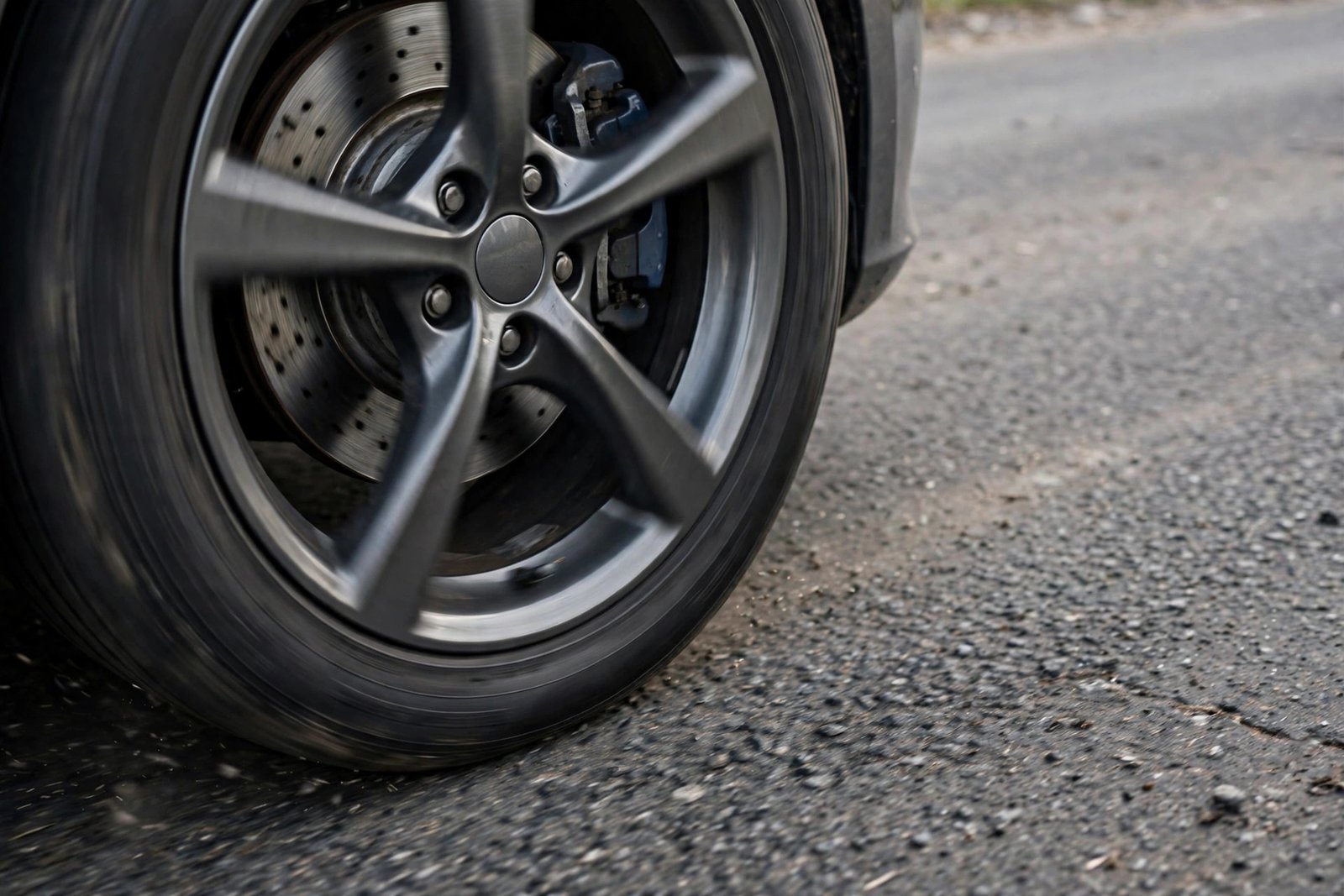
Grinding while braking is bad enough. Grinding that continues while you're just cruising, foot off the pedal, is more alarming — and for good reason: brakes are supposed to be fully released when you're not using them, so contact happening anyway means something is stuck, bent, or failing. Every mile of that contact generates heat, wears parts, and can end in a locked wheel.
This is the companion to our grinding-when-braking guide, and the distinction is the whole diagnosis: grinding noise when braking. Here, noise happens with the pedal released. That narrows the suspect list fast — but raises the urgency.
Safety first: Continuous grinding while driving can mean a brake is dragging — building heat that can boil brake fluid, destroy components, or lock a wheel. If the grinding is constant and getting louder, or it's joined by pulling, a burning smell, a hot wheel, or a warning light, stop driving and have the car towed to a certified mechanic.
In this guide, you'll learn:
- The one test that separates brake-caused grinding from everything else
- The most common causes, in order of likelihood
- How a sticking caliper reveals itself before it becomes dangerous
- Safe observations you can make without touching anything
The One Test: Brake or Something Else?
The grinding stops (or changes sharply) the moment you touch the brake pedal — the noise is almost certainly brake-related: a stuck caliper, debris, a bent dust shield, or hardware. The pedal changes the contact, so the sound changes.
The grinding is constant, unaffected by braking, and changes pitch with vehicle speed — wheel bearing or drivetrain territory. It usually gets louder in turns as weight shifts onto the failing bearing. Still get it checked — bearings can fail — but it's a different diagnosis.
The grinding appeared suddenly on one wheel, possibly after gravel or dirt roads — trapped debris or a bent dust shield. Note the wheel and the timing.
Record which one matches — it saves your mechanic real diagnostic time.
The Most Likely Causes, in Order
1. Sticking caliper (most dangerous, treat as urgent)
The caliper's job is to release the pads fully when you lift off the pedal. Corrosion on the piston or seized slide pins can keep a pad pressed against the rotor — constant grinding contact even while cruising. The giveaway trio: grinding that never stops, one wheel running much hotter than the others, and often a burning smell from that corner. This builds heat fast and can escalate to a locked wheel. brakes locking up
What to do: This is a stop-driving situation if the grinding is constant and worsening. Do not try to free it yourself — report the wheel location and heat to a certified mechanic.
2. Pads worn to the metal
If the grinding began as a squeak weeks ago that was ignored, the friction material is gone and the steel backing plate is scraping the rotor — contact that continues even between brake applications because of the minimal running clearance. Check the companion guide for the full wear-indicator timeline. grinding noise when braking
3. Debris trapped between pad and rotor
Small stones or grit lodged in the caliper area grind against the rotor continuously — sometimes on one wheel only, sometimes rhythmic with wheel speed. Sudden onset after unpaved roads is the tell.
What to do: Note when it started and which wheel. A shop inspects and clears it; don't try to dig debris out yourself.
4. Bent dust shield
The thin metal shield behind the rotor can get bent inward (potholes, tire work) and touch the rotor constantly — a light metallic scraping that's there whether or not you're braking, sometimes worse when turning. The fix is observation and shop adjustment, not force.
5. Failing wheel bearing (not the brakes)
A constant rumble-grind that changes with speed and gets louder when you turn — loading the bad bearing — points at the hub, not the brakes. Because it mimics brake grinding, it belongs in this list so it doesn't get misdiagnosed.
Simple Observations You Can Make Safely
- Run the one test: touch the brake lightly in a safe area — does the sound change or stop? Note the answer.
- Map it by wheel: windows down, quiet road — is it front or rear, left or right?
- Speed dependence: does the pitch rise with vehicle speed even when you're not braking? That's the wheel-speed signature.
- Turn test: does it get louder turning one direction? That loads the failing bearing on that side.
- Heat — hover only: after a drive, hold the back of your hand a few inches from each wheel. One corner noticeably hotter = dragging brake there. Never touch hot components.
When to Stop Driving — See a Mechanic Right Away
- Grinding is constant and getting louder.
- One wheel is much hotter than the rest, or you smell burning from a corner.
- The car pulls while driving (not just braking).
- A brake warning light comes on.
- The grinding started suddenly and is severe.
A tow costs less than a locked wheel or a boiled-fluid brake failure. Treat dragging-brake signs as urgent.
What to Tell Your Mechanic
"Grinding while driving, not braking" plus: your one-test answer, the wheel location, speed dependence, turn behavior, when it started (suddenly vs. gradually), any recent gravel roads or brake work, and heat/smell observations. A shop inspects caliper slide function, pad thickness, debris, shield clearance, and bearing play — ask what they found at each step.
FAQ
Can I keep driving if the grinding is mild?
Mild, intermittent grinding after gravel roads might just be debris. Constant grinding is a dragging brake until proven otherwise — and dragging brakes build heat and damage fast. When in doubt, stop and get it checked.
Why does my grinding stop when I brake?
Light pedal pressure changes the pad's contact with the rotor — sometimes masking a stuck-calibrated contact or pushing a loose stone aside. It's still a brake problem; the silence isn't a cure.
How is this different from grinding when braking?
Grinding when braking is usually worn pads reaching metal on metal. Grinding without braking means contact is happening when the system should be fully released — which points at sticking calipers, debris, bent shields, or bearings. Different causes, higher urgency.