
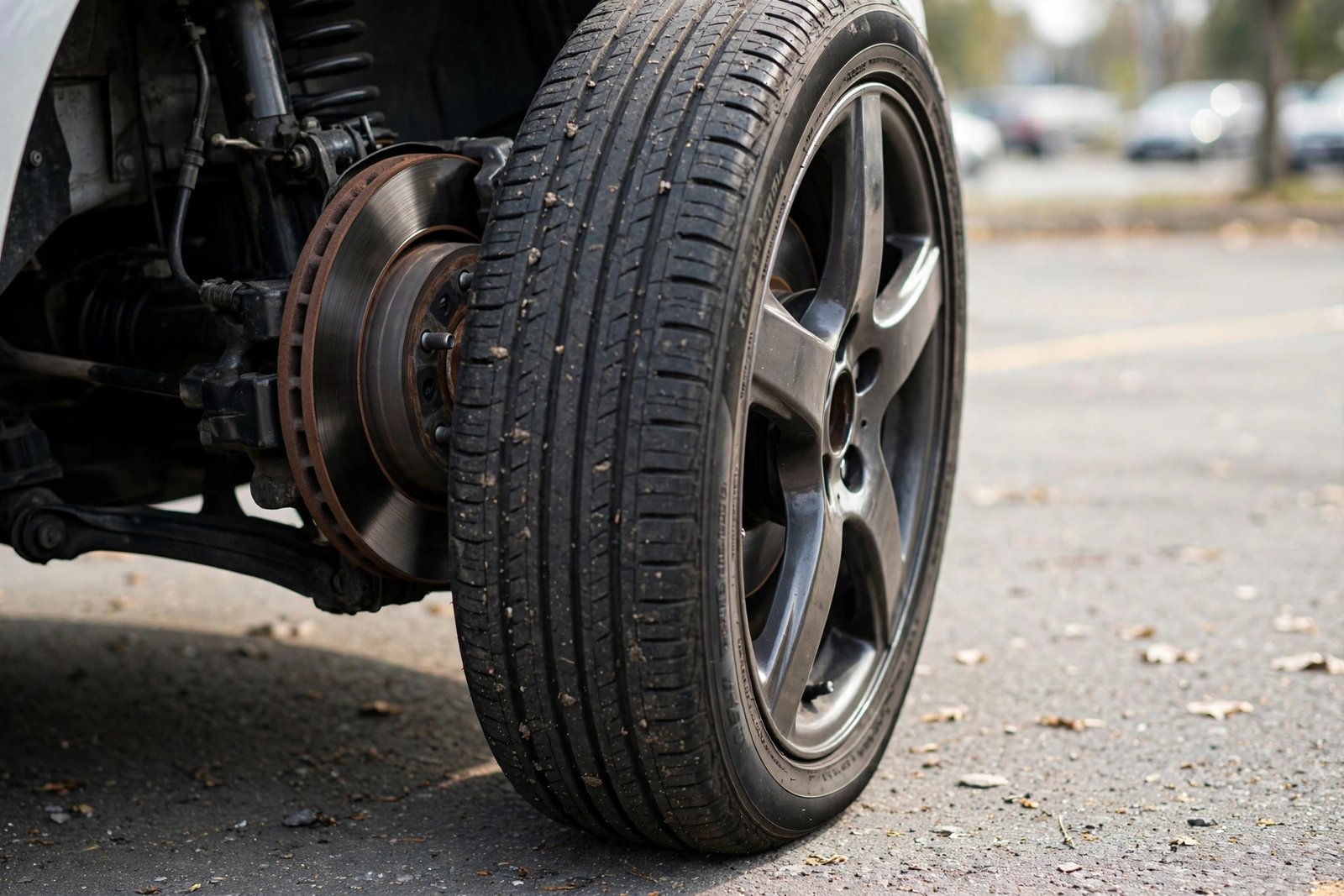
Cars announce wear in stages: a click means a part is wearing out, a hum means it's wearing faster, and a grind means it has worn through — metal is now scraping metal. A grinding noise when turning is never an early warning. It's a "this week, not next month" problem, because a grinding bearing or CV joint can seize or break.
In this guide, you'll learn:
- The wear-staging ladder (click → hum → grind) and where you are on it
- How turning direction localizes the bad part
- The most common causes, in order of likelihood
- Why this topic is diagnosis-only, and what to tell the shop
Safety first — read this: Grinding means advanced mechanical wear in parts that keep the wheel attached and turning (bearings, CV joints, brakes, steering). A grinding wheel bearing can seize; a grinding CV joint can break and leave you with no drive. This article is diagnosis-only: note the pattern and get to a certified mechanic promptly. Do not attempt steering, suspension, brake, or drivetrain repairs yourself.
The Wear-Staging Ladder: Where Are You?
Match your noise to the stage — it tells you how urgent this is:
- Clicking, rhythmic, speeds up with the wheels → early stage. Usually a CV joint starting to fail. See clicking noise when turning.
- Humming or growling, rises with road speed → middle stage. Usually a wheel bearing wearing out. See humming noise that gets louder with speed.
- Grinding — harsh, metallic, continuous scraping → late stage. The part has worn past clicking and humming into metal-on-metal contact. This article. Act this week.
If you skipped straight to grinding without noticing earlier stages, the wear may have progressed fast (pothole damage, torn boot unnoticed) — the urgency is the same either way.
Localize It: Which Way You Turn
Turning loads the outside wheels harder. So:
- Grind gets louder turning LEFT → the RIGHT-side components are under maximum load → suspect the right wheel bearing / right CV joint.
- Grind gets louder turning RIGHT → suspect the LEFT side.
- Grind happens turning the wheel while parked → not a bearing or CV (they need wheel rotation) → suspect the power steering system or strut mount bearing.
Tell the mechanic which direction makes it worse — it tells them which corner to inspect first.
The Most Likely Causes, in Order
1. Failing wheel bearing (most common)
The #1 cause of grinding tied to turning. A bearing that has worn from hum to grind has lost its internal surfaces — the rolling elements are scraping the races directly. Often accompanied by looseness you can feel as vague steering or vibration.
2. Severely worn CV joint
A CV joint ignored past the clicking stage grinds as its internal balls and races destroy each other — worst at full steering lock under power. Check for the classic torn-boot grease splatter inside the wheel well.
3. Worn brakes grinding
If the grinding appears or worsens when you brake while turning, the brake pads may be worn to the backing plates (metal-on-metal). This is also a stop-driving-soon issue — grinding brakes mean compromised stopping power and rotor damage.
4. Power steering system (grind while parked)
Low or contaminated power steering fluid lets the pump cavitate — a whine that becomes a harsh grind at full lock. Check the reservoir level (engine off). On electric-steering cars, a grinding steering rack needs professional diagnosis.
5. Seized strut mount bearing
When the upper strut bearing seizes, turning the wheel forces the coil spring to wind up against it — a harsh rubbery/metallic grinding, often felt as resistance through the steering wheel, worst when stationary.
Simple Checks You Can Do Yourself
- The direction test: Note which turn direction makes it louder (left = right-side parts, and vice versa).
- The parked test: Turn the wheel lock-to-lock while parked. Grind present = steering system (pump/rack/strut mount), not bearing/CV.
- The brake test: Grind changes when braking = brake system. Don't delay — grinding brakes are a safety issue.
- The grease check: Flashlight inside each front wheel well — dark splattered grease = torn CV boot.
- Power steering fluid (engine OFF): If equipped with hydraulic steering, check the reservoir against MIN/MAX. Low fluid + grind at full lock = pump starving.
Then drive — gently, avoiding full-lock turns — to a certified mechanic. Bring your notes: direction, parked-vs-moving, braking effect.
When to Stop Driving Immediately
- Grinding + the wheel feels loose, wobbly, or the steering has play: Bearing near failure. Tow it.
- Grinding + vibration that suddenly worsens: Something is breaking up. Park it.
- Grinding brakes + longer stopping distances or a brake warning light: Braking is compromised. Tow, don't drive.
- Any grinding that appeared suddenly after a pothole or curb strike: Impact damage can fail a bearing or bend components fast — get it inspected before highway speed.
FAQ
How long can I drive with a grinding wheel bearing?
There's no safe mileage number. A grinding bearing is past the wear stage into the failure stage — it can seize with little further warning. Days, not months; and avoid highways until it's inspected.
Is grinding worse than clicking or humming?
Yes — it's the last stage. Clicking and humming are warnings; grinding means the warning period is over and metal parts are destroying each other.
Could it just be rust on the brakes?
Light surface rust causes a mild scrape for the first few stops, then clears. A persistent grind that tracks with turning is not surface rust.
Why does it only grind when turning, not going straight?
Turning puts the worn part at its maximum angle (CV joint) or maximum load (bearing). Going straight unloads it enough to stay quiet — for now.
Sources
- wowowow.com — "Grinding Noise When Turning: Causes & Fixes" (grinding = advanced wear; bearing #1 cause; which-way-you-turn clue; shop-not-DIY) — https://wowowow.com/car-grinding-noise-when-turning
- engineerfix.com — "Why Does My Car Make a Grinding Noise When Turning?" (CV joint failure progression; boot tear mechanism) — https://engineerfix.com/why-does-my-car-make-a-grinding-noise-when-turning/
- engineerfix.com — "Grinding Noise When Turning Steering Wheel While Stationary" (strut mount bearing seizure; parked-turn diagnosis) — https://engineerfix.com/grinding-noise-when-turning-steering-wheel-while-stationary/
- cargaragee.com — "Grinding Noise When Turning: Top Causes and Effective Fixes" (wheel bearing failure signs; bearing lifespan context) — https://cargaragee.com/grinding-noise-when-turning/