
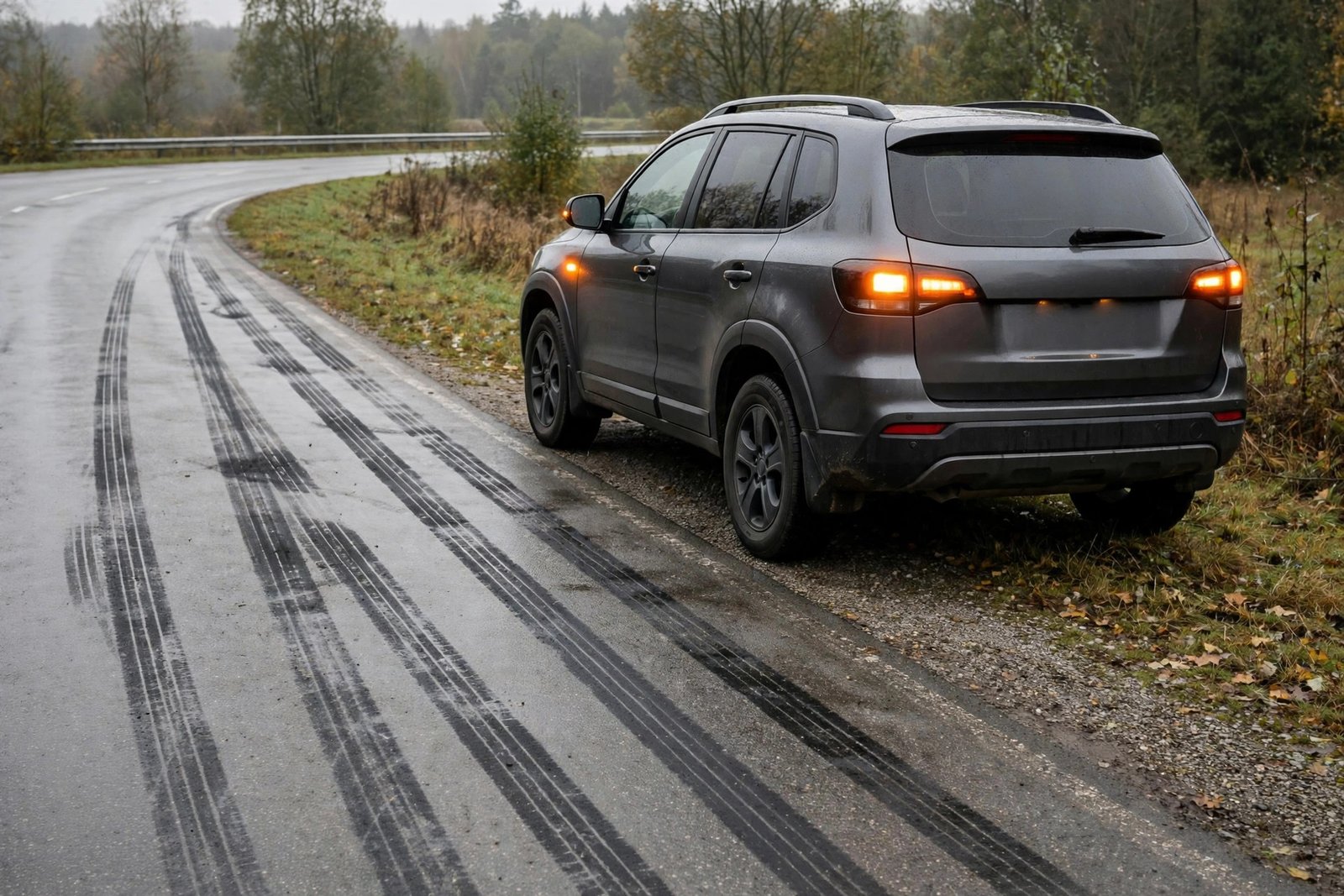
Few car moments are scarier: you press the brake and a wheel locks — the tire stops turning, the car may veer sharply, skid, or refuse to move at all. Modern ABS is designed specifically to prevent wheel lock-up, so a lock-up in an ABS-equipped car is itself a diagnostic signal: something in the brake system is broken.
The core message of this article: a car with brakes that lock up is not safe to drive. Tow it to a certified mechanic. Don’t “see how it goes.”
Safety first — strongest warning: If your brakes have locked up, do not continue driving. Residual hydraulic pressure, a seized caliper, or a failed ABS component can lock a wheel again without warning — at speed, a locked wheel means a skid and loss of steering control. Pull over safely, call a tow, and have a certified mechanic inspect the entire brake system. This is not a drive-to-the-shop situation if the lock-up is severe or repeated.
In this guide, you’ll learn:
- What lock-up actually is (two different scenarios, two different causes)
- The most common causes, in order of likelihood
- What to do in the moment if a wheel locks while driving
- Why ABS-equipped cars shouldn’t lock up — and what it means when they do
- What to tell your mechanic
Two Scenarios, Two Meanings
Scenario A: Brakes lock when you hit the pedal hard
On dry pavement with working ABS, this shouldn’t happen — the ABS pulses pressure to keep wheels turning. If it does, the ABS may be faulty, or a mechanical/hydraulic fault is overwhelming it. On non-ABS cars (older vehicles), hard steady pressure can lock wheels — that’s expected behavior, and the correct response is to ease off and reapply (cadence braking).
Scenario B: Brakes drag or lock without you pressing the pedal
This is the more dangerous one: residual hydraulic pressure keeps a caliper applied, or a caliper is seized, so a wheel slows or locks on its own — sometimes after the car has been driving a while. The signature: the car feels like it’s fighting you, a burning smell develops, one wheel runs very hot, and in the extreme the wheel locks. This is almost always a hydraulic/mechanical fault demanding immediate attention. grinding noise when not braking
The Most Likely Causes, in Order
1. Seized caliper or wheel cylinder (most common)
Corrosion or debris prevents the caliper piston from retracting — the pad stays clamped to the rotor. Continuous contact builds heat, and heat makes everything worse: boiled brake fluid, destroyed pads, warped rotors, and eventually a locked wheel. The giveaways: grinding that never stops, one hot wheel, burning smell, often a pull. burning smell after braking
2. Collapsed or restricted brake hose
A deteriorated flexible hose can trap hydraulic pressure in the caliper after you release the pedal — the brake never fully lets go. The hose looks normal from the outside, which is why this one fools visual inspections. A mechanic tests the hydraulic circuit at the wheel to find it.
3. Faulty ABS components
The ABS exists to prevent lock-up, but a failing wheel speed sensor, tone ring, or ABS module can cause exactly what it’s meant to prevent: wrong pressure modulation, false activation, or a wheel locking during normal stops. If lock-up comes with the ABS warning light on, or a buzzing/pulsing at low speed, the ABS system is suspect.
4. Master cylinder fault
The master cylinder distributes pressure to all four corners. An internal fault can send too much pressure to one circuit — or fail to release it. Master-cylinder issues often pair with a sinking or inconsistent pedal feel.
5. Contaminated or wrong brake fluid
Wrong fluid type or moisture-contaminated fluid degrades hydraulic behavior — boiled fluid creates vapor, and vapor in the lines means erratic pressure. This is the slow-burn cause behind some “mystery” lock-ups.
If a Wheel Locks While You’re Driving
- Stay calm. Keep both hands on the wheel.
- Hazard lights on, and steer where you want the car to go — a locked wheel can’t steer, so give the rolling wheels every chance.
- Non-ABS car: ease off the brake and reapply with cadence (pump) — don’t slam it again.
- ABS car: keep firm, steady pressure — don’t pump; pumping confuses the ABS computer. If the ABS is working, you’ll feel it pulse.
- Get to the shoulder safely, stop fully, then do not drive on — call a tow.
What to Tell Your Mechanic
“My brakes locked up” plus: which scenario (A or B), which wheel if you can tell, whether the ABS light was on, any burning smell or heat, whether it happened once or repeats, and what the pedal felt like. A shop inspects calipers, hoses, fluid condition, ABS codes, and the master cylinder — tell them the full sequence so they test the right circuit first.
FAQ
Can I drive to the shop if the lock-up only happened once?
A single lock-up is a proven failure in the system that stops your car. It can recur without warning — at speed, that’s a skid. A tow is the safe call, especially if the lock-up repeats or came with heat, smell, or warning lights.
My car has ABS — why did a wheel lock at all?
Because something is broken: a seized caliper, a trapped-pressure hose, or a faulty ABS component can all overwhelm or bypass the anti-lock logic. Lock-up in an ABS car is itself the diagnostic clue — the system is supposed to prevent exactly this.
Is brake lock-up the same as brake fade?
No. Fade is reduced braking power from overheated components — the car won’t stop enough. Lock-up is the opposite failure: a wheel stops turning too much, losing traction and steering. Both come from heat and hydraulic faults, but they need different responses.
Will pumping the brakes help?
Only on non-ABS cars. On ABS-equipped cars, keep firm steady pressure and let the ABS cycle; pumping fights the computer. Either way, get the car towed afterward — the underlying fault is still there.