
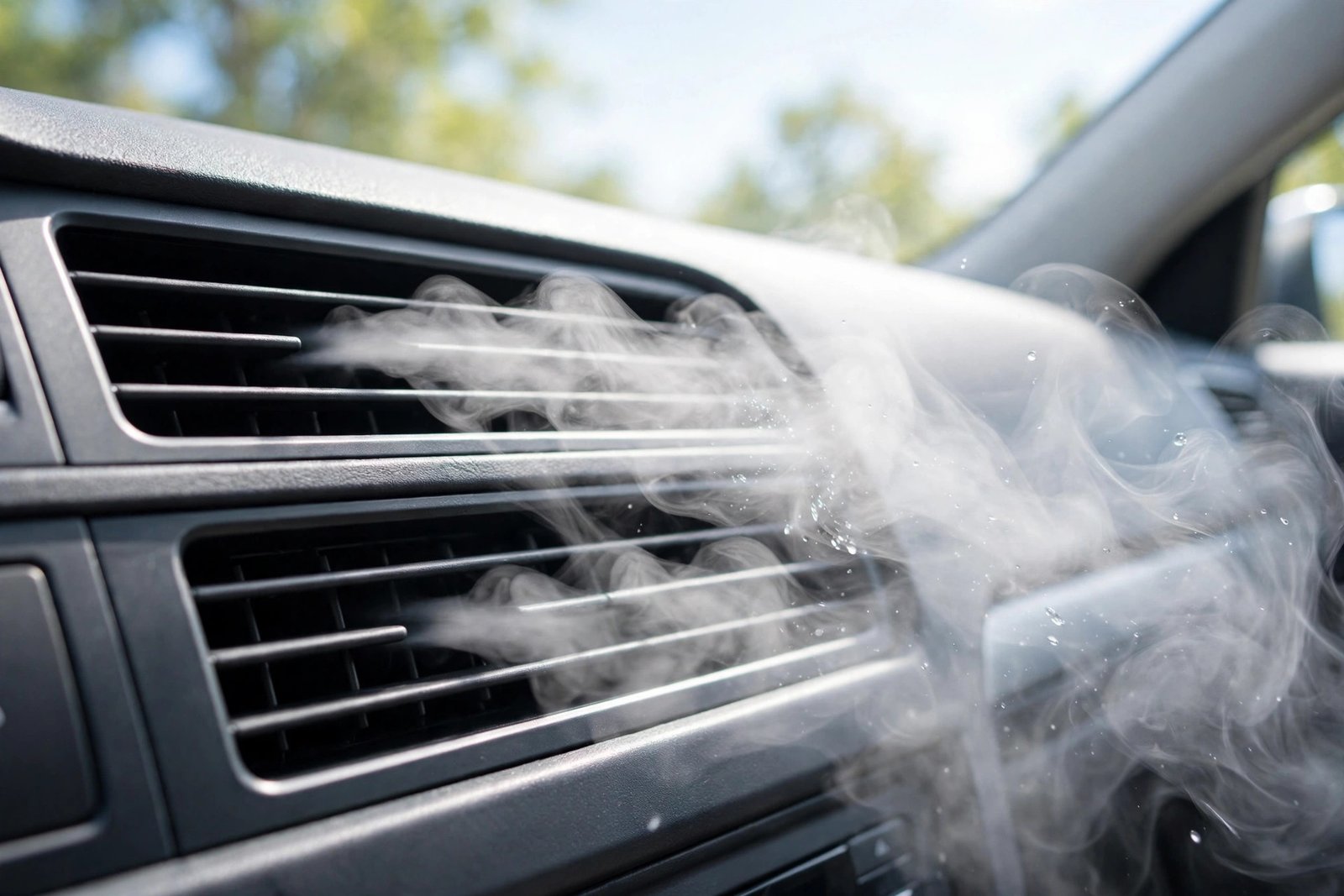
That sour, sweaty-sock smell when you first switch on the AC is one of the most common — and most fixable — car complaints. It's mold and bacteria growing on the evaporator coil, the cold, damp component behind your dash where cabin air gets chilled. Every time the AC runs, condensation forms on it; most drains away under the car, but what stays behind becomes a breeding ground. This guide covers the fixes in order of effort, and the 2-minute habit that prevents it.
Safety first: Refrigerant handling is pro-only (EPA Section 609 certified technicians) — but nothing in this article touches refrigerant. These are cleaning and maintenance steps. If you have asthma or mold allergies, wear a mask when spraying cleaners into the intake, ventilate well, and consider having a shop do the evaporator cleaning.
First: Which Smell Is It?
Not every vent smell is mold. Get this right before treating:
| Smell | Likely cause |
|---|---|
| Musty, mildewy, sweaty socks — fades after a few minutes | Mold/bacteria on evaporator — this article |
| Sweet, syrupy | Coolant leak (heater core) — see sweet smell means coolant — different problem, needs a mechanic |
| Burning plastic or electrical | Electrical fault — turn the system off, get it inspected |
| Rotten eggs | Usually exhaust/catalytic converter, not the AC |
The Fixes, in Order of Effort
1. The 2-minute drying habit (prevention + mild cases)
Before you shut off the car, turn off the AC but leave the fan running for 2–5 minutes. This dries the evaporator so mold can't establish itself. It costs nothing and is the single most effective prevention. Many drivers who adopt it never get the smell back.
2. Replace the cabin air filter
A clogged filter traps moisture and debris — mold food. It's usually behind the glove box, takes minutes, and costs little. If yours is dark, damp, or smells itself, replace it before anything else. (Weak airflow alongside the smell makes this doubly likely — see car AC not cold enough.)
3. Run the system hot and dry
Park in direct sun, set heat to max with the fan on high and windows cracked for 10–15 minutes. Heat and airflow dry the evaporator and ducts. This helps mild cases and is good maintenance between cleanings.
4. AC disinfectant / evaporator cleaner spray
Auto parts stores sell foaming cleaners designed for car evaporators. The standard method: engine running, fan on low, windows open, cabin filter removed, spray into the cowl intake at the base of the windshield (where the wipers sit) so the fan pulls it through the system. Follow the product's instructions exactly and ventilate well.
5. Check the evaporator drain
The drain tube under the car should drip water on humid days with the AC running. No drip + musty smell = a clogged drain keeping the evaporator housing wet. Clearing it (often just compressed air or a careful poke from underneath) fixes the root cause.
6. Professional evaporator cleaning
If the smell persists through all of the above, a shop can do a deep evaporator cleaning — and inspect for a clogged drain or housing issues you can't reach. This is maintenance, not a refrigerant service.
What Doesn't Work
- Air fresheners and vent clips — they mask the smell for a day; the mold is still there.
- Ozone generators in the cabin — can damage rubber and interior materials; not a substitute for cleaning the evaporator.
- Ignoring it — mold colonies grow. People with allergies or asthma breathe this air daily.
FAQ
Why does the smell fade after a few minutes?
The initial blast carries the concentrated odor from the evaporator surface; once fresh air dilutes it, you notice it less. The mold is still there.
Will running the AC in winter help?
Yes — running it periodically keeps seals conditioned and airflow moving, which discourages stagnation. Many cars run the compressor automatically in defrost mode for exactly this reason.
Is the mold dangerous?
For most people it's just unpleasant, but it can aggravate allergies and asthma. If you're sensitive, prioritize the fix and consider a shop cleaning.
How often should I replace the cabin filter?
Roughly annually or every 12,000–15,000 miles — more often in dusty areas or if you park under trees.
Sources
- Consumer Reports — "How to Get Rid of Musty Smell From a Car Air Conditioner" (evaporator condensation mechanism; plenum spray method; cabin filter) — https://www.consumerreports.org/cars/car-maintenance/get-rid-of-musty-smell-from-cars-air-conditioner-a2986616934/?itm_source=parsely-api
- Car From Japan — "Car AC Smells Bad: The Causes and Solutions" (mold/mildew on evaporator; fan-on drying habit; condensation system check) — https://carfromjapan.com/article/car-ac-smells-bad/
- AutoScope Car Care — "This is why your car AC smells like a dirty gym sock" (evaporator moisture + heat = mold; cabin filter compounding) — https://www.autoscopecarcare.com/car-repair/car-ac-smells-bad/
- U.S. EPA — Regulatory Requirements for MVAC System Servicing (Section 609 technician certification) — https://www.epa.gov/mvac/regulatory-requirements-mvac-system-servicing