
Coolant (antifreeze) is what keeps your engine from overheating in summer and freezing in winter. Checking it is a 60-second job — but it has one non-negotiable safety rule that sends people to the emergency room every year. Read the safety box first, then the procedure.
SAFETY — read this first: Only ever check coolant on a cold engine (parked for several hours, or at least 30+ minutes after driving — a couple of hours is better). Never open the radiator cap or coolant reservoir cap on a hot engine. The system is pressurized; hot coolant and steam can erupt and cause severe burns. For routine checks you don't need to open anything at all.
The Key Insight: Check the Reservoir, Not the Radiator
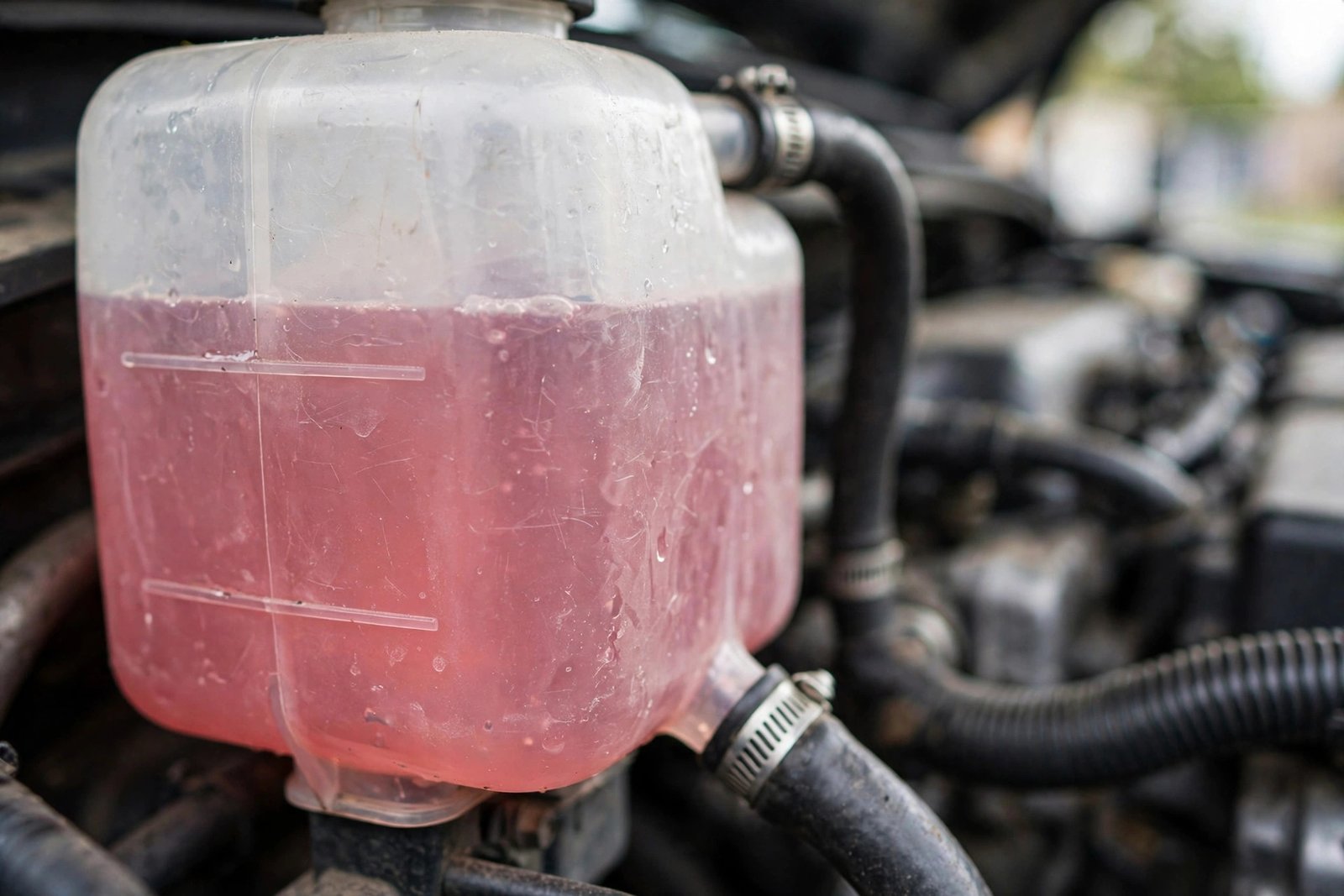
Most drivers assume they need to remove the radiator cap. You don't. Modern cars have a translucent plastic coolant reservoir (overflow/expansion tank) near the radiator with MIN/MAX (or LOW/FULL) marks molded into the side. You read the level through the plastic — no cap removal, no pressure risk. Only on older cars without a marked reservoir would you ever need to look inside the radiator itself, and only when stone cold.
Step-by-Step: Checking Coolant
- Make sure the engine is cold. Parked overnight is ideal.
- Park on level ground and open the hood.
- Find the coolant reservoir — a translucent plastic tank near the radiator, often labeled "Engine Coolant." Your owner's manual shows the exact location.
- Read the level through the side. It should sit between MIN and MAX, ideally closer to MAX/FULL when cold. (Level rises slightly when hot due to expansion — that's why you read it cold.)
- Check the color and clarity. Healthy coolant is bright and clear — green, orange, pink, blue, or yellow depending on your car's spec. Rusty brown, cloudy, or full of particles = the corrosion inhibitors are breaking down.
- Top up if low (engine still cold): remove the reservoir cap slowly, add the correct coolant type for your car — the owner's manual specifies it; don't mix types — up to the MAX line. Don't overfill; leave room for expansion.
- Cap it tightly and close the hood.
What the Results Mean
- Between MIN and MAX, bright and clear: you're good. Check monthly and before long trips.
- Below MIN: top up to MAX with the correct coolant. Then watch it — a cooling system is sealed, so a low level means fluid went somewhere.
- Level keeps dropping after top-ups: you have a leak (hoses, radiator, water pump, heater core) or internal consumption. Look for puddles, sweet smells, or white steam. Get it inspected — don't just keep topping up.
- Rusty, brown, or sludgy: the coolant is spent. It needs a flush and refill per your manual's schedule (typically every few years depending on coolant type).
- Oil film or milky appearance in the reservoir: possible head-gasket issue. Get it diagnosed promptly.
Coolant Types: Don't Mix
Coolant isn't generic. The common families (conventional green, extended-life orange/pink OAT, HOAT, and Asian-vehicle blue/pink) use different additive chemistry. Mixing types can cause gelling and corrosion. Always use what your owner's manual specifies — and note whether the bottle is pre-mixed 50/50 or concentrate (concentrate needs distilled water, not tap water).
Common Mistakes
- Opening the cap on a warm engine "just to peek." The #1 coolant injury. If the engine has run recently, wait.
- Topping up with the wrong coolant. "Antifreeze is antifreeze" is false — chemistry matters.
- Overfilling past MAX. The system needs expansion room; overfilling just pushes coolant out the overflow.
- Treating repeated top-ups as the fix. A sealed system shouldn't lose coolant. Topping up monthly means there's a leak to find.
- Using plain water as a long-term substitute. Fine as an emergency top-up to get home; it lowers the boiling point and freeze protection and lacks corrosion inhibitors.
When to See a Mechanic
- Coolant level drops repeatedly (leak hunt needed)
- Temperature gauge climbs or the coolant warning light comes on
- Sweet smell, puddles under the car, or white steam from the hood
- Milky/oily coolant or visible contamination
- Any overheating episode — even one can warp a cylinder head
FAQ
How often should I check coolant?
Once a month and before long trips. It takes a minute and catches leaks early.
Can I check coolant when the engine is warm?
No. Wait until it's cold. A warm reading is unreliable (expansion) and opening anything pressurized is dangerous.
My reservoir is empty — can I just fill it and drive?
Fill it with the correct coolant (cold engine), then drive to a shop, watching the temperature gauge. An empty reservoir means significant fluid loss — the cause needs finding.
Why does the level look different hot vs cold?
Coolant expands as it heats. That's the entire reason for the reservoir — it gives expanding fluid somewhere to go. Always judge the level cold.
Sources
- 5SpeedAuto — "How to Check Coolant Level Safely" (never open when hot; reservoir-not-radiator rule; MIN/MAX cold reading; low level = leak or issue) — https://5speedauto.ca/2026/06/22/how-to-check-coolant-level-safely/
- EngineerFix — "How to Check the Coolant Level in Your Car" (translucent reservoir; MIN/MAX or Full Cold/Add marks; color clarity check; radiator only for older cars, cold only) — https://engineerfix.com/how-to-check-the-coolant-level-in-your-car/
- FleetRabbit — "How to Check Coolant Level and Flush Your Radiator" (cool 30+ min minimum; level between marks; color check; don't mix coolant types) — https://fleetrabbit.com/blogs/post/how-to-check-coolant-level-and-flush-your-radiator-a-simple-guide
- Hendrick Cadillac Southpoint — "How to Check the Coolant Level in Your Car" (no need to open radiator cap; reservoir markings; 50/50 mix; never open hot) — https://www.hendrickcadillacsouthpoint.com/service/service-tips/how-to-check-coolant-level/