
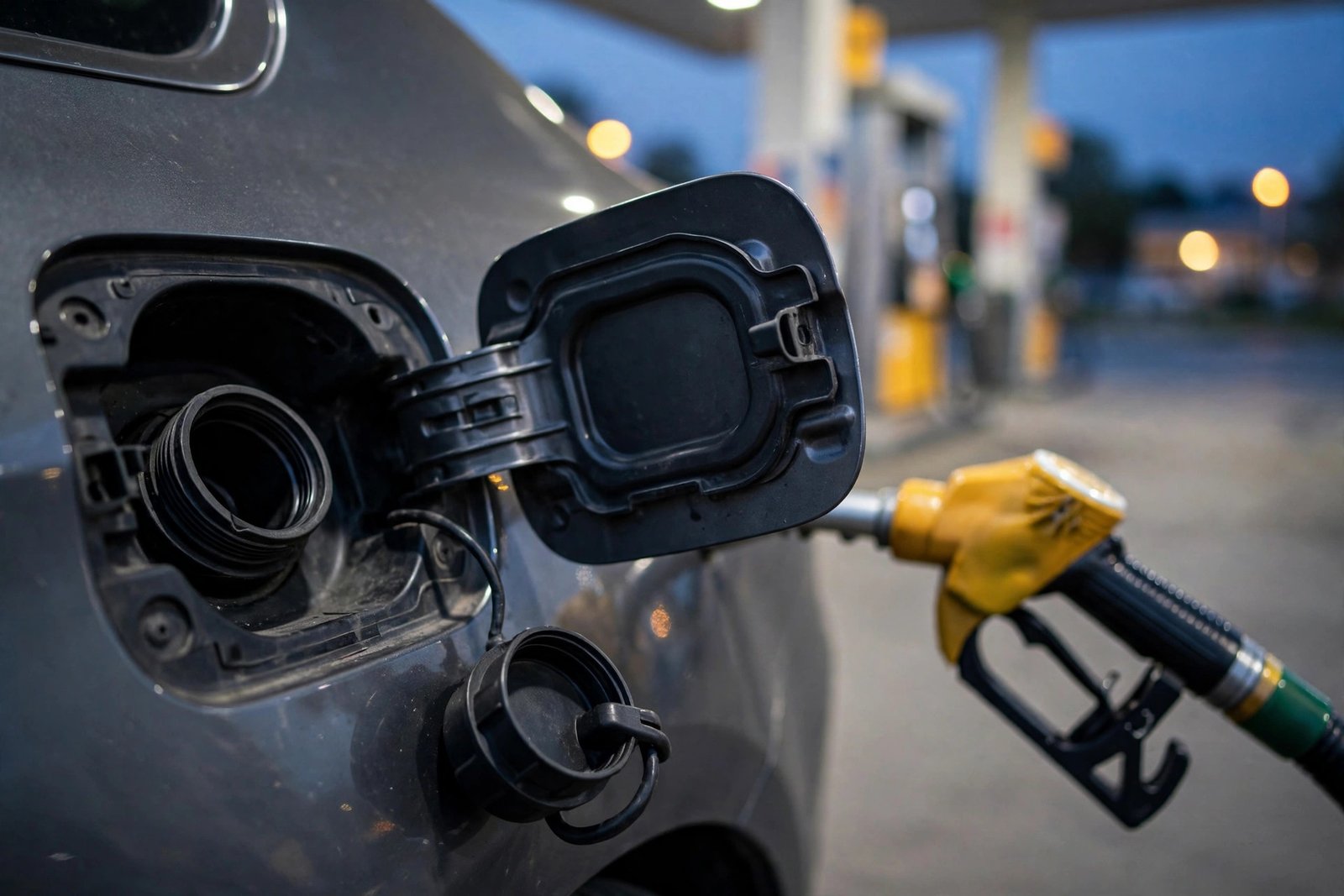
A gasoline smell from your car is never “just an odor problem.” Gasoline vapors are flammable and a health hazard — and a fuel leak near hot or electrical components is a fire risk. This guide leads with safety, then helps you figure out what you’re dealing with.
SAFETY — the hard rules:
– Do NOT drive if the smell is strong, persistent, or you see wet spots/puddles. Park it, turn it off, and have it towed to a certified shop.
– No ignition sources: no smoking, no lighters, no starting the engine repeatedly “to check.”
– Ventilate: if the smell is inside the cabin, open the windows — don’t sit in concentrated fumes.
– This article is diagnosis + safety only. Fuel-system repair (lines, injectors, tank, EVAP components) is professional work — pressurized fuel systems are not DIY territory.
The Severity Ladder
LEVEL 1 — Normal: brief odor right after refueling. A few drops spilled at the filler or vapors displaced during filling. It should fade within minutes of driving.
LEVEL 2 — Concerning: the smell persists while driving, appears regularly, or is noticeable inside the cabin. Something is wrong — investigate promptly (start with the gas cap check below).
LEVEL 3 — Dangerous: strong odor plus visible wet spots/puddles under the car, smell getting stronger while driving, or any liquid fuel visible. Stop driving. Tow it. This is a fire hazard.
Where You Smell It → Likely Cause
- Around the rear of the car / after refueling: loose, cracked, or missing gas cap; damaged filler neck; overfilled tank (fuel forced into the EVAP system by topping off past the pump’s automatic shutoff).
- Inside the cabin: EVAP system leak (charcoal canister, purge valve, hoses) letting vapors in; exhaust leak letting fumes enter through the ventilation; fuel smell being pulled in from the engine bay by the HVAC fan.
- Under the hood / front of the car: leaking fuel injector or injector seals, fuel line or fuel rail leak, failing fuel pressure regulator (over-pressurizing the system → rich mixture → unburned fuel smell).
- After sitting overnight: EVAP system not holding vapor pressure (purge valve, vent solenoid, cracked hose); slow seepage that evaporates before forming a puddle.
The Gas Cap Check (Do This First)
It’s the simplest cause and a genuinely common one:
- Check the cap is present and clicks tight (most caps click when properly sealed).
- Inspect the rubber gasket — cracked, flattened, or missing = replace the cap.
- A bad cap also triggers the check engine light via the EVAP system — if both appeared together, the cap is suspect #1.
A replacement OEM-spec cap is cheap and often resolves minor vapor issues. If the smell persists after the cap checks out, keep going down the list — with a mechanic.
Common Causes, Ranked by Danger
- Fuel line/tank/injector leaks (HIGH): liquid fuel escaping anywhere is a fire risk. Signs: wet spots, drips, strong localized smell, dropping fuel economy.
- EVAP system faults (MEDIUM): vapor leaks from the canister, purge valve, or hoses. Signs: smell strongest after sitting, check engine light with EVAP codes, smell near the rear.
- Exhaust leak (MEDIUM-HIGH): unburned fuel fumes entering the cabin — also a carbon monoxide risk. Signs: louder exhaust, smell through the vents, headaches/nausea while driving (get out and get it checked immediately).
- Rich running condition (MEDIUM): faulty fuel pressure regulator, bad sensor, or stuck injector dumping excess fuel. Signs: black exhaust smoke, poor MPG, rough running.
- Gas cap / overfilling (LOW): as above — the benign end of the spectrum.
What NOT to Do
- Don’t try to find a fuel leak with a lighter or match (this happens more than you’d think).
- Don’t keep driving “to see if it gets worse.” Fuel leaks don’t improve.
- Don’t mask it with air fresheners — you’ll miss the severity change that tells you it’s getting worse.
- Don’t replace the cabin air filter expecting it to fix a gas smell — filters trap particles, not fuel vapors.
When to Call a Tow Truck (Not Drive)
- Visible liquid fuel anywhere under or around the car
- Strong smell that intensifies while driving
- Smell inside the cabin that doesn’t clear with ventilation
- Check engine light + fuel smell together
- Any suspicion of a leak near the engine bay (heat + fuel = fire risk)
FAQ
Is it normal for my car to smell like gas after filling up?
A faint, brief odor right after refueling can be normal (spilled drops, displaced vapors). It should fade quickly. If it lingers, or happens every fill-up, check the cap and filler area.
My car smells like gas but there’s no puddle — is it still serious?
Yes, potentially. Vapor leaks (EVAP system, injector seals, filler neck) often evaporate before forming puddles. “No visible leak” ≠ “no leak.”
Can overfilling the tank cause a gas smell?
Yes. Pumping past the automatic shutoff forces liquid fuel into the EVAP vapor system, which isn’t designed for liquid. Stop at the first click.
The smell is only in the morning after the car sat overnight — what does that mean?
That pattern points to the EVAP system (it’s supposed to hold vapors sealed while parked) or slow seepage. Have the EVAP system smoke-tested by a shop — that’s the standard diagnostic.
Sources
- FleetRabbit — “Why Your Car Smells Like Gas: Causes and Fixes” (severity ladder: brief after refueling / persistent / puddles; gas cap; fuel line leaks; injector issues; severity ratings) — https://fleetrabbit.com/blogs/post/why-your-car-smells-like-gas-after.html
- Detailing Experts — “Why Your Car Smells Like Gas – Causes, Fixes & When to Worry” (EVAP leak overnight pattern; fuel tank seepage; charcoal canister; injector drip-back; leak = inspect immediately) — https://detailingexperts.ca/why-your-car-smells-like-gas/
- CarXplorer — “Why Does My Car AC Smell Like Gas” (stop driving immediately with raw fuel smell; AC fan as delivery system; professional diagnosis not optional) — https://carxplorer.com/why-does-my-car-ac-smell-like-gas/
- Fusion Car Wash — “Why Does My Car Smell Like Gas” (gas cap signs; fuel leak warning signs; do not ignore strong odor) — https://fusioncarwash.com/why-does-my-car-smell-like-gas
- AutoReviewUS — “Why Your Car Smells Like Gas After Refueling but Doesn’t Leak” (brief post-refuel odor vs persistent; EVAP/cap/canister/purge valve causes) — https://www.autoreviewus.com/2026/08/why-your-car-smells-like-gas-after.html
check engine light on but car runs fine